

- Daily & Weekly newsletters
- Buy & download The Bulletin
- Comment on our articles
Related articles
Recent


Popular
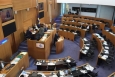

542 days and counting: Brussels beats Belgian record for lack of government

After 542 days and counting without a government, the Brussels region has broken Belgium’s 2011 record for the longest period without a government at 541 days.
Politicians have yet to sort through the deep political impasse resulting from the last election, citing persistent disagreements between the parties tasked with forming a coalition.
While the politicians and parties continue to blame each other, many residents are getting fed up with the situation and worry about a potential government shutdown in the spring of 2026 due to a lack of funding.
Some are calling for a return to the polls in the hope of clarifying the political landscape and breaking the deadlock, and action group Respect Brussels has mobilised once again to protest against the lack of progress.
“People don't always feel the impact on their daily lives, but that is starting to change,” said the group, which arranged a protest involving about 500 participants on Monday opposite the Brussels parliament.
“We want to say ‘stop’ to the standstill, negligence and contempt for our city. Brussels deserves better.”
But the efforts of the group have yielded little results, especially in comparison to the protests of the 2011 federal impasse, which saw thousands of Belgians take to the streets of the capital.
The Brussels impasse has already led to serious consequences. Numerous non-profit organisations have lost their subsidies, investments are being postponed, important projects are blocked, political appointments cannot go ahead and large-scale projects such as metro line 3 and the Kanal museum are in limbo.
“Many Brussels residents feel a sense of resignation and acceptance about the current situation,” said Respect Brussels organiser Nicolas Hemeleers.
“People don't always feel that there are direct consequences for their daily lives. If you look at it a little longer, it quickly becomes clear that there are indeed consequences - streets that are not being resurfaced, buildings that are not being renovated, safety issues. That affects everyone.”
Monday’s protest featured various speakers from the cultural and social community in Brussels who warned of impending disaster if the region does not come together and form a government, pointing out the toll the impasse has already had on everything from public transport and social welfare programmes to arts and culture.
“A government must be formed urgently because of the budget,” said professor, economist and philosopher Philippe Van Parijs.
“It won't be pleasant, but the decisions must be taken now, because later it will be even worse. The current impasse is actually about mutual trust. Politicians must compromise.”
In the wake of the uncertainty and lack of progress, a new collective called 541 WeAreBrussels was formed.
They are not only calling for the rapid formation of a government in Brussels, but also want to assist politicians with an expert committee and a citizens’ convention.
Representatives from civil society, universities and the business community, among others, are behind the initiative.
Writer David Van Reybrouck and Professor Van Parijs are among the initiators who outline three stages in an open letter.
“In the short term, we are asking political leaders to enter into a conclave and finally reach a coalition agreement and budgetary path – not a perfect agreement, but one that protects the essentials, keeps public services running, supports the people who bring Brussels to life and protects the most vulnerable,” the letter reads in part.
“If no agreement is reached, we will propose credible alternatives from within society itself, so that negotiations can move forward and Brussels can finally get a political and budgetary plan.
"In the long term, Brussels needs not only breathing space, but also vision and a horizon. That is why we want to organise a Citizens' Convention to build together the political and institutional future of Brussels, beyond this crisis."
For this final stage, the initiators are considering the "G1000 model", the panel in which 1,000 citizens took action with proposals during the 2011 federal impasse.
“What makes this collective special is that it involves players from very different sectors of society,” said Fatima Zibouh.
“Until now, each of them has expressed their frustration about the lack of a government, but now we are bringing together people from the business community, universities, the cultural world, the G1000 and civil society, among others.”
The more than 190 signatories include Jan Danckaert (rector of VUB) and Annemie Schaus (rector of ULB), as well as Michaël De Cock (KVS), Marion Alecian (Arau), Dirk Snauwaert (Wiels), Olivier De Brauwere (Brussels Beer Project) and Lisa De Visscher (Brussels chief architect).





Comments
The politicians should all be sacked as they are obviously not adult enough to be politicians and new elections held to elect people who will actually do the job that they are meant to do. They have let down themselves and the public by being so infantile.
Are they all still getting paid their full salaries + perks?
Yes, the politicians receive full remuneration for not doing their job. They block each other. There are far too many of them.