
- Daily & Weekly newsletters
- Buy & download The Bulletin
- Comment on our articles
Related articles
Recent


Popular


60th anniversary of bus crash that killed 28 Brussels schoolchildren

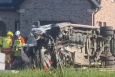
A memorial service has been held to mark the 60th anniversary of the 25 July 1966 bus crash in Gerlany that killed 36 Belgian passengers, including 28 children from Brussels.
The passengers were returning from a summer camp in Austria when the coach crashed into the barrier of a bridge in the German state of Hesse - possibly due to a burst tyre - and plunged 12 metres down.
Ani Cuypers, the sister of one of the victims, organised a small memorial service on the A3 motorway at the site of the crash in Niederbrechen, a district of the German town of Limburg-an-der-Lahn.
Present were a few relatives of the victims along with some emergency workers, including a firefighter from Niederbrechen who helped rescue the children at the time.
“I haven’t been able to find many other survivors since then, and their families have often passed away too,” Cuypers said.
The young people on the bus were all aged between 12 and 18µ.
“The camp was organised for children of parents who worked for government institutions, such as the police, ministries or the airline Sabena. A former commissioner of the Brussels police had been organising these nature trips for several years,” said Cuypers.
The former commissioner was Leopold Ceuster, a former resistance fighter who, after the second world war, continued to organise activities for the children of resistance fighters and in particular for families from disadvantaged backgrounds.
“My parents were caretakers at the federal parliament in 1966,” Cuypers said.
“That year, they still had a few places left for the trip. They asked if my brother Paul and I would like to come along.”
Paul went, but Cuypers turned down the offer.
With its death toll of 36, the incident became one of the worst bus crashes in Belgian history.
The majority of the passengers are buried in and around Brussels, although some of the graves have since become overgrown. At Evere cemetery, a memorial stone can still be seen for four young victims from the municipality. Molenbeek, Schaerbeek, Woluwe-Saint-Lambert and Etterbeek also lost residents in the crash.
Following the accident, a period of national mourning was declared on 26 July 1966. Archive photographs show hundreds of people mourning along the streets of Brussels as the coffins were driven into the capital. A temporary chapel was set up at a secondary school in Etterbeek.
A memorial stone for all the victims was erected on the bridge in the German village, where it still stands today.
“In the first 20 years following the disaster, Niederbrechen organised its own annual commemoration there,” Cuypers said.
“For this anniversary year, my daughter-in-law, who is German-speaking, asked for it herself. It’s lovely that the local fire brigade was there too. They’ve even dedicated a corner of their station to the accident.”