
- Daily & Weekly newsletters
- Buy & download The Bulletin
- Comment on our articles
Related articles
Recent





Popular



All businesses in North District must close overnight to tackle crime
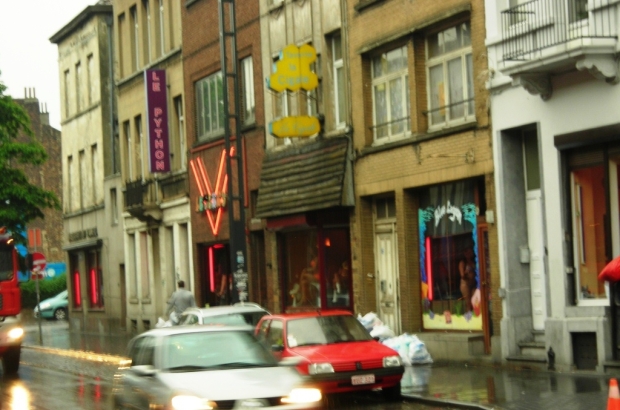
Prostitution venues and all other businesses open to the public in the North District of Brussels will have to close overnight from 1.00 to 6.00 in order to improve safety and combat drug trafficking in what is considered to be a crime hotspot.
Schaerbeek mayor Martin de Brabant (MR) made the decision in consultation with Saint-Josse-ten-Noode mayor Emir Kir.
“Given the worsening security issues in the North District, we could not remain passive,” said de Brabant. “It was high time to take action to restore calm and peace to residents at night.”
The measures were agreed upon within the framework of the Local Task Force, which includes Schaerbeek, Saint-Josse, the Brussels public prosecutor’s office, safe.brussels and the Brussels-North police zone.
But Mohamed El Hajaiji, president of the Rue de Brabant traders’ association, said closing all businesses at night will not solve the security issues, even if fewer people passing through means quieter nights for local residents.
“I appreciate that the local and regional authorities are trying to do something to improve neighbourhood safety, but I regret that they’re using a bazooka-style approach, with night-time closures, without distinguishing between different types of business,” El Hajaiji told RTBF.
“What’s more, they assume that by closing all shops between 1.00 and 6.00, crime will disappear. At best, the problem will simply shift a few streets further on.
"And my question is: what measures are being taken during the day? So I have some doubts about the effectiveness of the measure. But it’s better to try something than to do nothing at all."
Kece, an owner of several snack bars on Place Liedts that stay open until as late as 4.00, is worried about the economic impact of the measure.
“There’s a demand. We have two teams: one that starts in the morning and a second team that starts at night,” said Kece.
“If we close at 1.00, that means one team won’t be working - about 25 to 30 people. We need to find another solution. The police are there to arrest criminals and offenders. Why should I be the one to pay the price?”
But neighbourhood resident Thierry, who has lived for about 10 years on a side street off Rue d’Aerschot, welcomed the measure.
“At least this will allow people to get some rest, because sometimes, during the night, you hear all sorts of things,” said Thierry.
“There are people smoking, there are drugs, people using laughing gas. In this neighbourhood, things have gone downhill. What I hope is that within three months, I’ll see a more positive change.”
Fellow resident Ayri of Rue de Brabant also expressed optimism about the new mandatory closing times.
“It’ll calm the traffic on the street,” he said.
“After 1.00, you’ve got all the cars honking their horns, making a racket. At night, it’s hard to get to sleep with all the fighting on top of that.
"Some shops attract a certain sort of crowd; it creates a lot of commotion and sometimes causes problems."
The North District, recognised as a regional crime hotspot since April 2024, is the subject of a coordinated approach at both municipal and regional levels.
In addition to the night-time closure of establishments open to the public, authorities announced the standardisation of opening and closing times between Schaerbeek and Saint-Josse, an extension of the ban on the sale and consumption of alcohol in public places, increased police presence, and the expansion of the CCTV network.
The speed of scooters will be limited to 8 km/h in the neighbourhood and a local prevention partnership and "Safe Places" are also to be established.
The municipalities have also planned temporary area-specific bans, an increase in community patrols for vulnerable groups, and targeted clean-up initiatives.
In the medium term, investigations will be launched to combat money-laundering in certain businesses and discussions on the redevelopment of public spaces have also begun, particularly on Rue d’Aerschot, in connection with the regional ‘Station Plan’ and the €10 million announced as part of this initiative.
“The aim is to have measures based on security, prevention and community life,” said de Brabant.
“The key measure is closing all establishments from 1.00 to 6.00 to bring calm to the streets. We’ve found that across all three municipalities in the police zone, more than 50% of violent robberies occur in this area.
"And we note that these incidents are disproportionately frequent at night. It is a neighbourhood known for drug dealing, and also for being home to quite a few people with drug addictions who use drugs on the streets. And so, behind the measure, there is this desire to ensure peaceful nights in the neighbourhood."
The mayor emphasised that this was a general measure not targeting any particular sector.
“Legally speaking, in fact, to ensure the measure stands up to scrutiny, we are adopting a regulatory measure, which therefore applies to the entire neighbourhood and all sectors,” de Brabant added.
“Shopkeepers will have the right to appeal if the measure is adopted. However, the case law of the Council of State supports the view that a measure which is uniform across all sectors is not discriminatory.
"And we are only closing between 1.00 and 6.00. For the rest of the day, we are not hindering the freedom of trade or business in any way."