
- Daily & Weekly newsletters
- Buy & download The Bulletin
- Comment on our articles
Related articles
Recent

Popular
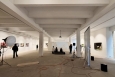




Belgian impressionist Jenny Montigny lights up Ghent art museum in major retrospective

From sunlit gardens to World War One soldiers, the Museum of Fine Arts Ghent (MSK Gent) delves into the poetical world of impressionist artist Jenny Montigny (1875-1937).
Born in the Flemish city, the location of the exhibition is in itself symbolic. Apparently, when Montigny was 16, she visited the museum and was particularly impressed by the Belgian luminist painter Emile Claus’ The Skaters. It inspired her to pursue an artistic career at a time when the art world was still dominated by men.
Montigny later took classes from Claus, with who she was also to conduct an affair, and many of her paintings adopt similar countryside themes.

But the exhibition shows that her oeuvre - accomplished over more than 40 years in Ghent, the River Lys region, Deurle and London – explored a richer vein. Montigny’s keen eye for the world and eternal fascination with everyday life is clear in her canvases of children at school, villagers working in the fields, mothers caring for their children, ladies strolling in the park or flowers from her own garden.
It was in the British capital, where she fled during the first world war, that she joined the Women's International Art Club. In addition to depicting scenes of Hyde Park and Kensington Gardens, she also made drawings and etchings of wounded Belgian soldiers in the King Albert’s Hospital.
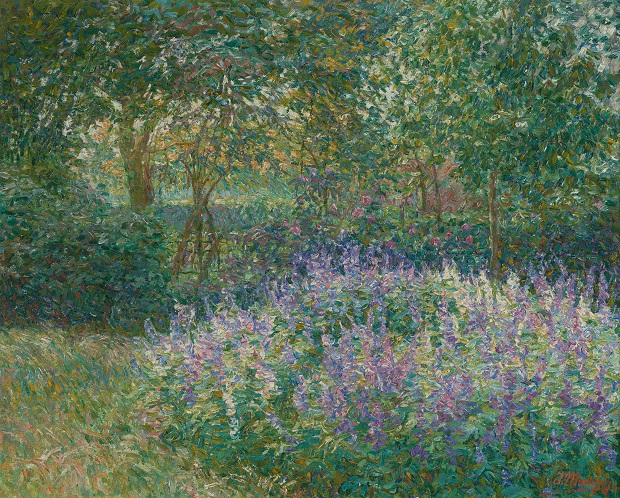
The broad selection of work on display encompasses paintings, drawings, prints, pastels and beautiful photographs, notably of her first home – Villa Rustoord in Ghent along with memorabilia including several personal letters and exhibition notices. They originate from museums such as Brussels’ Musée Charlier and numerous private collections.
Curators Dr Johan De Smet and Dr Marjan Sterckx invite visitors to rediscover an artist who, in the words of her contemporaries, succeeded in capturing ‘the sun and life,’ while they say Montigny’s work “is characterised by her mastery of light, her focus on the human figure and the diversity of her means of expression.”

What stands out in this chronological look at Montigny’s life and art, is not only the technique, especially how she creates the effects of sunlight in nature or streaming through domestic scenes, but also her skill in capturing drama and pathos in wartime scenes such as, The Doctor’s Visit at King Albert’s Hospitals (1918). In everything she tackles, there is a drive to paint everything as genuinely and as lifelike as possible. So her flower paintings including Delphiniums and Flower Gardens are more ‘nature vivante’ than ‘nature morte’.
Montigny – like many female artists of the time – was childless. But her myriad depictions of motherhood are realistic. And instead of idealised images, she shows the minutiae of childcare in different social classes. Children are washed, take their first steps, pick flowers, play and are fed or breastfed in very naturalistic works.
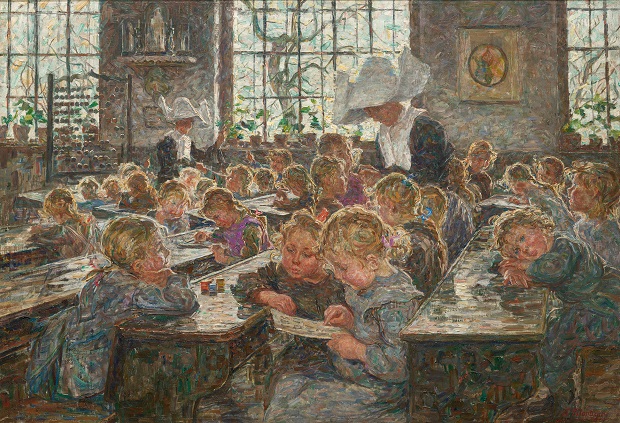
Moreover, Montigny excels in her paintings of children at school or in sunny playgrounds. As the curators say: “No other artist depicted this subject as frequently or as vividly as she did.” Amongst the sunlight and happiness of children playing, listening to teachers or simply sleeping on a desk, emerges a message, argues De Smet: “Her school scenes show a dreamlike vision of a better life, a hope that was reserved for very few at that time.”
Finally, especially for any parent, grandparent or carer visiting the show, Montigny’s paintings of children going to and from school – Saint-Joseph’s in Deurle, opposite her studio – are extraordinary. Not only are they delightful depictions of young insouciance and togetherness, but they also show that in the early 20th century it was completely normal for children to go to school unaccompanied.

After Claus’ death in 1924, Montigny suffered from financial difficulties. Her paintings fell out of fashion and she relied on the support of her sister and friends.
Following the artist’s death in 1937, her reputation further dwindled, and it was not until 1987 that her talent was recognised in local exhibitions in Deurle and Deinze.
This new retrospective confirms not only her artistry but the versatility of her practice in portraying both interior and outdoor scenes. In addition to shining a light on her individuality, it shines a light on yet female artist whose life and work had been overshadowed.
Jenny Montigny – The Sun and the Life
Until 10 January
MSK Gent
Fernand Scribedreef 1
Ghent
Photos: © Jenny Montigny, Flower Garden, 1912-1913, MSK Gent; Jenny Montigny, 'Strollers in Hyde Park', 1918, Jan Muller Collection; Jenny Montigny, Flower Garden, 1910, private collection, courtesy Francis Maere, Fine Arts, Gent; Jenny Montigny, The Doctor’s Visit at King Albert’s Hospital, London', 1918, private collection; Jenny Montigny, The Classroom, Het Kunstuur; Jenny Montigny, Towards School (Spring), private collection, courtesy Francis Maere Fine Arts, Ghent