
- Daily & Weekly newsletters
- Buy & download The Bulletin
- Comment on our articles
Related articles
Recent



Popular



Brussels has three times fewer swimming pools per capita than Flanders
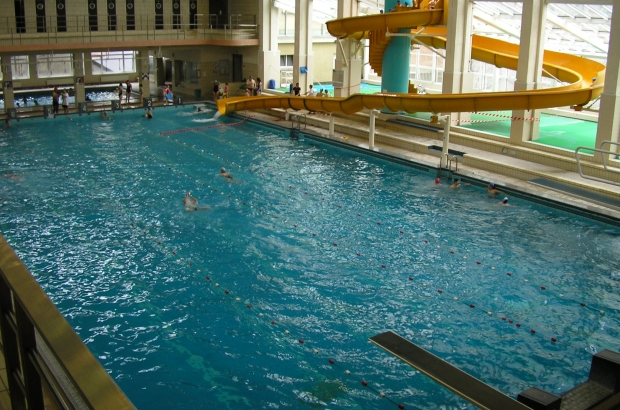
Brussels has one public swimming pool for every 68,000 residents, compared with one for every 22,000 residents in Flanders, according to new figures.
Residents in the capital also face high costs for access to limited swimming spots and secondary school students are receiving fewer swimming lessons because it is no longer mandatory, unlike in primary education.
This worries Mats Leemans, a swimming instructor at Vrije Universiteit Brussel (VUB), who said that a lack of swimming skills can have serious consequences.
“It remains a crucial skill for moving around safely in a swimming pool, a pond or at the seaside,” Leemans told Bruzz.
“The standard of the pupils who come to us is often appalling. Of the sports science students who start here, only a few have had any formal swimming lessons.”
Although most swimming pools in Brussels offer reduced rates for people on lower incomes, swimming remains expensive and not every municipality in Brussels even has a swimming pool. Swimming has thus increasingly become a luxury activity.
At VUB, everyone pays €5.70 per visit, but this amount does not cover the actual costs - even after the swimming pool was completely renovated in 2018 to make it more energy-efficient and therefore cheaper to run.
“To keep the swimming pool operational today, we’re looking at about €8 per swimmer, so the university is subsidising each swimmer,” VUB said.
Woluwe-Saint-Lambert is currently attempting to bring down the costs of swimming at its municipal pool by investing in energy efficiency.
“We have the most energy-efficient building in the municipality here,” Erik Bott, alderman for sport told Bruzz.
“The swimming pool accounts for about a third of the energy consumption of all municipal buildings. With rising energy prices, that would have had a major impact under the old system.”
Bott considers it a pity that more investments are not being made into municipal swimming pools and believes facilities should be better distributed across the capital.
According to the alderman, one possible solution is to manage swimming pools more collaboratively, which would allow municipalities to share costs and staff.
Over the years, several drowning incidents involving young people in Brussels have brought the debate on swimming proficiency into sharp focus.
Sports educator Kristine de Martelaer said swimming deserves more attention in education and advocates for swimming to be reintroduced into the curriculum objectives, along with a broadening of the definition of swimming proficiency.
“Being able to swim involves much more than simply being able to perform certain skills,” de Martelaer said.
“It’s also about knowledge and understanding: how your body functions in the water, what effect cold water has on you, and how you deal with dangerous situations.
"Parents think their child can swim because they have a certificate obtained in a swimming pool, but if those young people then go to the sea or a lake and have no experience of it, that can be very dangerous."
De Martelaer wants to see more varied swimming facilities in Brussels, such as the successful open-air swimming pool in Anderlecht, Flow, which demonstrated that open-air swimming is possible in the capital.
She also wants to investigate whether certain sections of the canal could eventually be developed as swimming areas, or explore even smaller interventions, adding: “Why shouldn’t fountains be places where children can cool off on hot days?”
A larger swimming project is already in the pipeline in Cureghem, in Anderlecht. An indoor and outdoor swimming pool is planned on the roof of the new building on the Abattoir site and the tender documents have now been published, meaning interested private partners can submit their responses.
According to the organisers, there is interest and a hope for a pool in place by 2030.