
- Daily & Weekly newsletters
- Buy & download The Bulletin
- Comment on our articles
Related articles
Recent



Popular





Brussels to relax rules on Airbnb rentals
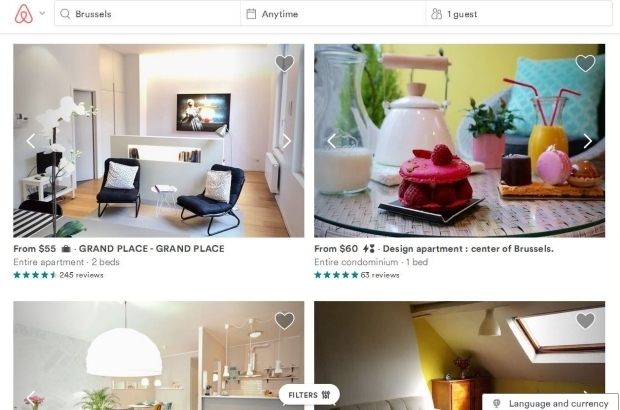
The Brussels government is simplifying rules for renting out a home or room on Airbnb by removing the requirement for an urban planning certificate from 1 January 2027.
The certificate was intended to be easy to obtain, but Airbnb operators sometimes encountered administrative difficulties with local authorities.
The new measure applies to those looking to rent out their property for fewer than 90 days a year or those renting a room in the home where they also have their main residence.
The idea is to make the American corporation’s platform easier to use for individuals, rather than the property management companies who have come to saturate the market.
For professionals who list a property on Airbnb without living there themselves, an urban planning certificate is still required and difficult to obtain because few local authorities are willing or authorised to change the use from "residential" to "tourism" when Brussels is facing a major housing crisis.
The procedure for the certificate is being simplified. There is also a more streamlined arrangement for co-ownership properties in which prospective operators will no longer have to wait for the co-owners’ approval to apply for the registration of a tourist accommodation.
Instead it will suffice to have informed the property manager or to have co-ownership regulations in place that permit the activity, which will enable prospective operators to start their business more quickly.
Brussels minister-president Boris Dilliès (MR) had long wanted to relax the rules for private individuals using the platform.
“Private individuals were faced with a Kafkaesque situation when, for example, they wanted to let out a room via Airbnb,” Dilliès said.
“The rules were so complex that some decided not to register, resulting in safety risks and heavy fines. In practice, this amounted to a de facto ban.
"From next year, Brussels residents will be able to rely on a clearer, simpler and less risky framework, so that they can legally let out their home or part of it and generate some extra income."
Airbnb has come under fire in major cities around the world for contributing to housing crises. Scarce real estate often sits empty despite high demand from locals because property management companies buy it up to rent out to tourists, despite Airbnb’s original mission of empowering ordinary people to host guests as part of a more personable cultural exchange than traditional tourist accommodation.
Airbnb listings in Brussels fell by almost a quarter in the space of a year.
According to L’Echo, the number of properties available for short-term lets (less than 30 days) fell from 6,171 in June last year to 4,750 in June this year, a drop of 23%.
The supply fell particularly sharply in Forest and Etterbeek, with 35.8% and 34% fewer available houses, rooms and flats respectively. In the City of Brussels, the reduction was 15%.
Landlords offering their property or room via Airbnb have had to comply with strict regulations since 2016 and the Brussels tax authorities issued a large number of fines, particularly last summer, when about 1,900 were issued.