
- Daily & Weekly newsletters
- Buy & download The Bulletin
- Comment on our articles
Related articles
Recent





Popular




Food banks close to saturation following cuts to unemployment benefits
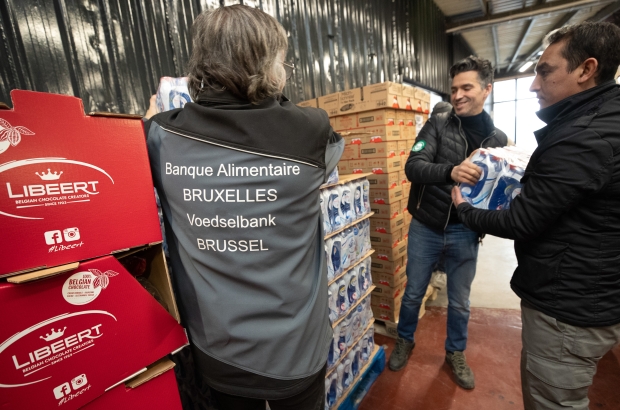
The growing demand for food aid following new restrictions on unemployment benefits is pushing food banks to the brink, according to a survey carried out by several aid organisations.
The phenomenon signals a “gradual blurring of the line between employment and precariousness”, the organisations said.
The Concertation Aide Alimentaire - a platform bringing together organisations active in food aid in Wallonia and Brussels - and the Fédération des Services Sociaux - the voluntary and mutual social services in French-speaking Belgium - are concerned that there will not be enough food supplies to meet the increase in need.
A recent study revealed that 561,000 people sought food aid across all regions in Belgium in 2024 - double the amount 10 years ago. And in the first half of this year, requests for food aid rose by almost 73% compared with 2025.
The profiles of those seeking help are becoming increasingly diverse. They now include more single people, women with children, pensioners and students. Almost one in five students is seeking assistance, according to the report.
“Since the Covid period, students have become more vulnerable,” said Brigitte Grisar, project manager at Concertation Aide Alimentaire.
“But what surprised us most is the fact that many organisations report that an increasing number of employed people are now seeking help. This really took us by surprise, and it highlights the gradual blurring of the line between employment and precariousness.”
More requests for food aid are coming from what are known as "the working poor", which is in addition to the new group of people excluded from unemployment benefits.
“We provide food parcels to people excluded from unemployment benefits who turn to the CPAS (social welfare centre),” said Grisar.
“While the social assessment is being carried out, the person is temporarily left without any income. We’re facing significant problems with certain CPAS offices that are experiencing delays in processing applications, meaning people are left without any financial resources for several months.”
Other striking figures from the recent survey include the fact that 20% of Walloons live in a situation of food insecurity, but only 6.4% actually access food aid.
“People who don’t seek help either don’t apply for it due to a lack of information, or because they’re above the eligibility threshold, and this can sometimes be by as little as €5 or €10,” Grisar said.
“But above all, in a great many cases, we find that what unfortunately prevents a large number of people in precarious circumstances from seeking help is a feeling of embarrassment, or even shame. Simply admitting that you’re broke and need help isn’t an easy thing for many beneficiaries.”
But despite the fact that demand for food aid has been steadily rising, the federal government cut funding by almost half this year, from €27 million to €15 million per year.
For half of all food aid organisations, this means a reduction in the quantities distributed to beneficiaries or having to dip into financial reserves.
Exacerbating the situation is that there has been a decline in supplies since the start of this year. Unsold stock collected from supermarkets, in particular, is becoming scarcer.
“There’s increasingly fierce competition from commercial operators specialising in the recovery of unsold stock,” Grisar said.
“Those on the ground are being pushed to their limits and must find solutions, often temporary ones, to cope with the successive shocks. Despite repeated warnings, the various levels of government are passing the buck and no emergency response has been put in place.”
Grisar noted that the sector relies on volunteers for many of its operations, and the fact that the situation “is constantly deteriorating” means the strain is harder to absorb. Organisations are having to turn people away without feeding them.
“Those working on the ground are waiting for concrete signals from the political sphere,” Grisar said, and a commitment to coordination to secure resources “commensurate with the scale of the challenge”.