
- Daily & Weekly newsletters
- Buy & download The Bulletin
- Comment on our articles
Related articles
Recent





Popular




GSK layoffs spark blockades at Belgian sites
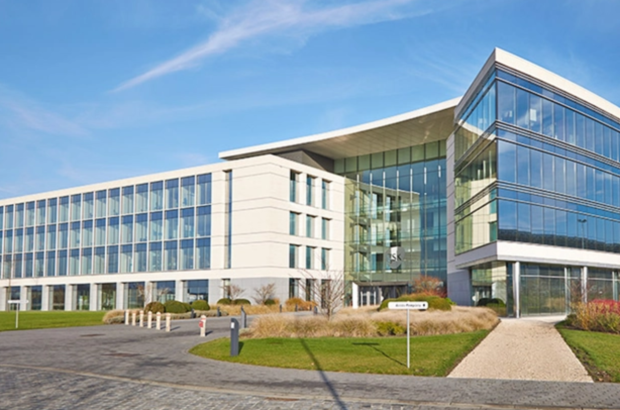
British multinational pharmaceutical and biotechnology company GSK’s sites in Rixensart and Wavre (Walloon Brabant) have been blockaded by trade unions in response to planned layoffs.
Management for the British group’s Belgian subsidiary - which is the largest private employer in Wallonia - announced last week that it intends to cut 1,217 jobs.
“The workers have taken the announcement very badly. It affects a huge number of people, while the workers are deeply committed to the company,” said Anthony Morelli, a Setca trade union representative.
“Some have been with the company for a very long time. The action could go further if the staff decide to do so.”
The trade unions also submitted a notice of an indefinite strike as a united front.
The first phase provided for under the Renault Act - which applies to collective redundancies - is the consultation and information phase, which is expected to begin shortly. The plan will then be to hold one extraordinary works council meeting per week, Morelli said.
Several hundred workers were participating in the blockades in Wavre and Rixensart last week. No one was allowed through picket lines apart from staff responsible for the sites’ security.
“In over 30 years, I’ve never seen so many people outside the entrances. I think the workers are beginning to realise the significance of the announcement,” said Karim Aifa, the FGTB union’s representative for managerial staff.
“We have little hope of managing to drastically reduce the number of job cuts, but we’re still holding out hope. We will try to be resourceful to limit the inevitable impact as much as possible.”
The Wavre site employs almost 7,000 people and the Rixensart site has about 1,000.
“Workers cannot understand why there are so many redundancies when the financial figures are good and we’re told, at works council meetings, that the company is selling well and performing well,” said Élodie Mascolo, chief CNE trade union representative.
“Our aim is to put a bit of pressure on management ahead of a further meeting with the trade unions, but we are also aware that receiving just €40 in compensation is a significant loss for everyone,” Mascolo said.
Trade union representatives are still discussing the next steps regarding the layoffs.
The British pharmaceutical giant’s layoffs in Belgium come despite the company being in good financial health, RTBF reports.
Since announcing Australian Luke Miels as the new chief executive in July, the company has said that it is making a radical shift towards oncology and research at the expense of its vaccines division, for which Wallonia is the global production hub.
GSK ranks among the world’s top 10 pharmaceutical companies, with almost 70,000 employees. Its current growth is driven by specialist medicines - for asthma, cancer and the immune system - which account for more than 40% of its turnover.
Vaccines, meanwhile, account for 28%, but this division stagnated last year. By 2025, the company’s net profit had doubled to €7 billion, on a turnover of nearly €40 billion.
When Miels became chief executive, he announced a goal to further increase turnover to €53 billion by 2031 by, among other things, slashing €2 billion in costs by 2029 through artificial intelligence, automation and the streamlining of procedures.
GSK also aims to launch 25 late-stage clinical trials by the end of the year, more than double its previous target. Over half of these relate to cancer, while only one concerns a vaccine. The group had previously abandoned oncology in 2014.
This return to the field is also driven by a looming deadline: the patent for its flagship HIV drug is due to expire from 2028 and the company seeks to reassure investors and find new sources of growth.
Vaccines are considered less profitable, putting their division in the firing line of the announced cost-cutting measures.
The vaccine field has shifted considerably since the pandemic, when small biotech firms began challenging the established giants.
In early September, Belgium’s economy minister David Clarinval warned that the competitive position of the Belgian pharmaceutical sector was “under increasing pressure”.
The biopharmaceutical sector accounts for 15% of Belgian exports and some 45,000 jobs, nearly one in five of which are at GSK.
Belgium is home to GSK’s largest production site worldwide at Wavre, Rixensart houses its historic campus, and Gembloux is the hub of its logistics operations.
According to GSK, more than 50% of its global vaccine production comes from its Belgian sites alone.
A decline in the Belgian workforce had already begun, with 873 jobs axed from 2023 to July of this year without a redundancy scheme. This newest and biggest round of layoffs requires one, per the Renault Act.
While GSK insists it does not plan to completely close its Belgian operations, the company recently promised US president Donald Trump a $30 billion investment in the United States over five years, which critics say partly explains the restructuring.
The US accounts for more than half of GSK’s sales, while Europe accounts for just 23%.