
- Daily & Weekly newsletters
- Buy & download The Bulletin
- Comment on our articles
Related articles
Recent


Popular



Josaphat redevelopment: 6,000 people respond to public consultation
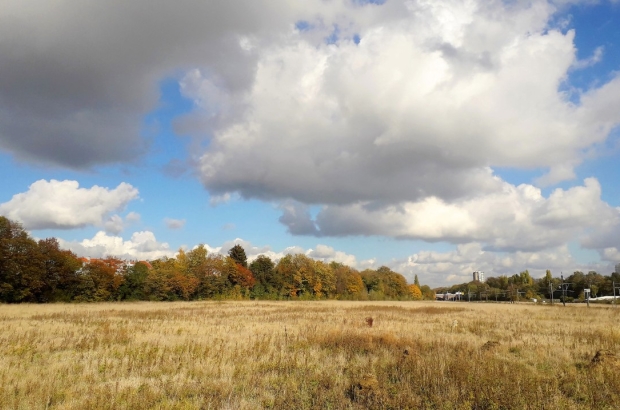
The public consultation regarding renovation plans for the Josaphat site in the Brussels neighbourhood of Schaerbeek has already received more than 6,000 responses.
The 1km-long strip of land between Schaerbeek and Evere has been the subject of significant debate in recent years as the municipality looks to revitalise the site.
Property developer Eiffage-AXA submitted a land subdivision application to build 537 homes there, but activists are campaigning to have the site remain a green space.
The public consultation for Eiffage-AXA’s application runs until 26 September. Their application does not yet concern the actual planning permission for the homes, but rather a permit to enable preparatory work, such as on the access roads.
The developer already submitted a similar application a year ago, and this current application is a variation on that.
The 6,350 responses - and counting - to this plan are well over double the number of responses to the public consultation a year ago.
“Many people used a standard letter, which was circulated by various associations,” mayor Martin de Brabant (MR) told Bruzz.
Activists for a green space instead of housing are aiming for 10,000 signatures by the end of the public consultation and plan to raise the issue at the Schaerbeek municipal council on Wednesday, where they will ask the majority to oppose the development plan.
The Schaerbeek council is divided on the issue, with proponents pointing to a major housing crisis in the Belgian capital and some opponents saying to simply leave the derelict land, sometimes referred to as a brownfield site, as it is.
“The brownfield site is a cooling island for the surrounding neighbourhoods,” said nature activist Benoit De Boeck.
“And after a summer with around 3,000 heat-related deaths, we’re going to build on most of this area? That doesn’t make sense.”
De Boeck also highlighted the biodiversity of the site, saying volunteers had already counted 1,700 species there, and that much-needed housing can go elsewhere.
“[Housing] can be built on the right-hand side of the railway line, where there’s currently a small business park and some undeveloped space,” De Boeck said.
“However, the undeveloped part must remain green. We can open the area to the public, but only for educational purposes, not as a recreational area.”
Nature campaigners also note that the Brussels coalition agreement imposes an 18-month moratorium on the development of the area, and so they say it does not make sense to press ahead with the permit.
The owner of the site, the Society for Urban Development (MSI), emphasised that the permit is only for preliminary works.
“This is merely a procedural step. It does not yet mean that work will begin on the site straight away,” spokesperson Pascal Devos said.