
- Daily & Weekly newsletters
- Buy & download The Bulletin
- Comment on our articles
Related articles
Recent



Popular



Electric car owners face penalties for overstaying at charging stations
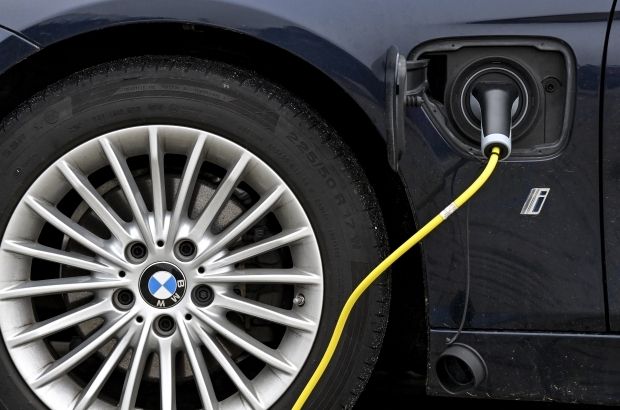
Studies show that electric cars in Brussels remain connected to public charging points much longer than necessary, prompting network operator Sibelga to prepare a "rotation tariff" - a form of financial penalty - to encourage drivers to move on after charging.
Although the number of charging points in Brussels is increasing rapidly year on year, it is proving more difficult today than a year ago for users to find an available charging point.
“The accessibility of charging stations is declining despite the additional installations, because users remain connected for an average of six hours and 30 minutes, while an 18 kilowatt-hour charging session only takes about two hours and 20 minutes,” said Sibelga spokesperson Serena Galeone.
The average connection time for vehicles in Brussels is almost three times longer than the actual charging time.
The phenomenon of "charging station hoggers" is also a problem in other cities. While one solution is to rapidly increase the number of public charging points, this puts extra pressure on available parking spaces.
Sibelga hopes that a rotation tariff could instead encourage behavioural change and prompt drivers to move their vehicles as soon as they are fully charged.
The tariff mechanism, which must be validated by the Brussels authorities, is not a new idea. The Brussels conference of mayors gave the green light for the introduction of such a rotation tariff in 2023 - but has yet to implement the system - and Ghent and Antwerp have also approved the concept.
From 1 February 2026, Ghent will charge a rotation tariff of €3.60 per hour for anyone who leaves their electric car at a public charging station for more than four hours between 8.00 and 22.00.
Antwerp has a rotation tariff of €0.06 per minute, which also amounts to €3.60 per hour. The tariff applies as soon as the car is fully charged.
The number of fully electric cars across Belgium rose by 55% in just one year, to 395,188 total in 2025.
While petrol and diesel cars still dominate the Brussels car fleet for now, about one in four new cars sold in the Brussels region is a fully electric model and, according to figures from HR service provider Partena, about 61% of new cars at Brussels companies are electric.
The share of electric cars in the fleet will therefore increase year on year, partly because more and more second-hand electric cars are coming on to the market, according to Joeri Van Mierlo, professor of electromobility at the VUB.
“In rural areas, you can easily charge your car in your driveway, but if you live in an apartment building in the city, you’re often dependent on public charging infrastructure,” said Van Meirlo.
“In the Brussels reion, only 10% of households have their own garage.”
The Brussels region currently has 9,779 public charging points, according to the latest figures from Brussels Mobility, which Van Mierlo said was theoretically enough to meet demand.
Van Mierlo also noted that according to monitoring by VUB, there are no disadvantaged neighbourhoods in terms of the even spread of charging infrastructure.
But Sibelga said that while the number of charging sessions increased by 20% last year compared to 2024, there could have been much more availability without the charging station hoggers.
As part of a greater effort to phase out petrol and diesel vehicles in the highly-polluted Belgian capital, the Brussels government set a target in 2021 to make approximately 22,000 charging points for electric vehicles accessible to the public by 2035.
This involves 11,000 roadside charging points to be installed by Sibelga and another 11,000 in semi-public areas by other providers.