
- Daily & Weekly newsletters
- Buy & download The Bulletin
- Comment on our articles
Related articles
Recent

Popular


Special rededication service for Trooper Fred following identification of "unknown soldier" in Belgian war cemetery
It is a question that remained a mystery for decades: who exactly was the “unknown soldier” buried in an unmarked grave Belgium?
Cemeteries across the country are full of unidentified service members killed in action, a poignant symbol of the devastating nature of war.
But the mystery of one such British soldier who died in a tiny Flemish village during World War Two has finally been unravelled thanks to the painstaking research of a couple of determined local “sleuths.”
Dirk Van Melkebeke and Willy Roggeman have succeeded in establishing the full identity of the fallen soldier. They discovered that a couple of administrative errors, including a mis-spelt surname, typed Pringle instead of Tingle on paperwork after his death, was why the full story of what became of Yorkshireman Fred never came to light.
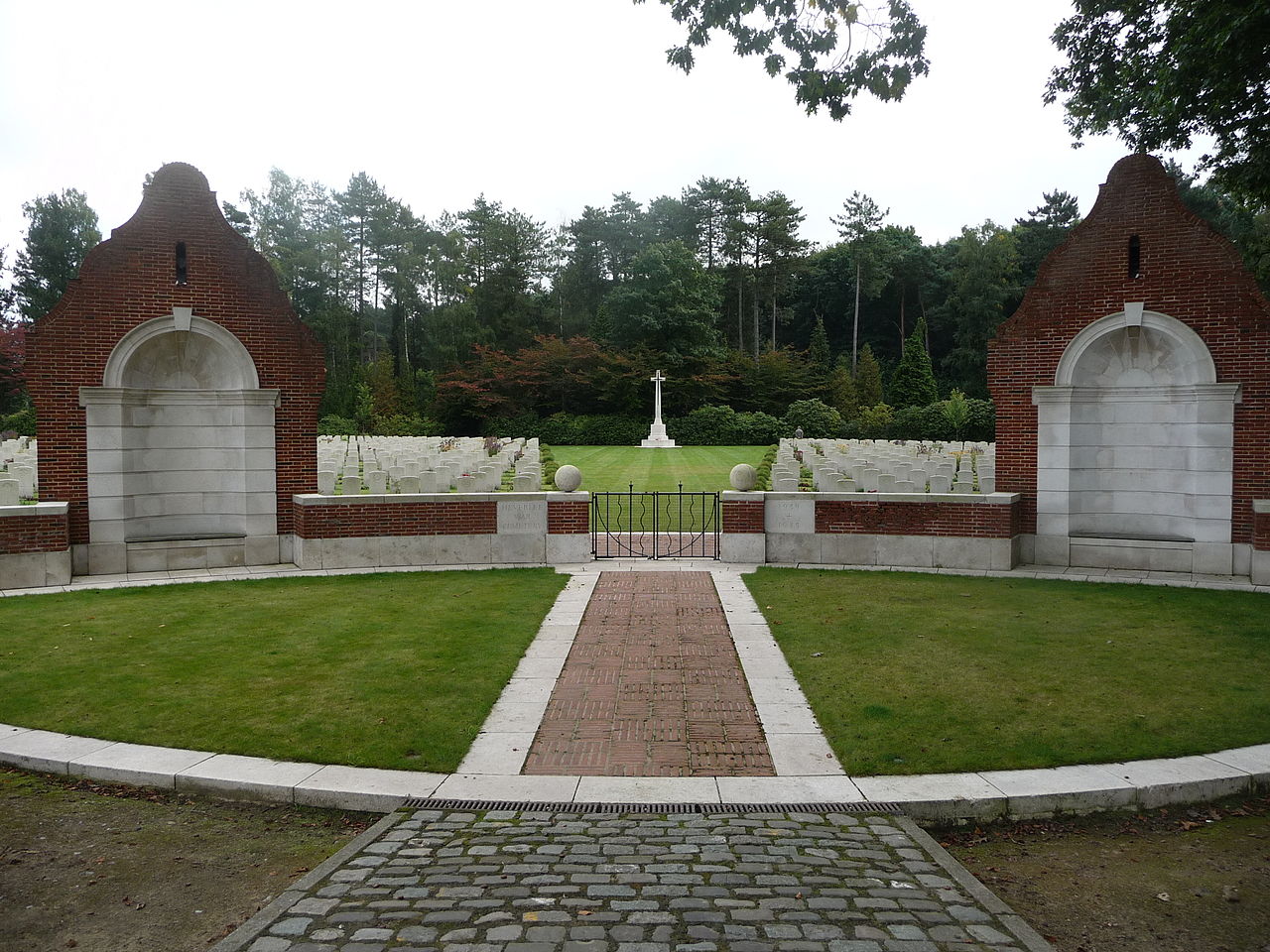
In belated honour of Trooper Tingle’s sacrifice, a formal rededication ceremony will be held at Heverlee War Cemetery in Flanders (pictured above) on 25 March.
The service will be led by Padre David Jeal, current chaplain to the Royal Dragoon Guards. A representative of this regiment will be present as well as a bugler and a piper. Other invitees include an alderwoman from Leuven, representatives of the Belgian Defence Forces and the Royal British Legion in Brussels, the Commonwealth War Graves Commission (CWGC), as well as Van Melkebeke and Roggeman.
The Bulletin spoke to the local military historians, along with a great niece of Trooper Tingle, in an effort to piece together the story of this “unknown soldier.”
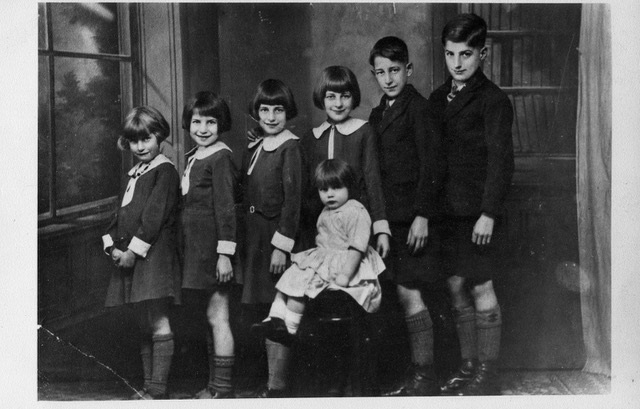
Tingle was born in Castleford, Yorkshire in 1920 – a twin brother to Fern (both pictured above), and one of 11 children born to William Tingle, a coal miner, and Annie Hepples, William’s second wife.
He was a soldier with the 5th Royal Inniskilling Dragoon Guards (pictured below), which was part of the British Expeditionary Force deployed to mainland Europe in a reconnaissance role shortly after the war broke out.
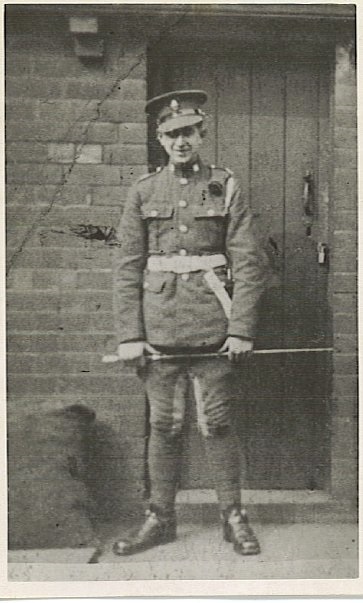
When the Germans launched their invasion of the low countries on 10 May 1940, the British forces had to retreat. The 5th fought a fierce rearguard action as they made their way back towards Dunkirk – which they reached on 29 May 1940.
But Tingle was killed in action on 19 May 1940 during the retreat and buried in Sint Antelinks, a village lying 37km west of Brussels.
Although local people cared for his grave throughout the war, when his body was recovered by the British Army in 1946, it proved impossible to reconcile all the records. His remains were exhumed and he was buried at Heverlee War Cemetery, Leuven, as an “unknown soldier”. The cemetery contains 977 Commonwealth burials from the second world war, 37 of them unidentified.
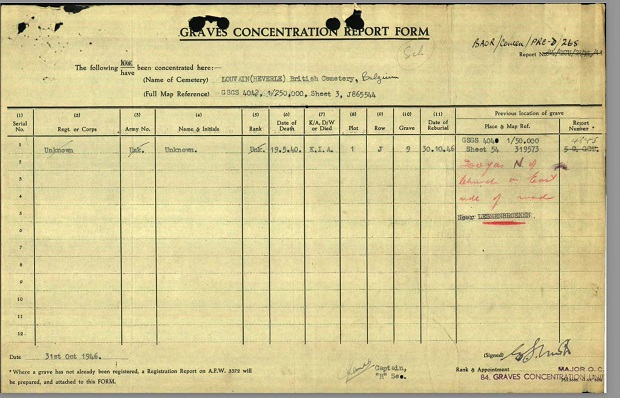
Recent research by Van Melkebeke, however, found key documents which proved that the location the “unknown soldier” had been recovered from (Huigeveldstraat in Sint Antelinks) was identical to the original burial location of a soldier who had been carrying an identification disc. He also found letters and papers Tingle was carrying, which bore addresses in the West Yorkshire area.
By piecing all the documents together, they were able to confirm that the unnamed grave at Heverlee was that of Trooper Fred.
Van Melkebeke unearthed the information when researching for a book on the impact of WW2 in his village. Three British soldiers were killed in the area: a pilot who crashed his Hawker-Hurricane on 16 May 1940 and temporarily buried in the cemetery under an anonymous cross; a soldier called Albert Thompson who was killed on 19 May and buried in the old cemetery of Sint-Lievens-Esse; a third soldier died in Sint-Antelinks on 19 May and wastemporarily buried in an improvised grave along the Huigeveldstraat.
Both the pilot and the soldier in Sint-Antelinks were exhumed after the war and reburied in the British military cemetery of Heverlee in an anonymous grave.
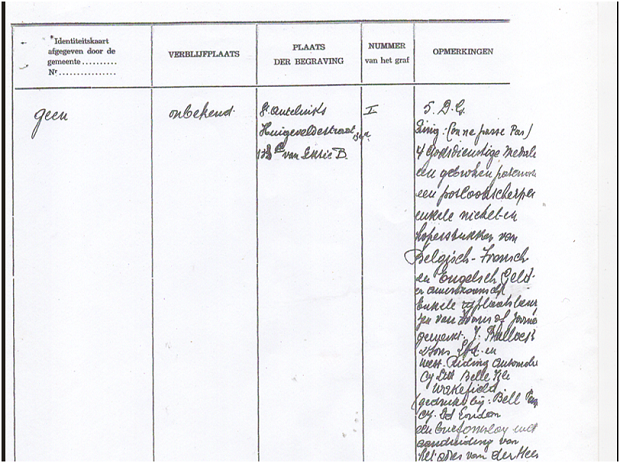
Van Melkebeke found a report in the municipal archives about the soldier. “In the column where the name had to be filled in, it is stated "anonymous", but in column 5 the identity of the man is indeed mentioned. Additional evidence is given in the column remarks in which one describes in detail what one has found in the grave. And that is, indeed, Freddy Tingle.”
He explains: “An incorrectly filled in document was therefore the reason why Freddy Tingle ended up in an anonymous grave in Heverlee.” Van Melkebeke submitted the findings to the CWGC “and the rest, as they say, is history.”
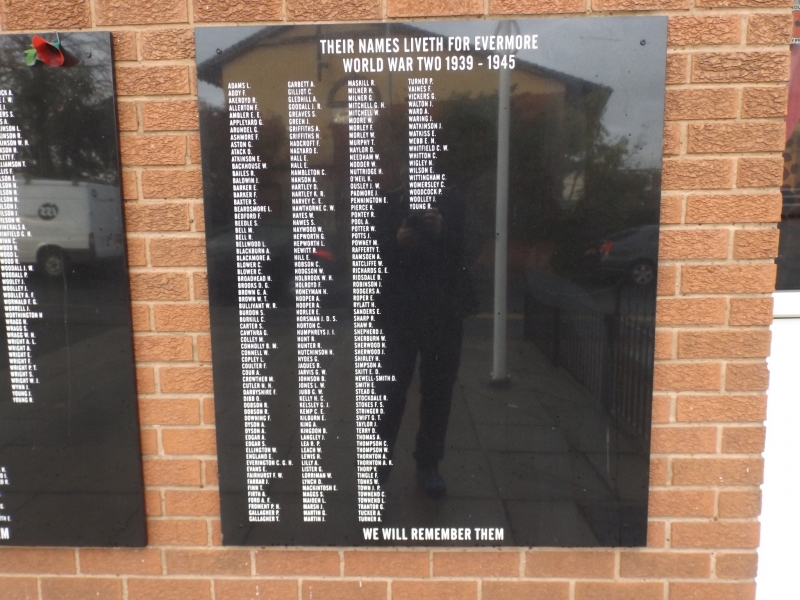
Roggeman, who collects items related to the history of Sint-Antelinks, adds: “I wanted to document his final resting place but I couldn't find it. Fred was mentioned on a Dunkirk Memorial and also on a Memorial in Castleford in Yorkshire (pictured above) but there was no sign of his grave.
“We were able to track down relatives of him but, unfortunately, the family didn't know where he was buried either.”
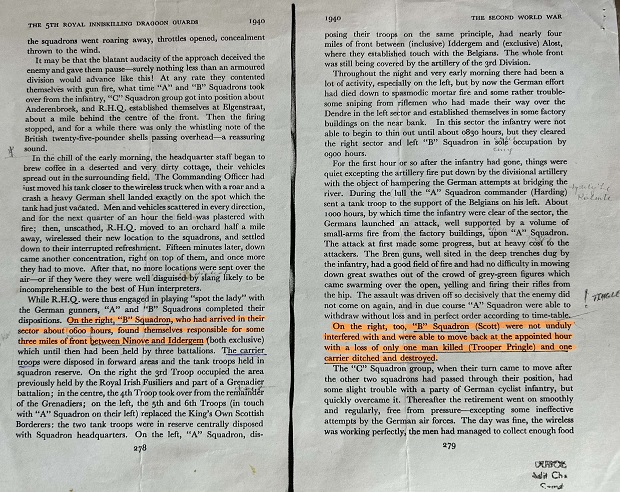
The book The story of the 5th Royal Inniskilling Dragoon Guards by R Evans (pictured above) describes what happened on the day Fred Tingle died, but it also shows, says Roggeman, that Fred’s name was mistakenly typed Pringle instead of Tingle.
“We think Fred Tingle got injured and died while they were retreating and passed by our village. He was buried not very deep by the English army - they didn't have much time – and, after 15 minutes, the Germans arrived and they buried him deeper,” says Roggeman. “Until 1946 the resistance held regular speeches at his grave.”
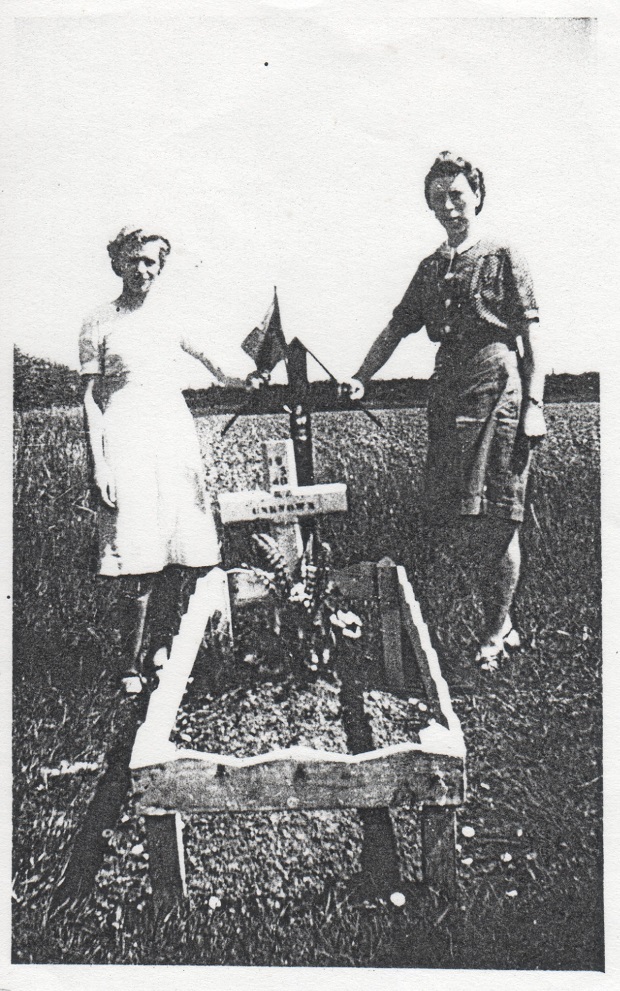
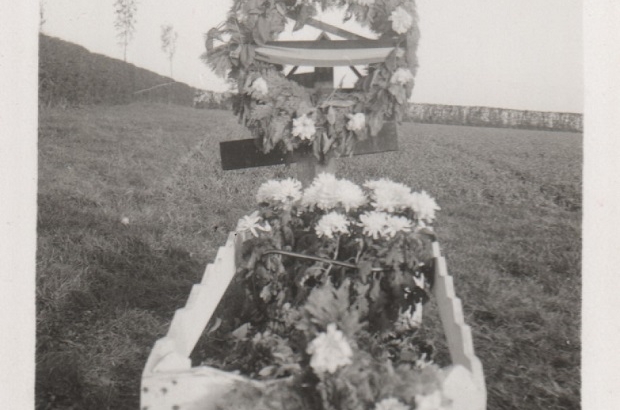
Van Melkebeke acquired one of these speeches and also a photo of Tingle’s temporary grave in Sint-Antelinks (around 1943), which showed members of the Belgian Resistance.
He also found a document that listed all the items in Tingle’s possession when he died. They included a ring, religious medals, a pencil sharpener, Belgian, French and English nickel and copper coins, driving licenses, an envelope addressed to “Mr. A Raffin, British consul” and two unused handkerchiefs.
Linda Robshaw, who lives in California, is the grand daughter of Fred’s twin sister. “We’re so happy to finally know where Freddie is. I know my grandmother would have been so relieved.
“Having him go MIA during the war and never knowing what happened to him, she would want me to pass on her never-ending thanks to the Belgians who found him for us.”
She adds: “Unfortunately, I am unable to make it over for the rededication ceremony on her behalf, and none of the other family members are able to attend either. But we’re happy to know he’s getting his final resting place.”
The final chapter of Trooper Tingle’s story will play out next week at his rededication service. A source at the UK Joint Casualty and Compassionate Centre says: “ Fred never had a proper military funeral, acknowledging who he was or the sacrifice he made. If he was lucky the local people would have given some sort of prayers when they buried him, and a military Padre might have said a prayer when he was reburied in the post war years, but none of them really knew who he was.
“The rededication service is a chance to right that – it includes a blessing of the grave, and an acknowledgement that we now know the man interred there, and the importance of that. It also includes the Last Post and Reveille, prayers, the Exhortation and Kohima Epitaph.”
Tingle’s story, says the UK Joint Casualty and Compassionate Centre, does “demonstrate the vast numbers we’re dealing with, and just how special it is to have ‘found’ Fred.”
He adds: “It is incredibly sad that over half-a-million are still missing (though this number does include those who were lost or buried at sea) – but it makes these occasions all the more special, and every man ‘found’ is a small victory in some way.”
Photos: ©Dirk Van Melkebeke and Willy Roggeman; Heverlee War Cemetery ©Wikimedia Commons; Tingle family, courtesy Linda Robshaw