
- Daily & Weekly newsletters
- Buy & download The Bulletin
- Comment on our articles
Related articles
Recent




Popular

Sales of alcohol-free beers up 30% in a year
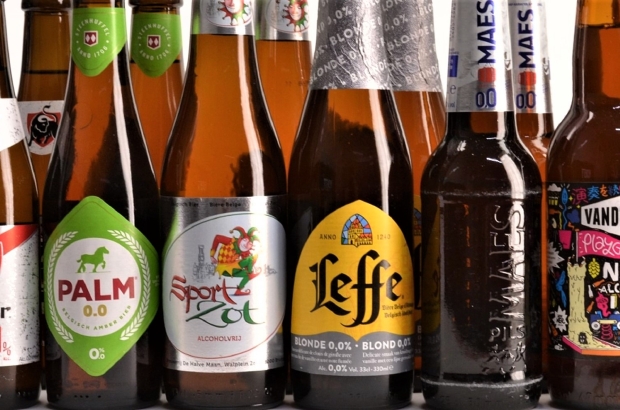
Consumption of non-alcoholic beer rose by more than 30% in Belgium in 2025, according to the annual report by the Belgian Brewers’ Association (BBA), which some experts believe reflects a gradual "societal shift" in alcohol consumption.
The rise in consumption of non-alcoholic beers comes amid what the BBA describes as a "challenging" time for the industry.
“The 2025 annual report of the Federation of Belgian Brewers reveals a clear trend: lower consumption, lower exports, and fewer breweries,” the report summarises.
“The causes behind those figures are diverse. International turbulence is putting exports under pressure. Many costs in the beer production process have risen.
"Domestically, drinking habits are changing. Finally, policymakers are not making the trade any easier either, with more and more regulations that make doing business more difficult."
In 2025, the volume of non-alcoholic beer consumed in Belgium surged by 32% compared to 2024, while total beer consumption fell from 6.4 million hectolitres in 2024 to 6.1 million hectolitres in 2025.
The BBA said the success of non-alcoholic beers did not offset the overall decline in the sector, although many brewers have adapted to meet the demand for alcohol-free options.
“The brewers themselves have made a significant effort in terms of communication and advertising around these products,” public health expert Martin de Duve told RTBF.
“They’ve realised that, compared to neighbouring countries, there’s real scope for growth in Belgium. The Netherlands is further ahead in the non-alcoholic market.”
A recent survey conducted by the non-profit organisation Brasseurs Belges found that 39.5% of breweries now offer non-alcoholic beers.
“There’s a shift among brewers towards the production of non-alcoholic beer,” Pierre Maurage, a doctor of psychology and researcher at the Belgian National Research Fund (FNRS), told RTBF.
“There’s greater diversity and an improvement in the quality of the range on offer. We don’t consume a great deal of non-alcoholic beer compared to overall beer consumption. It remains a small segment - it’s just that the proportion is increasing.”
Maurage describes "a societal shift", adding: "A whole segment of the population - moderate drinkers - is moving towards reduced alcohol consumption.
“There’s been a steady decline in alcohol sales. This has been a structural trend since the 1960s. In fact, we drink half as much as we did in the 1960s.
"I think the idea that alcohol is not just any other drink is gaining ground. And even though we still live in a society that overvalues alcohol, we’re seeing a much more significant decline in alcohol consumption."
Public health expert de Duve noted that Belgians still consume too much alcohol compared to recommendations.
“We still need to make efforts in terms of prevention,” he said.
“But it’s true that, perhaps, gradually, the message that it’s better to moderate one’s consumption of beer, wine or spirits is getting through. The efforts of the prevention sector are slowly beginning to pay off.”
De Duve points out that while alcohol is still "omnipresent in party settings", the pro-sobriety movement is gaining ground, especially on social media.
What is less clear is the profile of the alcohol-free beer drinker, Maurage said, explaining that research into this market is not yet robust.
What is known is that these consumers tend to be people who normally drink beer and use non-alcoholic beers out of “a desire for complete abstinence”, people looking to reduce their alcohol consumption at events by alternating between alcoholic and non-alcoholic beer, or people who do not drink alcohol at all.
These consumers “are potentially more likely to turn to other types of non-alcoholic drinks, such as a wider variety of soft drinks or non-alcoholic cocktails, but less so to alcoholic beers”, according to Maurage.
The FNRS researcher said he was optimistic “particularly because young people are changing their behaviour. And I think it’s they who will ultimately shape social norms and, consequently, policy in the long run. As for the older generations, well, it remains complicated”.
De Duve emphasised that drinking any amount of alcohol has a negative impact on health.
“One drink a day increases the risk of breast cancer in women by nearly 9% and the risk of prostate cancer in men by 7%,” said de Duve.
“Alcohol remains a major public health issue. It comes at a very high cost in health, economic and social terms.
"I don’t wish any business to go under, so brewers may well complain about shrinking profit margins, but we must first recognise that alcohol is responsible for nearly 10,000 deaths a year in Belgium, and that it’s the second leading cause of preventable death, just behind tobacco."
Maurage echoed that while economic concerns about the brewing industry are valid, so are worries regarding public health.
“Obviously, there’s a significant brewing tradition in Belgium, and the idea isn’t to put all these people out of work, but rather to recognise that it isn’t normal to consume alcohol all the time as we do now - just as we’ve done with tobacco,” Maurage said.
“The idea is to find a middle ground where consumption is reduced and sensible. This is good news for public health.
"It’s also good news for brewers because they have a niche that allows them to consider keeping their business afloat or diversifying their operations.
"We can see that the shift is already taking place."