
- Daily & Weekly newsletters
- Buy & download The Bulletin
- Comment on our articles
Related articles
Recent


Popular

Vouchers, maternity leave and parcel costs: What changes on 1 July
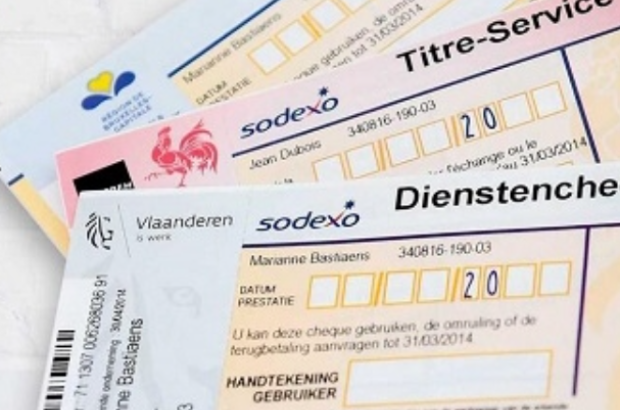
Changes to service voucher prices, self-employed maternity leave and non-EU parcel costs are among the various new measures coming into force in Belgium on 1 July.
In Wallonia, service voucher prices will rise from €10.20 to €10.60 each. The price rises to €11.60 for more than 175 vouchers and €12.60 for more than 400 vouchers. Vouchers purchased before the increase takes effect remain valid for eight months from the date of issue.
Receiving a small parcel from outside the European Union via online shopping platforms such as Shein or Temu will cost more due to a temporary flat-rate tax of €3 on small parcels.
This charge will apply to each product category contained in a parcel passing through customs and originating from a country outside the European Union, provided the value of the goods does not exceed €150.
A consignment containing several types of items may therefore be subject to several charges.
Train travellers must hold a valid ticket before boarding the train as of 1 July, whereas before then it was still possible to pay for a ticket on board, subject to a €9 surcharge. By ending onboard sales, Belgian railway operator SNCB hopes to better combat fare evasion and ensure the safety of train staff.
Flexi-jobs will be now open to the entire private and public sectors, subject to the rules governing access to protected professions, including care roles.
In the healthcare sector, workers must possess the required qualifications. Artistic or technical-artistic jobs remain excluded from the measure.
Pensioners, for their part, will no longer have to wait two quarters after retiring to take on a flexi-job but will be able to start from their first day of retirement.
From 1 July, the amounts of on-the-spot fines for road traffic offences will increase by 10%. On-the-spot fines for offences relating to drunk-driving will also rise. These fine amounts had not been adjusted since 2017.
First-degree offences - failing to wear a seatbelt, minor speeding, driving in a bus lane - will rise to €64 (up from the current €58). Second-degree offences will rise from €116 to €128. These include indirect endangerment sich as failing to stop at a stop sign or driving at an inappropriate speed. Third-degree offences will rise to €191, such as using a mobile phone while driving, running a red light or crossing a solid white line.
Immediate fines for alcohol-related offences will depend on the level of alcohol intoxication and range from €116 to €636.
Maternity leave will increase from 12 to 15 weeks for self-employed women, who will therefore be entitled to the same duration as employees. They can also apply for 105 free service vouchers.
The means-tested social tariffs for the third quarter of 2026, which will be in force from 1 July to 30 September, will rise by 15% for gas and heating. The social tariff for gas is therefore set at a maximum of €5.458 per kWh, including VAT.
For electricity, the social tariffs for the third quarter are rising by an average of 1.4% compared with the previous quarter. More specifically, single-rate and two-tier daytime tariffs are increasing by about 5% as a result of the rise in wholesale market prices between February 2026 and May 2026. By contrast, dual-rate night-time and night-only tariffs are falling by around 2% in the third quarter of 2026.
New TV content labelling will come into force on 1 July in the Wallonia-Brussels Federation. The system is designed to be more precise and transparent for the public, with content ratings no longer based solely on the recommended age of viewers, but supplemented by content descriptors.
Programmes will be classified into six age categories: suitable for all audiences, 6+, 10+, 12+, 16+ and 18+. This classification will then be supplemented by one or more descriptors indicating the nature of sensitive content: violence, anxiety, sex, the use of addictive substances, coarse language and discrimination.
A programme may have several descriptors, and some programmes, such as sports broadcasts, are exempt from the classification and labelling requirements.
Family carers will receive more targeted support from July, with the option to take more flexible leave, as well as greater recognition. As part of this, the concept of a family carer will be incorporated into the comprehensive medical record, so that doctors are also informed of the presence of a family carer.
This measure forms part of a federal plan announced at the end of June, aimed at offering greater support to family carers through administrative simplification and improved support.