
- Daily & Weekly newsletters
- Buy & download The Bulletin
- Comment on our articles
Related articles
Recent


Popular




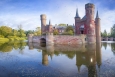
Japan-inspired, Art Nouveau-influenced Artonov Festival celebrates the arts in style
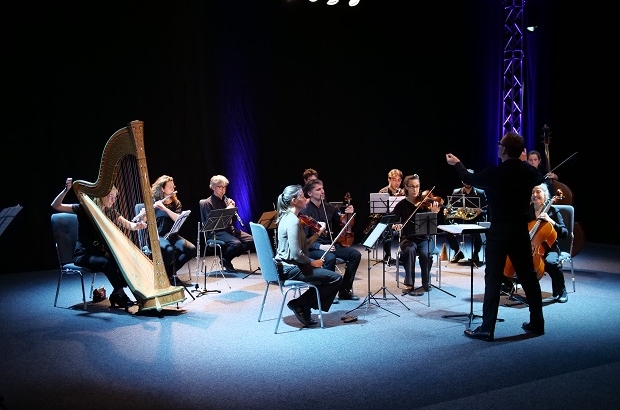
Influenced by the international movement of Art Nouveau, Brussels’ Artonov Festival offers 10 evenings of music, dance and performance in Brussels from 4 to 23 October.
Now in its 12th year, the multidisciplinary event aims to reunite every aspect of the performing arts: music, dance, theatre, fashion and visual arts.
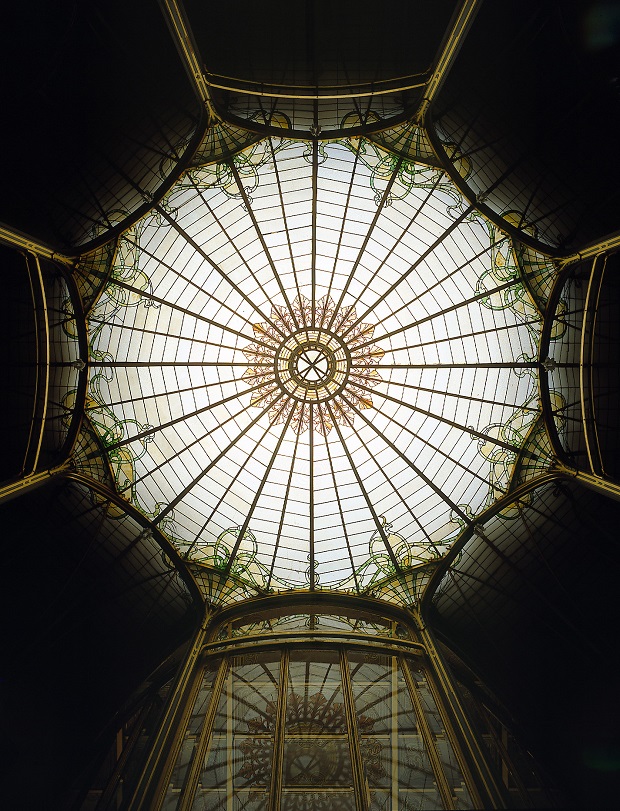
A diverse range of live performance is staged in venues that are not always publicly accessible. They include Victor Horta’s Art Nouveau masterpieces, the Hôtel van Eetvelde (pictured above) and Hôtel Winssinger, as well as the former 1906 Ixelles barracks and Royal Gendarmerie School – now Usquare, and Léon Stynen’s 1950s modernist Uccle Cultural Centre.
The 2026 edition honours the 160th anniversary of cultural and diplomatic relations between Belgium and Japan. Almost the entire programme consists of new works or new versions with some developed in residences in Japan.
Artists from both countries were invited to explore new dialogues between heritage and contemporary creation, in particular how ancient forms, rituals and collective memories can generate life-changing experiences today.
The guiding principle of this year’s festival - ‘We Do Not Work Alone’ – originates from Japanese ceramist Kanjiro Kawai who was instrumental in the mingei movement that valued daily objects and the work of anonymous artisans.
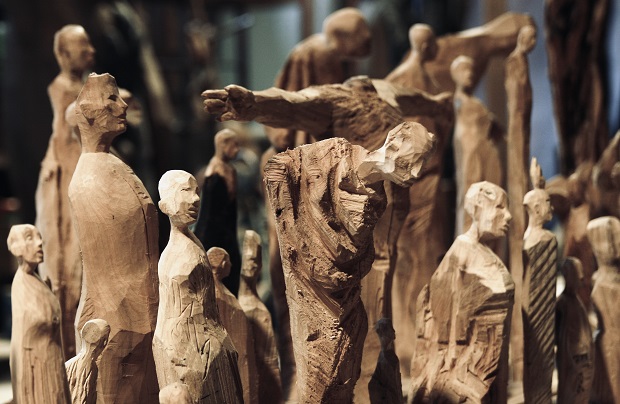
The festival takes over the former Centrale for Contemporary Art space in Place Sainte-Cathérine to set up its Artonov Lab, which hosts the exhibition The Gods of the House (pictured above), featuring Buddhist sculptures and textiles from rural Japan.
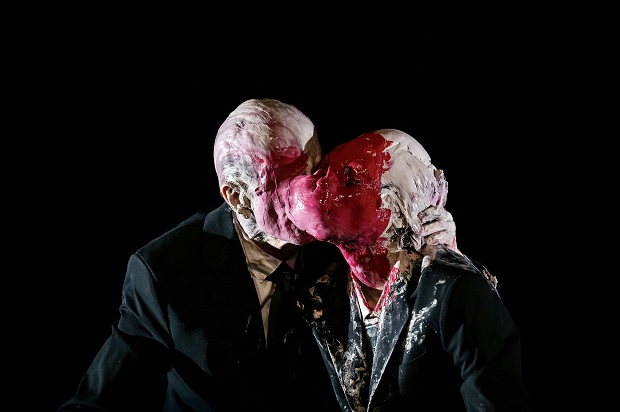
Among the event’s other highlights is French artist Olivier de Sagazan’s Hybridation (pictured above), performed at Uccle Cultural Centre on 6 October. Presented for the first time in the capital, accompanied by live music, two performers sculpt clay on to their faces, erasing their identities in a mesmerising show straddling the boundary between dance and trance.
With support from the Japan Foundation, butoh dance company Dairakudakan presents Asura, by Naomi Muku, inspired by the Buddhist figure of transformation. Also at the Artonov Lab, the immersive project Résonances au Temple Mii-dera Temple brings together musicians and six monks around ritual chants, poetry, incense and visual experiences on 7 October.
For modern music lovers, at U Square, Erwan Keravec stages Huit Sonneurs pour Philip Glass on 8 October. This performance for eight bagpipes focusing on the 20th century American composer’s minimalist music is accompanied by The Life Cycle of a Plastic Tube by German artist Dominic Kiessling.
Turning to classical music, Lab Artonov is staging Belgian ensemble Sturm and Klang’s Renaissance (pictured, main image) on 13 October, in which Toshio Hosokawa, Isabel Mundry and Jorg-Peter Mittmann create a dialogue between contemporary composition and the Renaissance/Baroque works of Guillaume Du Fay (1397-1474) and Claudio Monteverdi (1567-1643).
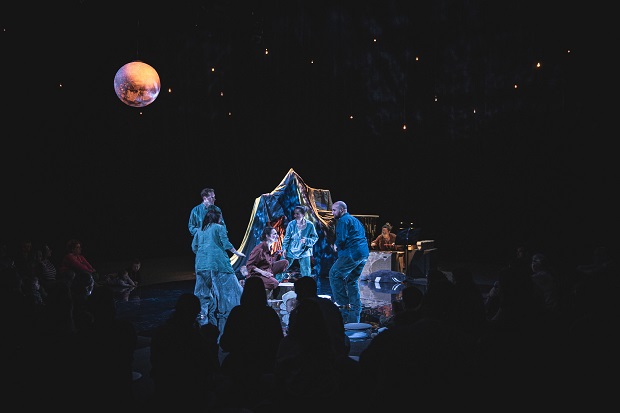
And with the aim to encourage even the youngest audiences, Artonov Lab’s Forêt Paisible (pictured above) a baroque and sensory performance by the Namur Chamber Choir, entertains children aged from just a few months old on 18 October.
Last but not least, beneath the Hôtel van Eetvelde’s stunning glass roof, Thomas Bloch offers Reflets du Cristal, showcasing the Baschet crystal and glass harmonica – instruments remarkable both for their sound and for their sculptural appearance on 20 October.
Tickets start at €15 for adults, with reductions for the under 18s, over 65s and job seekers. There are reductions if you buy more than one entry, and each show ticket includes free admission to the Artonov exhibition.
Photos: (main image) Sturm Berne @ThorstenKrienke; Van Eetvelde ©Bastin & Evrard; Exhibition The God of the House @Peter Jaquemyn; Hybridation ©Didier Carluccio; ©Forêt paisible