
- Daily & Weekly newsletters
- Buy & download The Bulletin
- Comment on our articles
Related articles
Recent




Popular




Breaking the silence: New documentary explores life for families caring for a person with a mental disorder
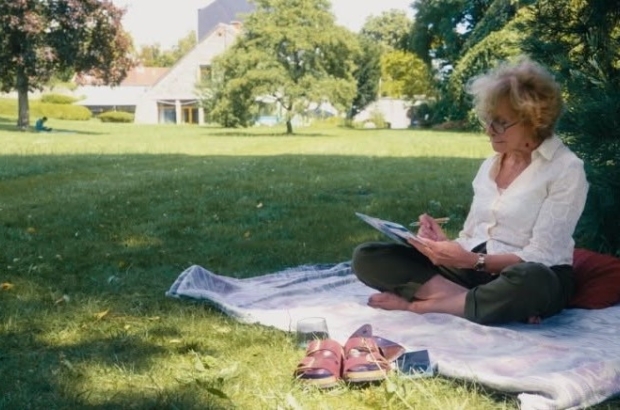
One in 10 people in Belgium is estimated to be a carer for a family member, which includes caring for a person with a psychiatric illness. Beyond the diagnosis, daily life with a mental disorder is extremely challenging, taking a toll on parents, children and siblings. The Bulletin’s publisher, Sarah Crew, is one of three mothers featured in a new Belgian documentary and podcast that shine a light on the reality of long-term care in the community. The film is being screened in a series of cinema-debates across Belgium and France.
How to distil more than 20 years of caring for my son into some 18 minutes of screen time? This was just one of the challenges for a small-budget film that turns the camera on mental health journeys from the family’s point of view.
Dans les ruches is a collaboration between Similes Wallonia, an association that supports the families of people living with a mental disorder, and the non-profit production company Anotherlight, which makes socially engaged films while providing audiovisual training.
I joined Similes in 2014 after my youngest son, Max, was diagnosed with paranoid schizophrenia at the age of 21 following years of behavioural problems, self-isolation, school exclusion and addictive behaviour. Support groups, a 14-month psychosocial course and meeting other parents were a lifeline while I navigated the reality of living with and caring for a young adult with a lifelong illness.
As a journalist, I found I was able to communicate about some of the traumatic episodes that inevitably accompany life with a condition like schizophrenia. I took part in presentations and media events in an attempt to combat the stigma and lack of understanding around such conditions.
So when Similes co-coordinator Jean-Philippe Lejeune contacted me about a potential documentary, my interest was piqued. A group of eight parents attended the first meeting with director Christophe Hermans, but many families felt uncomfortable at the idea of appearing on camera. The relationship between parent and adult child in a care situation is often emotionally fused but fraught, and speaking openly about it could damage this fragile bond.
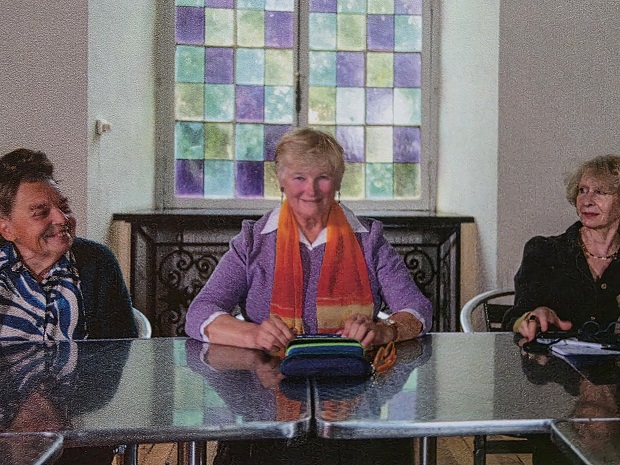
We decided to continue with a one-hour film centring on three women and their families: myself (pictured right), Patricia (left) and Anne-Marie (centre). All three of us are caring for our sons alone after the deaths of their fathers. A podcast series would feature our stories as well as those of the wider group, including the testimonies of fathers.
The name of our project, Dans les ruches, or In the Beehives, in addition to evoking the intense activity of a family nucleus, is a reference to Christophe’s feature film La Ruche, about a mother with bipolar disorder and the complex relationship with her three daughters. His own mother was similarly afflicted, so this project stems from a deeply personal place. It was also an opportunity to shift the focus to the loved ones. “I was asking myself a lot of questions,” says Christophe. “What can you really do for someone you love? How far can you go in helping them? How do you find your own place without constantly feeling like you should be doing more?”
The sessions that we spent together, becoming familiar with microphones and a boom hanging over our heads, involved opening up about such experiences. It revealed how we each responded to and coped with trauma. Recounting the story of my son’s gradual descent from a bright if boisterous and highly sensitive child to a teenager paralysed by paranoia and an adult living in the shadows of society, I was confronted with my need for control over my thoughts and behaviour. Others’ responses varied from outpourings of emotion to humour, and there were frequent laughter and tears.
During the process, I had to be sure that my son, who has difficulty with verbal expression, was comfortable participating. I discussed it with him in the presence of his psychologist and psychiatrist, but it was with some trepidation that we started filming in the summer of 2025.
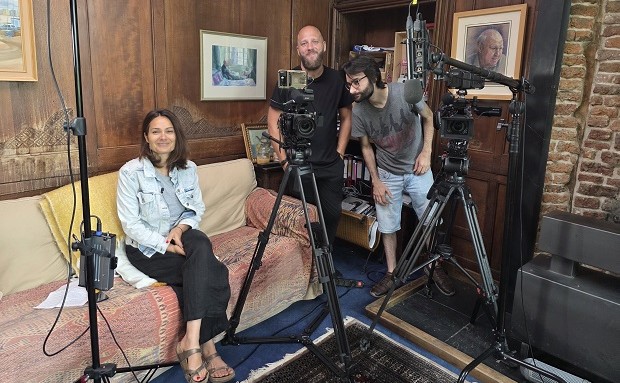
We had each been assigned a director. Amandine Bisqueret (pictured above), a former student of Christophe’s, worked with Max and me. Her brother had died at the age of 41 of a heart attack due to his medical treatment for schizophrenia. It was frustrating for Amandine to not have the time to explore the problems of medication in the film, and her personal experience inevitably affected her approach to Max. “While treating him with great gentleness and respect, I retained the reflex I’d developed with my brother of being somewhat on my guard — subconsciously of course —because my brother could be unpredictable,” she explains.
Our main task for the first day was an hour-long interview, which would serve as a voiceover for many of the scenes. Amandine asked prepared questions, and I did my best in French to describe my son’s condition, how it had developed and the challenges and rituals of our day-to-day lives. Encapsulating a complex history while adding personal reflections was not easy and I worried about missing things out.
With the film crew in tow, we went to a planned appointment with the psychologist, a visit complicated by the small consulting room. Max was distracted by the boom but otherwise seemed to take it in his stride.
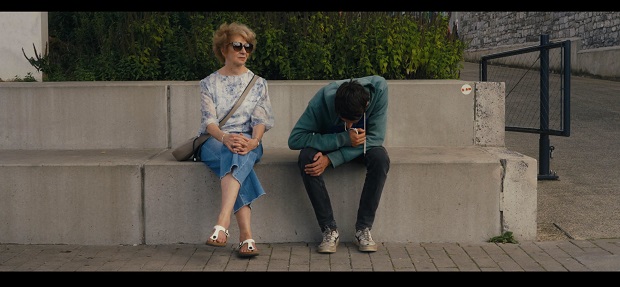
One of our regular occupations is simply walking along the banks of the River Meuse in our home city of Namur, so we attempted to film a short passage on the tow path. But it’s a busy spot and Max became fatigued by the numerous takes, so we sat down together in our habitual silence to admire the view. The scene wasn’t planned but it made the cut, capturing the sense of our relationship that often functions without verbal communication.
During pre-filming sessions I had mentioned that scuba diving was a useful release valve, especially as Max, who used to enjoy water sports, was happy to accompany me. So, on the second day, we went to a site I frequent with my local club.
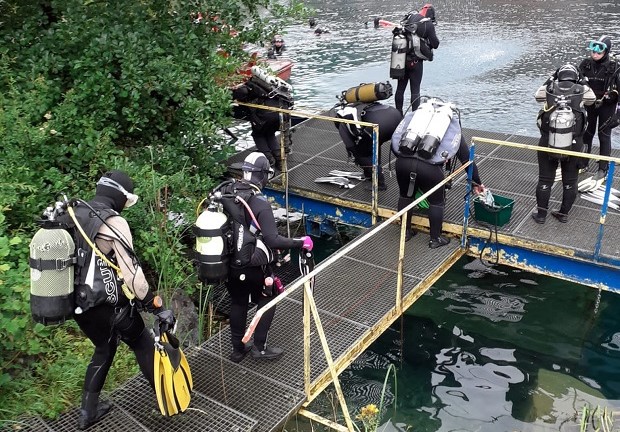
Fellow divers joined us early in the morning at Vodelée, a former quarry and one of our favourite locations. An underwater cameraman was there too. While I was more comfortable facing the camera in full wetsuit, hood and mask, it wasn’t easy maintaining my cool as I executed numerous exits and entrances into the water – up a rickety ladder in full gear with aging knees – and then jumping in and attempting to submerge myself with a now almost empty air tank.
The following day – our final one of filming – was demanding. But Max was becoming more accustomed to the camera and although he still didn’t want a microphone, he was happy for the crew to follow him around the house and the garden.
While he was seated under his favourite tree, I sat at the end of the garden to recite a text I had been procrastinating over for a year. It was my response to finding myself, at near retirement age, responsible for every aspect of my adult son’s life: from his medication to his medical appointments, his finances and ensuring he ate at least one meal a day.
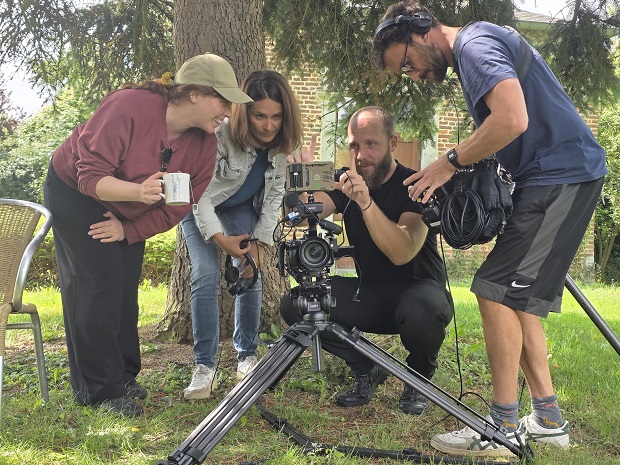
I had struggled to finish the text but as Laurent fiddled with the camera and Nico with the sound equipment, I scribbled some final lines. It was after the third take, when I finally began to inhabit my words, that I looked up and saw director Amandine and Mélanie, her assistant, in tears. I welled up myself. It was another 12-hour day and, after the final scene, the five of us gathered for a group hug. Exhausted, emotional, but with a sense of accomplishment.
When we started this process, Patricia, Anne-Marie and myself had little idea of what it would become. Hundreds of hours of film were condensed into 59 minutes running time, our stories meticulously intertwined to create a rare insight into the effects of mental illness on not only the sufferer but their families too.
It also altered slightly Christophe’s perception. “What struck me most about these three mothers was their journey toward a form of acceptance,” he says. “Accepting doesn’t mean giving up on someone. It means understanding that you can’t control everything, nor can you shoulder the burden for them.”
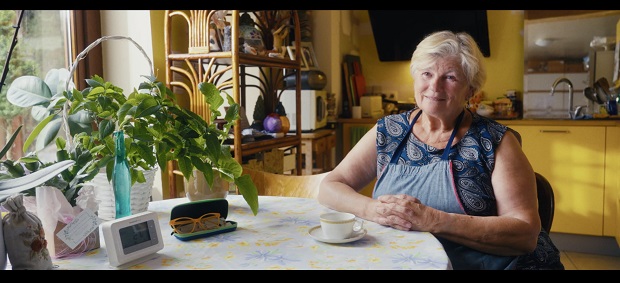
We see Anne-Marie openly sharing her grief at losing her elder son, Etienne, to suicide after he was diagnosed with schizophrenia, while helping her second son, Damien, who also has the condition, establish a more independent life.
Meanwhile, Patricia is joined by her daughter Laura who had chosen to protect herself by going no-contact with her brother Guy, who suffers from bipolar disorder. She is movingly filmed reading out a letter from him, illustrating the fallout of mental illness on siblings and other members of the family.
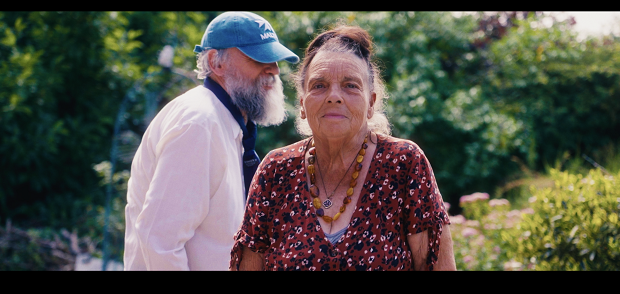
If there were difficult moments while filming, particularly as Guy was entering a manic phase, there were also positive consequences, “as it enabled Guy and Laura to reconnect — something that was completely unexpected,” Patricia explains. Laura adds: “Thanks to the film, I found the courage to see him again, and my whole family even got together once, something that hadn’t happened for years.”
For everyone involved in making the film, the aim is to reach other families and a wider audience and show the reality of caring for a person with a mental illness. Exposing our lives and our fragilities in the film wasn’t easy, and it’s difficult to stand in front of audiences after the screenings for the discussions that follow.
But I believe it is no longer “our” film: it’s a story of love and family relationships that has a wider message about the important role of families in medical care while raising awareness within society about psychiatric disorders. Ultimately, we want to reach the medical professionals and politicians whose decisions have such a massive impact on our lives and the lives of those who have the misfortune to suffer from mental ill health.
Dans les ruches by Amandine Bisqueret, Matthias Desmarres and Christophe Hermans (Bel 2026), co-produced by Anotherlight asbl and Similes Wallonie. The film is in French with Dutch and English subtitles available
Dans les ruches podcast series by Eugénie Martin and Nicolas Pommier
Cinémas Galeries
Galerie de la Reine 28
Brussels
8 October, 19.00
Other screenings in Belgium:
11 October 16.00, Plaza Mons
3 November 18.00, UMons
6 November 19.30, Centre Culturel d’Eghezée (Namur)
29 November 19.00, Festival Politik, Liège
20 January Centre Culturel de Visé (Liège)
28 January 20.00, Cinéma l’écran Ath (Hainaut)
Information on mental health services in Belgium: Mental health care in Belgium: National survey plus where to get help and support | The Bulletin
Photos: (main image) ©Anotherlight; Patricia, Anne-Marie and Sarah ©Anotherlight; Amandine Bisqueret, Laurent Courthouts and Luca Prencipe ©Sarah Crew; Sarah and Maxim ©Anotherlight; Diving at Vodelée quarry ©Anne Bruyère; Melanie Consiglio, Amandine Bisqueret, Laurent Courthouts and Nicolas Pommier ©Sarah Crew; Anne-Marie ©Anotherlight; Guy and Patricia ©Anotherlight
The production of this feature was supported by a grant from the Local Innovative Media In Europe Network (LIMENet), co-funded by the European Union.