
- Daily & Weekly newsletters
- Buy & download The Bulletin
- Comment on our articles
Related articles
Recent




Popular


New Brussels road tax to start from next summer
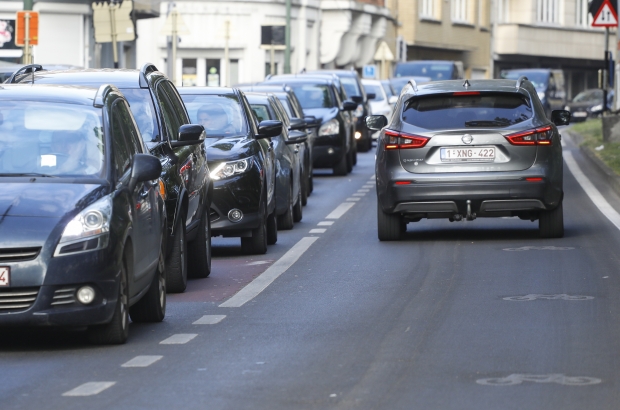
A new road tax for residents of the Brussels region is set to come into force on 1 July next year, the capital’s finance minister Dirk De Smedt has confirmed.
The Boris Dilliès-led government recently reached an agreement on the road tax revision that ensures small city cars, zero-emission vehicles and classic cars will be exempt from the Brussels road tax. The purchase of large and heavy vehicles, on the other hand, will be discouraged more strongly.
The main aim of the reform remains a reduction in the annual road tax for all passenger cars in Brussels, De Smedt said.
Road vignettes will be available for purchase from 2 April 2027 via a digital platform for owners of vehicles registered in Belgium.
Drivers will be able to choose a vignette valid for one day, 10 days, one month, two months or one year. An annual vignette would cost between €90 and €125, depending on the vehicle's emission class.
The amount of the fine for anyone driving on a regional road without a vignette will be standardised between Brussels, Flanders and Wallonia: €70 for a first offence, €140 for a second and €210 from the third offence onwards. Only one administrative fine may be imposed per calendar day on a vehicle with the same registration number.
The cooperation agreement between Belgium’s regions provides for the distribution of revenue from the road vignette.
Revenue generated by domestic drivers accrues to the region in which the driver is resident. This principle does not apply to leased vehicles.
For many road users, the reform means paying less taxes.
The smallest cars currently pay the minimum road tax rate of €107.18 per year. After the reform, this will be reduced to €0.
The zero rate will apply to cars with a fiscal power - a measure based on engine capacity - of 5 or less. Examples include models such as the Renault Twingo, Fiat 500 or Toyota Aygo. The reasoning is that such cars are best suited to urban mobility and therefore deserve a tax exemption.
Fully electric cars - both small and large - will also be exempt from road tax. This means that, together with small city cars, about 50,000 vehicles will no longer have to pay road tax.
For cars with a tax power rating of 6 or more, new rates will be introduced which will be lower than the current ones.
The exact tax reduction will depend on the weight of the car through the introduction of a weight coefficient.
“The heavier the car, the lower the discount will be,” said De Smedt.
“Systems are in place to monitor and evaluate tax revenue. It goes without saying that, if the vehicle fleet were to become fully electrified in the long term, the region would have to consider how to deal with that loss of tax revenue… [But] we don’t want to introduce a measure one year only to scrap it the next.”
Owners of pick-up trucks, such as a Ford Raptor or Dodge Ram, may also face another regional measure unrelated to taxation. The Brussels coalition agreement states that the government will introduce a ‘Light and Safe’ zone (LISA), “under which the heaviest passenger cars will gradually be banned from its territory, according to a timetable yet to be determined”.
Such cars are disproportionately responsible for fatal accidents, but are becoming increasingly popular in Europe.