
- Daily & Weekly newsletters
- Buy & download The Bulletin
- Comment on our articles
Related articles
Recent





Popular




Asbestos likely in up to 90% of Brussels buildings
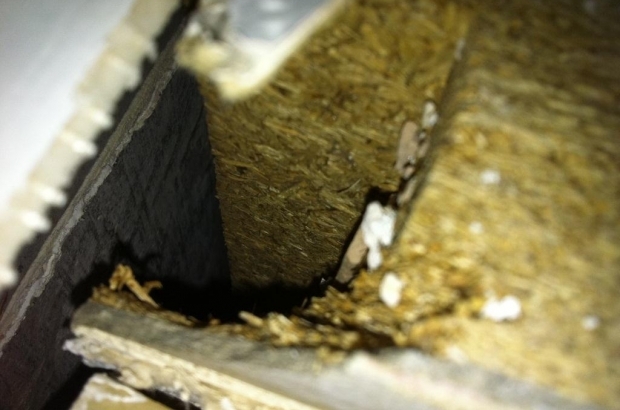
Up to 90% of buildings in Brussels are estimated to contain asbestos, according to official data.
Brussels will review its policy on dealing with asbestos and launch a platform featuring new inventories and updated figures, with an initial proposal for the review expected in early 2027.
“Today, you can buy a flat in a building that was built or renovated in the 1990s and which still contains asbestos-containing materials,” said state secretary Ans Persoons (Vooruit).
“Sometimes this can be without even realising it, as it can be found in paint, insulation or false ceilings.
"We must be extremely vigilant and protect the health of Brussels residents. In this case, prevention is certainly better than cure."
Persoons said in response to questions in the Brussels parliament’s environment committee that the region has been monitoring asbestos through environmental permits since the late 1990s.
Subsequently, between 2017 and 2018, several studies were commissioned to determine the most appropriate approach to the asbestos issue.
The studies showed that the region would be best advised to focus on management rather than removal. For example, material containing asbestos that is in good condition and cannot release fibres does not need to be removed immediately.
However, where the material is damaged or where works are planned, strict regulations apply. Brussels Environment oversees the removal process by issuing the necessary permits.
The Brussels approach differs from that of Flanders, where the focus is primarily on removal with the aim of becoming asbestos-free by 2040. According to Persoons, this method is not feasible in the capital.
“Given the significantly higher costs associated with the removal of friable asbestos, the total cost of asbestos removal in Brussels would be around 40% higher than in Flanders, despite a smaller total quantity,” said Persoons.
Studies have estimated that 80 to 90% of Brussels’ building stock, both private and public, contains asbestos. Of this, 27% is friable asbestos, which is the most dangerous type because the fibres are only loosely bound, and can therefore be easily released.
This contrasts with Flanders, where, although more asbestos is found in absolute terms, the friable variety accounts for only 3% of the total.
Between 2020 and 2025, Brussels Environment issued 2,854 permits for the removal of asbestos. Due to the high prevalence of asbestos in the region, Persoons wishes to review the approach.
A first step is the development of a regional digital platform on which asbestos inventories can be recorded, stored and managed, so the eegion can gather more reliable information about the presence of asbestos in buildings and facilitate monitoring.
The inventories should also provide up-to-date statistics on the quantities and types of asbestos. The platform is scheduled to go live in 2027.
Brussels Environment is also working on revising the overarching asbestos decree. The Persoons cabinet expects to put forward an initial proposal in early 2027.
But MP Mathias Vanden Borre (N-VA), who raised the issue in the environment committee meeting, believes the plan should go further.
“It’s good that the asbestos decree is being revised and that work is under way on a digital inventory, but the big question remains as to how we will ensure that the asbestos in our buildings is actually systematically identified and removed,” Vanden Borre said.
Vanden Borre plans to put extra pressure on the Brussels government by tabling a resolution modelled on the Flemish example.
Among other things, Vanden Borre is calling for a compulsory asbestos certificate when selling buildings constructed before 2001, the year the ban on asbestos came into force.
“Today, many people in Brussels are still unaware of the risks posed by asbestos and how to deal with it,” said Vanden Borre.
“I’ve noticed that renovation work is often carried out very carelessly, which entails serious risks.
"In principle, asbestos never disappears. Old and weathered material can even become more dangerous. That is precisely why a comprehensive approach is so important."