
- Daily & Weekly newsletters
- Buy & download The Bulletin
- Comment on our articles
Related articles
Recent





Popular





Opinion: “The Parthenon Marbles belong back in Athens”
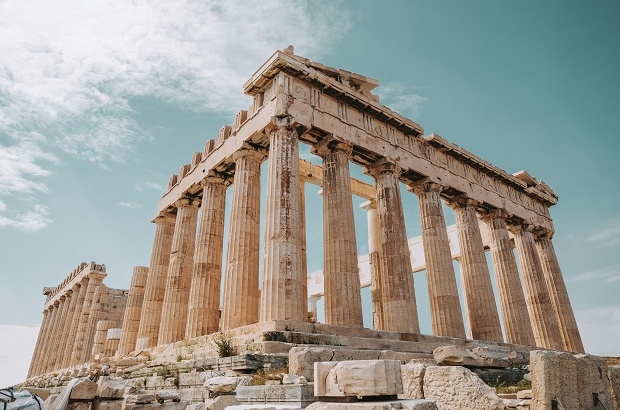
As the British Museum prepares to show the disputed Parthenon Marbles at an exhibition in Frankfurt, Brussels-based communications leader Stavros Papagianneas argues for their return to the Acropolis in Athens, citing a Belgian academic’s argument that their original removal was illegal and immoral.
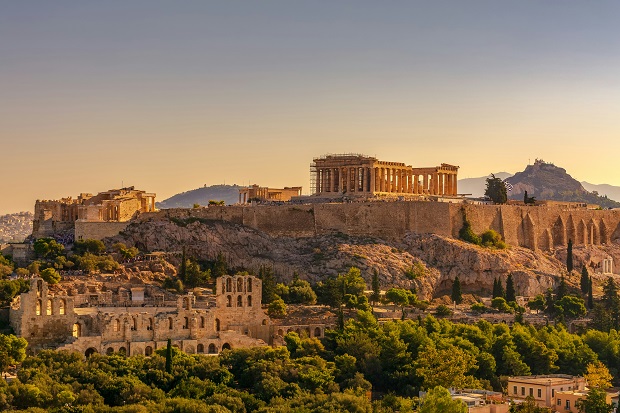
Rising above Athens on the Acropolis, the Parthenon has stood sentinel for over 2,500 years, quietly observing the tides of European history. Growing up in its shadow, I passed the marble columns daily on my walk to school. Yet for all its majesty, the Parthenon's story is as much about absence and dispute as it is about endurance.
Just a stone’s throw from the Parthenon, the Acropolis Museum displays less than half of the temple’s original sculptures. Where masterpieces are missing, plaster replicas stand in their place - marked by black dots that quietly but powerfully signal their absence.
In the early 19th century, Lord Elgin, then the British ambassador to the Ottoman Empire, orchestrated the removal of more than half of the Parthenon's marbles under the guise of “copying and recording”.
A large portion of the Parthenon’s original sculptural decoration, including 15 metopes, 17 figures from the pediments and sections of the frieze were forcibly removed.
In practice, this meant dismantling and transporting these ancient artefacts to the United Kingdom, where they remain housed in the British Museum to this day.
For more than two centuries, the fate of the Parthenon Marbles has strained relations between London and Athens.
At the heart of the debate lies a pressing question: is this a story of preservation, or of plunder carried out under the guise of legality?
Thomas ‘le diplomate corsaire’
It was between 1801 and 1805 that Lord Elgin arranged to have large sections of the Parthenon’s sculptures removed and transported to London.
The British Museum maintains that Elgin possessed Ottoman authorisation and that a British parliamentary inquiry in 1816 considered the acquisition lawful.
Greece, however, has long disputed both the nature and the scope of that authorisation, arguing that no genuine imperial decree authorising the dismantling and removal of the sculptures has been established.
For Athens, this debate is about far more than the technicalities of museum collections. It is, at heart, a matter of cultural justice. The sculptures were made for Athens - envisioned as integral elements of a single, sweeping artistic vision - and they belong to the city’s cultural fabric, not scattered across continents.
The modern Acropolis Museum was specifically designed to display the surviving sculptures alongside casts of those held abroad, demonstrating how naturally the separated pieces belong together. Athens has demanded their reunification for decades, with its formal government request dating from 1983, while the broader Greek claim stretches back much further.
The comparison with the corsairs - private sailors authorised by governments to attack and seize the property of other nations - is revealing. A corsair could claim official permission, yet permission did not necessarily make the act morally just.
Similarly, an imperial power’s authorisation to remove cultural treasures from a subject territory should not automatically transform appropriation into legitimate ownership.
What was acceptable to an imperial administration two centuries ago has to be judged differently today.
Britain lends Parthenon marbles to Frankfurt museum - Greece says no
Meanwhile, the British Museum is supporting the exhibition, The Birth of the Gods, at the museum of ancient sculpture in Frankfurt, Liebieghaus Skulpturensammlung, from 18 November 2026 to 25 July 2027.
What makes this particularly interesting is the timing. The exhibition is effectively going to display British-held Parthenon material in Germany, while Greece continues to demand the reunification of the sculptures in Athens.
And the British Museum's director, Nicholas Cullinan, has recently been discussing international loans of the Parthenon sculptures - including the possibility of a loan to Greece - as part of a broader approach to the dispute.
However, the Greek government’s position has been for decades that the Parthenon sculptures are not a set of individual exhibits that can be lent out and shown wherever a museum wants. They are pieces of a single artistic and architectural whole that belong on the Acropolis in Athens.
The legitimacy of London's possession of the Parthenon sculptures remain fundamentally contested. Is it ethically appropriate for the British Museum to treat them as ordinary objects in its collection, freely lending them to third countries for temporary exhibitions while refusing their permanent reunification with the monument from which they were illegally removed?
Belgian archaeologist questions legality and morality of Elgin's removal
At a 2022 symposium at the Cardozo Law School, Dr Kris Tytgat, an archaeologist and former Director of the Belgian School of Athens, declared that “the removal of the Parthenon sculptures by Lord Elgin was not legal, and certainly not moral”.
He clarified his position, arguing that, judged by today’s international standards and ethics, the removal could not be justified. He also pointed out that the issue was divisive even in Britain at the time, with the British Museum’s acquisition in 1816 sparking debate.
He also referred to the Zimbabwe Bird, parts of which had been separated between Germany and Zimbabwe and subsequently reunited, including an exhibition at the Royal Museum for Central Africa in Tervuren in 1998.
Ethical imperatives and historical justice
The British Museum has not engaged with recommendations from Unesco’s Intergovernmental Committee, which has called for dialogue between Athens and London, and it remains unmoved from its current position.
Britain’s new prime minister, Andy Burnham, has also shifted position on the issue since taking office, calling for the British Museum to find a solution after previously backing an unconditional return of the sculptures to Greece.
After more than two centuries in London, the time has come to recognise a simple principle: the Parthenon belongs to Athens, and its surviving sculptures deserve to be reunited with it.
Their reunification would not diminish British culture. In the contrary, it would strengthen Britain’s reputation as a country willing to confront the injustices of empire and to place cultural heritage above possession.
Photos: Parthenon ©Spencer Davis/Unsplash; Parthenon ©Constantinos Kollias/Unsplash