
- Daily & Weekly newsletters
- Buy & download The Bulletin
- Comment on our articles
Student riots cause damage to public transport and shared vehicles
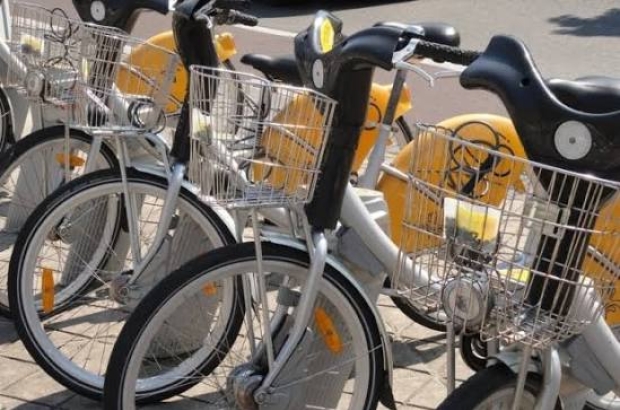
Operators of shared scooters, bikes and cars suffered an estimated tens of thousands of euros worth of damage due to vandalism during Friday’s student protests, and Brussels public transport operator Stib has reported damage to three trams, four buses, numerous bus stops and a lift.
The protests drew 30,000 participants, according to official police counts, although unions put the number closer to 50,000.
The damage was caused by rioters who marched through the city on the fringes of the official trade union demonstration.
A number of shared vehicles bore the brunt of the violence. Rioters piled dozens of shared scooters and bikes into a heap and set them alight at Brussels-Central station.
Yessin Aattache, spokesperson for shared mobility firm Voi, said an employee was attacked by rioters: “They were mainly targeting his cargo bike, but the employee himself sustained minor injuries and was very shaken.”
A spokesperson for shared scooter company Dott told Bruzz they were “shocked” by “several incidents in which shared vehicles were set alight”.
“The extent of the damage is currently unknown, but it could involve as many as 40 bikes and e-scooters in the region, with an estimated cost of €40,000 for the equipment alone,” said Bolt spokesperson Guillaume Burland.
“Although we’re insured, the insurance doesn’t cover minor damage.”
The companies were advised to remove their vehicles from the streets ahead of the protests and made attempts to do so, mainly along the protest route, but Aattache said they were hesitant to fully shut down the service.
“Brussels residents rely on shared bikes, especially on strike days when public transport isn’t running,” Aattache explained.
“Moreover, it’s not easy to predict exactly where the unrest will break out. It’s somewhere different every time - and vandals bring bikes from other locations further afield.”
Dott said it made "significant efforts" to remove vehicles. However, “with a fleet of 6,500 vehicles, at least 2,000 of which were in the affected neighbourhoods, it’s not possible to completely clear the area in a short space of time”.
Bikes and scooters were not the only shared vehicles damaged in the riots. Car-sharing company Poppy also had cars overturned and set on fire.
“We’re currently aware of three to four vehicles that have been damaged,” said Marko Raspudic, chief executive of Poppy Mobility, noting that it faced similar obstacles when it came to taking the fleet off the streets.
“We operate on a free-floating basis, so a customer can leave a car in an area at risk of vandalism. If we were to remove a large number of cars, it would have a negative impact on our service.”
Poppy is also still assessing the extent of damages.
“We’re not insured against this kind of vandalism. It makes the situation more difficult for us and drives up our costs,” Raspudic said.
“But this is also detrimental to the thousands of Brussels residents who rely on us for transport. We want to be there for them, even on a day like this.”
The affected companies are looking into potential legal action against rioters as a means to recover the cost of damages.
“We have a good working relationship with the Brussels police and the city, and will take the necessary steps in consultation with them,” said Raspudic for Poppy.
“Vandalism is, of course, unacceptable.”
This route to compensation is not unfeasible. Numerous people accused of committing serious offences during the 9 October protest were arrested and will face trial.
Among them, 16 minors were recently released due to a lack of places in public youth protection institutions. Alternatives to placement are also at full capacity.
The Brussels public prosecutor’s office said it would continue “its work with determination and once again calls on decision-makers to specifically restore the credibility of the juvenile justice system”.
Like Brussels’ shared mobility companies, public transport operator Stib also suffered heavily from the vandalism that took place on the fringes of Friday’s demonstration.
“This senseless violence is counterproductive and deeply disturbing,” said spokesperson Laurent Vermeersch.
According to an initial assessment, the damage is considerable. Three trams with smashed windows and four buses that have been vandalised, one of them very severely.
Bus stops and a lift were also damaged. Some track infrastructure was still being inspected over the weekend.
“Fortunately, our drivers and all passengers are unharmed,” said Vermeersch, noting that it was still in the process of assessing the damage.
“Nothing can justify such violence. Why would anyone attack a bus, a tram or public infrastructure used by thousands of people every day?
"This causes disruption for passengers and entails significant costs for the community, at a time when Brussels’ finances are already under pressure."
Stib appointed a lawyer to file a complaint and bring a civil action, seeking compensation for the damage caused.
“This morning, I came via Brussels-Midi station and it’s in a dreadful state,” one Brussels resident remarked in the aftermath of the protest.
“The bus shelters are smashed, the advertising billboards have been burnt, and the rubbish bins are completely blown apart.”
Bruxelles-Propreté began work immediately following the protest’s conclusion.
“Operations first focused on ensuring that traffic was no longer obstructed. It was primarily a security operation,” said spokesperson Adel Lassouli.
“[Then] we focused on the bus shelters and clearing away all the glass - quite staggering quantities of glass that were littering the streets.”
At the height of the protest, burning barricades were erected using shared-use scooters and bicycles. Molotov cocktails, sticks, mortars and other projectiles were seized throughout the day.
Many of those responsible for the damage filmed themselves at the time of the incidents and police intend to use this footage to identify the rioters and prosecute them.
In addition to damage to shared mobility and public transport, rubbish bins were also destroyed by rioters.