
- Daily & Weekly newsletters
- Buy & download The Bulletin
- Comment on our articles
Related articles
Recent



Popular


Study finds lack of diversity in Brussels police force

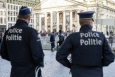
Brussels police officers with a migrant background still encounter forms of discrimination in the workplace, according to a new report by two ULB researchers and two VUB criminologists.
For two years, researchers from both Brussels universities have conducted research into discrimination within the Brussels police force, Bruzz reports.
At ULB, anthropologist Maïté Maskens and sociologist Nawal Bensaïd collaborated with criminologists Sofie De Kimpe and Steven Debbaut from VUB. Their report, called "Diversity within the police force: a test for democracy" argues that diversity within the Brussels police force is much more than a matter of numbers or symbolic representation.
The researchers spent 16 months between 2023 and 2025 observing operations such as interventions, reception and dispatching in three Brussels police zones. Interviews were also conducted with staff members in various roles across the six police zones.
“Police officers of colour are sometimes ‘used’ as a shield by the organisation to defend itself against external accusations of racism,” the researchers concluded.
“They are sometimes assigned to duties in certain neighbourhoods, and are often suspected of playing a dual role, a sort of undercover agent to serve the interests of ‘their’ community.”
Alongside the report, the researchers developed a map providing an overview of the six zones, with figures on diversity according to different ranks and roles.
This shows that of the approximately 6,750 staff members, about 70% have two Belgian parents. This stands in stark contrast to the population of Brussels, where nearly 80% have roots outside Belgium. The map also shows that less than 15% of the Brussels police force is of non-European origin.
The vast majority of those with a migrant background are inspectors (about 60%), while chief inspectors make up only a small proportion (about 10%) and very few become constables, superintendents and chief superintendents. According to the study, career progression opportunities for people with foreign roots are limited.
According to the report, diversity is essential for a well-functioning police force, particularly in a multicultural city such as Brussels.
The report noted that too little account is sometimes taken of the experiences of officers with a migrant background and of the feeling among some people that the police do not always act inclusively.
Because diversity within the organisation often exists mainly on paper and is not really translated into concrete actions, forms of racism often continue to exist in subtle ways in many Brussels police stations, the researchers said.
At the same time, the research shows that the picture is not entirely negative. There are managers and officers who are actively working to create an inclusive working environment and trying to combat racism.
“We have also found that many police officers are making efforts to actively deepen their critical understanding so that they can act with justice,” the researchers said.