
- Daily & Weekly newsletters
- Buy & download The Bulletin
- Comment on our articles
Related articles
Recent




Popular





Warmest 25 February on record brings early flowers, bad news for fruit growers
Belgium saw its warmest 25 February since measurements began, according to figures gathered by the Royal Metereological Institute (RMI).
Temperatures reached 18.9°C at 14.00 at the measuring station in Uccle, breaking the 2019 record of 18.8 degrees and later climbing even higher to a peak of 19.8°C at 17.00.
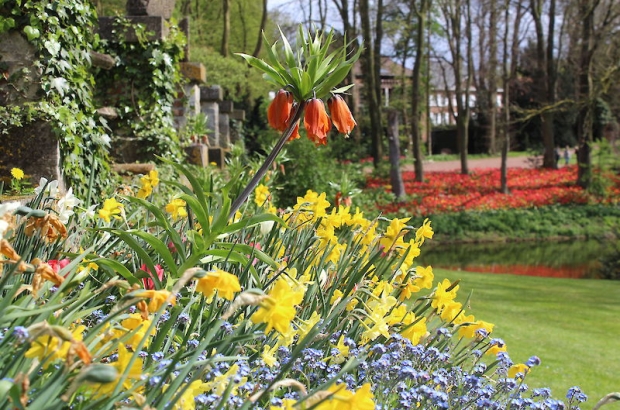
The warm weather has had a number of effects on local nature, including the blooming of daffodils two weeks earlier than usual.
While picking these flowers is permitted, forest ranger Nicolas Bronchain reminds people that it is strictly regulated by specific rules, namely that anyone looking to pick a daffodil must have permission from the landowner.
In state-owned forests, this permission is generally automatic. However, in communal forests it is recommended to check with the relevant local authority to see if there are any specific restrictions.
Where picking is permitted, people are allowed a maximum of two handfuls of flowers per person per day.
While the daffodils are expected to stay in bloom for several weeks, the exact duration will depend on future weather conditions, particularly the risk of late frosts.
“If there are frosts, the flowers will suffer and may wilt,” Bronchain said. “Go and see them now. It’s the beginning, but don't worry, there will still be some in a few weeks’ time.”
This diversity in flowering times is explained by the coexistence of early and later varieties, guaranteeing bloomage spread out over a longer period of time.
Also affected by the warm weather are bumblebees, which have already been spotted in Brussels after being awakened prematurely by the mild winter.
The early awakening could endanger the reproduction of the species because it causes energy waste and the burning of much-needed reserves, and because common food sources are often still scarce at this time of year.
“Ideally, these animals can sleep through from the end of November to the end of February, after which spring can begin in earnest,” said Wim Veraghtert of the Natuurpunt research department.
“However, such classic winters are becoming less and less common.”
Veraghtert emphasised that the warmer period was too short to wake the vast majority of hibernators, but other affected creatures include brown frogs, hedgehogs and brimstone and atalanta butterflies.
“These butterfly species are particularly vulnerable to heat because they often hibernate outdoors - brimstone butterflies often among ivy, atalanta butterflies more often in hollow trees,” Veraghtert said.
Because there is currently little food available for them, these butterflies now face difficulties.
Also facing difficulties due to the exceptionally warm weather are fruit growers.
With temperatures almost 10°C above the seasonal norm, farmers’ work has been disrupted and fruit trees are weakened.
“The cycles are disrupted,” said Guillaume Mahieu, who grows apples and pears.
The winter dormancy period, which is essential for trees to rest, has been significantly shortened and is now a source of stress for fruit trees.
“Vegetative growth is much too rapid, and buds are likely to appear much too early, even though winter is far from over,” said Mahieu.
“It’s only February, and there’s a risk of frost until May. Frost on vegetation that has restarted means loss of yield and loss of production.”
The earlier the flowering, the greater the potential number of risky nights in terms of frost.
Protecting an orchard from frost for several consecutive nights represents a considerable cost of up to €500 per hectare, making it therefore possible for only three to four nights. If the frost spell goes on longer, farmers generally must resign themselves to losing their harvest.
The unusually mild weather is also causing major disruption to work schedules.
“It puts us in a rush at the end of winter, which is unusual,” Mahieu said, explaining that pruning work, which is normally spread out over a longer period, has to be accelerated because "where we normally have another month to finish, we’re going to have to adapt".
He added: "There were normally five of us, and now we're going to have to increase that to 10 for the next few days."
Cycles are compressed, harvests are brought forward and all the logistics have to follow suit.
“All our work is condensed into shorter, more intense periods,” said Mahieu, adding that recruitment problems often occur in the summer.
For professionals in the sector, these mild winters are no longer an isolated phenomenon, but a fundamental trend.
“This is climate change in everyday life,” Mahieu said. “Everything is so extreme that plants are finding it very difficult to adapt to the new situation.”
On top of these early warm spells, growers also face increasing and unpredictable droughts, floods and periods of extreme cold.