- Daily & Weekly newsletters
- Buy & download The Bulletin
- Comment on our articles
Related articles
Recent


Popular

Belgian foreign minister confirms new humanitarian aid package for Lebanon during visit to Beirut
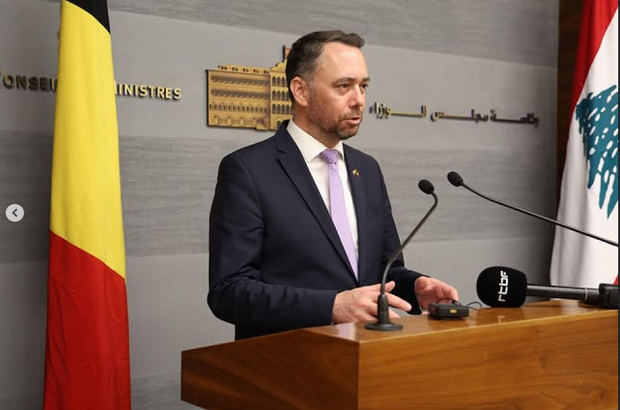
Belgium’s foreign minister Maxime Prévot (Les Engagés) announced a second additional aid package of €150,000 for Lebanon during a visit to its capital Beirut on Wednesday.
The financial promise came amid Lebanon’s deepening humanitarian crisis as Israel continues to bomb its neighbour. “Beirut cannot become a new Gaza,” say Belgian authorities.
One of four unannounced Israeli airstrikes on Lebanon landed a few hundred meters from the Belgian embassy on Wednesday afternoon while the foreign minister was inside the building, according to Belga.
Belgium’s diplomatic visit followed the signature of a declaration initiated by Prévot, co-signed by 17 other foreign ministers. It calls on all parties to cease hostilities and respect international humanitarian law and full humanitarian access.
The latest aid package for Lebanon comes after a delivery of essential supplies worth €150,000 a few weeks ago through the Belgian First Aid and Support Team (B-FAST).
Through its flexible funding system, Belgium has been able to provide humanitarian intervention in Lebanon before official calls from the UN.
In 2025, Belgium contributed €3 million to the Lebanon Humanitarian Fund. Given the current situation, it will increase its contribution to €4 million for 2026, announced the foreign minister.
Lebanon has suffered more than 1,300 casualties, 3,500 wounded and more than one million of its citizens internally displaced since the beginning of Israel’s military campaign against Hezbollah, a Shia Lebanese political party and armed group aligned with Iran.
“The Israeli ground advance – coupled with the systematic destruction of villages, bridges and infrastructure – is de facto creating a buffer zone that threatens Lebanon’s sovereignty,” said Belgian authorities.
Lebanon’s social and humanitarian system is currently under pressure as 52 health workers have been killed and 51 health centres and four hospitals are out of service due to bomb damage.
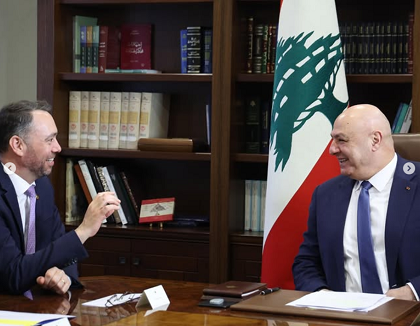
During the trip, the Belgian foreign minister met with Lebanon’s president Joseph Aoun (pictured above right) and other important political figures, as well as the UN humanitarian coordinator and a responsible of the United Nations Interim Force in Lebanon (UNIFIL).
Belgium’s diplomatic mission also included a visit to a refuge run by the Lebanese Red-Cross and a centre operated by the Lebanese NGO Amel. The latter is a longstanding partner of Belgian cooperation policy, which offers health services, psychological support and professional training.
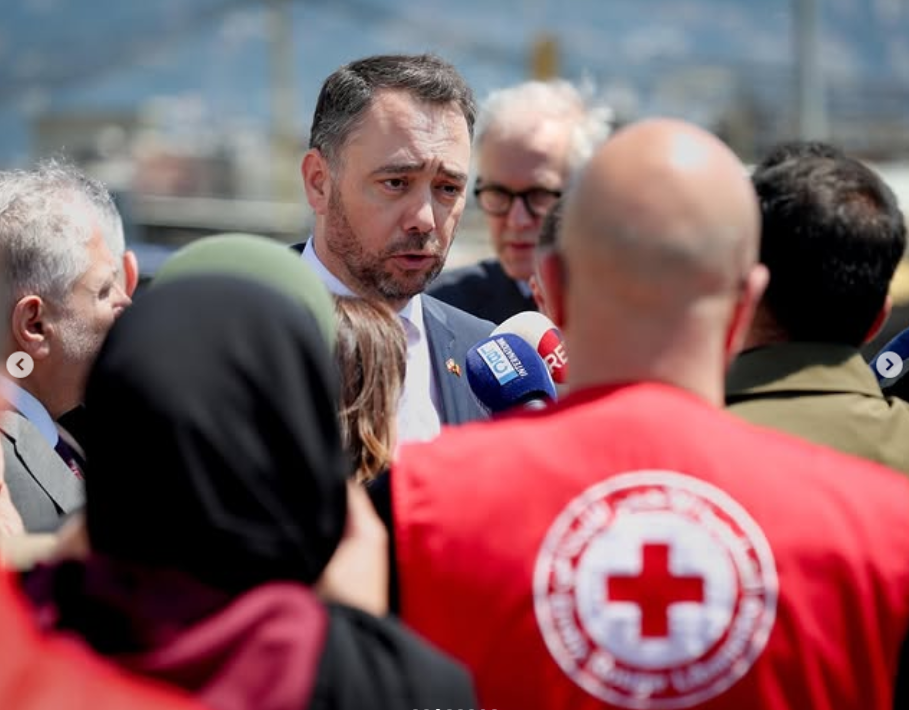
“Lebanon cannot become the forgotten collateral damage of the conflict in the Middle East. Behind the figures are families who have lost everything. Children who no longer go to school. A country that, despite successive crises, stood strong thanks to the courage of its people,” said Prévot.
The visit also addressed Lebanese political issues such as sovereignty, disarmament and de-escalation. Prévot recalled Belgium’s support to Lebanon national unity and its armed forces, while welcoming the commitment of Lebanon’s government to disarm Hezbollah’s military wing.
“My presence here is intended to forcefully remind everyone of this and to reaffirm Belgium’s support for Lebanon’s sovereignty and territorial integrity. Hostilities between Israel and Hezbollah must cease immediately to protect civilians”, added Prevot.
Photos: ©Maxime Prévot Instagram