
- Daily & Weekly newsletters
- Buy & download The Bulletin
- Comment on our articles
Related articles
Recent




Popular




Belgium maintains its demining commitment in Iraq and Syria as part of historical military specialisation
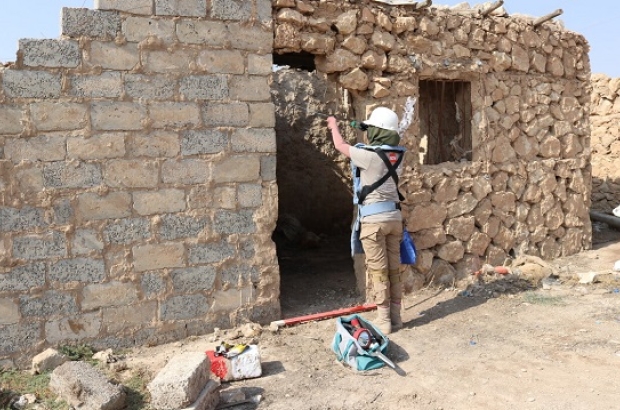
Belgium continues its commitment to humanitarian demining in Iraq and Syria with a €1.35m contribution to United Nations Mine Action Service (UNMAS) activities in 2025, says the foreign office.
Since 2019, it has invested more than €13m in mine action initiatives in the two Middle Eastern countries, the Belgian ministry of Foreign Affairs, Foreign Trade and Development Cooperation announced in a statement.
Mine clearance was a priority for the ministry as the presence of anti-personnel mines and explosive remnants of war pose a serious threat to the safety of civilians in Syria and Iraq. They also hindered access to roads, farmland and water sources, which undermine food security, livelihoods and economic recovery, it said.
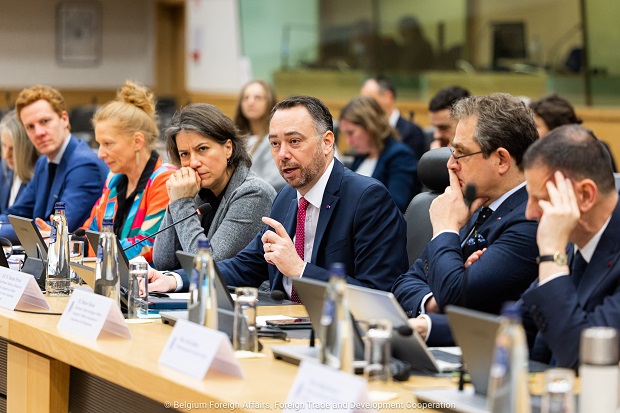
“Demining restores more than just physical safety: it gives communities space to breathe, grow and regain their dignity,” said foreign minister Maxime Prévot (pictured above). “When fields can be cultivated again, children can return to school safely and local economies come back to life, demining is the basis for real reconstruction and sustainable development,” he added.
UNMAS has already been working in Iraq: supporting the national demining authorities through technical expertise and capacity building.
Meanwhile, in Syria, since the fall of the former Bashar al-Assad government, UNMAS has supported the new Syrian authorities in rebuilding their technical and operational capabilities.
Belgium, a long-standing demining expert
The Belgian army is renowned among NATO members for its expertise in the field of mine clearances and explosive disposal.
Its specialist skills arose from historical necessity as thousands of tonnes of ammunition were dropped on Belgium soil during the first and second world wars.
Remnants of explosives and old rusted shells still occasionally resurface and pose a threat today. Farmers and workers often come across them by accident in fields and on construction sites.

Within the Belgian military, the Explosive Ordnance Disposal and Destruction Service unit (DOVO), pictured above, is responsible for the neutralisation and dismantling of remaining ammunition and unexploded ordnance.
It also intervenes in the disposal of improvised explosive devices in cases of terrorism and serious organised crime.
Every year, the unit receives between 3,000 and 3,500 calls with an average of 200 to 250 tonnes of explosives in need of disposal.
The number is particularly high (70%) around the West Flanders city of Ypres, which was the scene of intense fighting between the German and the Allied forces during World War One. Local farmers regularly plough out unexploded shells, which they call "The Iron Harvest".
The Belgian Navy is also highly active in the disposal of sea mines in the North Sea. Among the nine vessels that constitute Belgian’s naval fleet, five are minehunters. Belgium is expecting in the future to receive six additional vessels as part of a strategic partnership with the Netherlands (rMCM) in order to improve its technological capabilities to fight underwater mines in Europe.
Mine clearance is of vital economic importance as the passage from the Atlantic to the North Sea, with strategic ports such as Antwerp and Rotterdam, constitutes one of the busiest maritime routes in the world.
Photo: Humanitarian demining ©UNMAS; Maxime Prévot ©Belgium Foreign Affairs, Foreign Trade and Development Cooperation; DOVO unit ©Belgium Defence