
- Daily & Weekly newsletters
- Buy & download The Bulletin
- Comment on our articles
Related articles
Recent





Popular





Brussels scooter operators still hopeful ban will be reversed
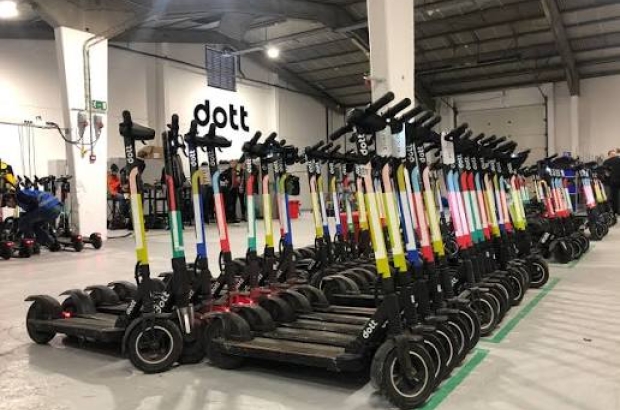
As a ban on shared electric scooters in Brussels approaches on 1 January 2027, some operators in the region are still counting on a last-minute change of course.
Current operators Dott and Bolt cite figures that show scooter usage rapidly growing in recent months.
“Over the last three months, the number of scooter journeys in the capital has risen by 248%, compared with an average of 164% in the rest of Belgium,” Bolt said in a statement.
Scooters account for more than 80% of Bolt users’ journeys in the Brussels region, while making up 64% of its total deployed fleet, with the remainder being bicycles.
It is those bicycles that the region, however, is counting on when it comes to filling the micro-mobility gap left by the scooter ban.
Mobility minister Elke Van den Brandt (Groen) is hoping that, in the short term, before deciding on new rules for the sector, the number of electric bikes will rise sharply to account for any shortfall.
At present, excluding the Villo scheme from the Brussels region itself, there are a total of 6,500 shared bikes available in Brussels, which are provided by three operators (Voi, Dott and Bolt).
This number of electric bikes has remained relatively stable, as there were 6,400 counted by these same three companies in June this year.
But Van den Brandt and the regional government could decide to authorise more operators in the coming weeks, each of which would be able to deploy up to 2,500 bikes.
There is talk of five operators who might be interested. The three current ones that would remain and two new ones that could join them, making potentially 12,500 bikes available.
This would likely only be for a few months because in the long term, following an upcoming tender due to take place by mid-2028, Van den Brandt wants to limit the number of self-service bikes to 9,600 and have only two operators.
In that same long-term picture, the Villo system from the region could pose increased competition for shared micro-mobility companies.
For the time being, the current partnership with French advertising company JC Decaux has been extended until September 2028 at the latest. In exchange for access to a network of advertising hoardings in the Brussels Region, the company provides, operates and manages the Villo network.
These are bikes that must be collected from and returned to a designated station each time. Another downside is that only a small proportion of these heavy bikes are fitted with electric assistance, featuring a removable battery system that users must carry from one bike to another and keep with them.
In future, the Brussels region would therefore like to replace these Villo bikes with a system that still uses stations, but where all the available bikes would be electric.
The goal is to make journeys easier and encourage use of the system, which is currently free for the first half-hour of each journey.