
- Daily & Weekly newsletters
- Buy & download The Bulletin
- Comment on our articles
Related articles
Recent




Popular


Cultural tour de force: The Maramotti Collection is a modern and contemporary art beacon for the Italian city of Reggio Emilia
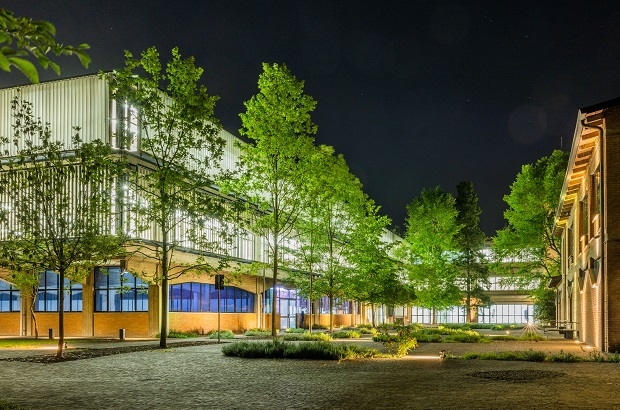
Art, fashion, architecture, history and a close-knit family come together to create an astonishing private art collection on the outskirts of Reggio Emilia. Alongside this outstanding artistic showcase, the city – home to fine food, a pioneering education system and a passion for culture – is well worth a visit in its own right.
Collezione Maramotti is housed in a vast architecturally resplendent building surrounded by a landscaped garden, in an industrial zone of the rather inconspicuous city. The setting is explained by the ownership of the collection: the family behind luxury fashion brand Max Mara.
Founder Achille Maramotti, who started buying art after the Second World War, had established Italy’s leading private collection by the time of his death in 2005. Now his three children continue his business and cultural legacy.
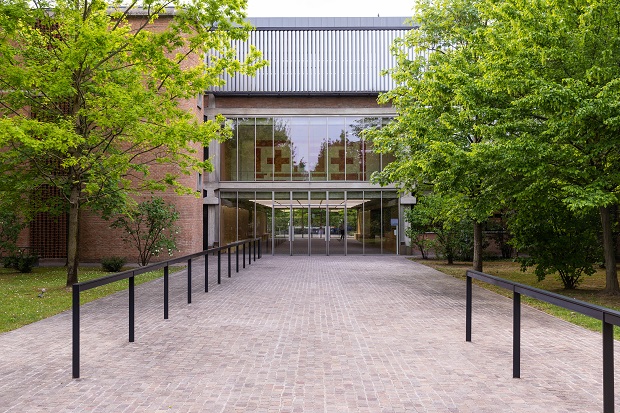
When the fashion house moved from its original 1957 factory in 2003, Maramotti commissioned British architect Andrew Hapgood to convert the minimalist brick structure into a permanent home for his artworks. His mission was to create a living collection for anyone passionate about or intrigued by modern and contemporary art.
The renovation of the building – already an innovative example of modernist industrial architecture, with its natural lighting and open spaces – was another tour de force. Reopened in 2007, it stands proudly as a post-industrial statement that pays homage to the region’s textile tradition.
A new entrance hall creates a link between the old and the new, a dialogue that reinforces the original aesthetic. One striking element of the sober interior is the original skylights that enabled the factory’s workers to produce garments, alongside the weathered stains on the floor from the machinery that once occupied the building.
Sanctuary of modern and contemporary art
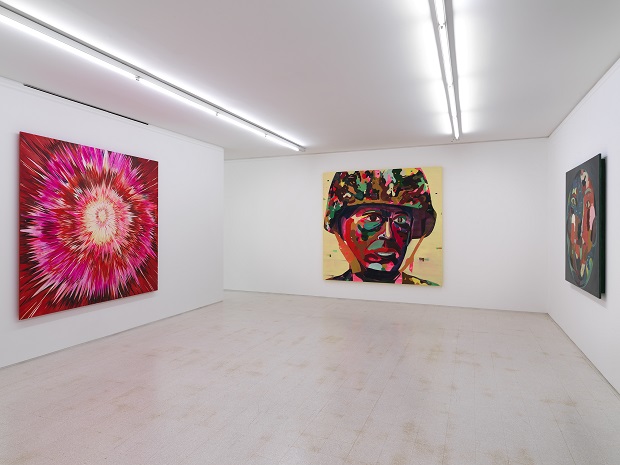
The art on show, consisting of some 220 works arranged chronologically, by country of origin and artistic movement, is spread over two floors. They are largely divided between wide open spaces for monumental installations and individual galleries connected by an outer corridor.
A quote at the beginning of the tour by German philosopher and cultural critic Walter Benjamin comments on the motivation of the private collector, who “takes up the struggle against dispersion” and “brings together what belongs together; by keeping in mind their affinities and their succession in time”.
Maramotti was initially inspired by artists who shared his country’s struggles immediately after World War Two. His first acquisition was Sacco by Alberto Burri, which remains an important piece for the collection. It reflects his penchant for artists who challenged the rapidly changing society and his ability to buy works at key stages of an artist’s career.
He particularly appreciated the radical Arte Povera movement of the late 1960s and 70s, whose members repurposed cheap materials around them to critique the increasing mechanisation of the time. He turned his attention to European artists such as British painter Francis Bacon, who defied social and artistic conventions, represented here by the portrait Man Eating a Leg of Chicken (1952).
In fact, he had a predilection for paintings and large-scale works that would often hang in the factory for all to admire. American artists, including Julian Schnabel, joined the collection, valued for their contribution to movements in Italy and the rest of Europe such as the neo-expressionist Transavanguardia.
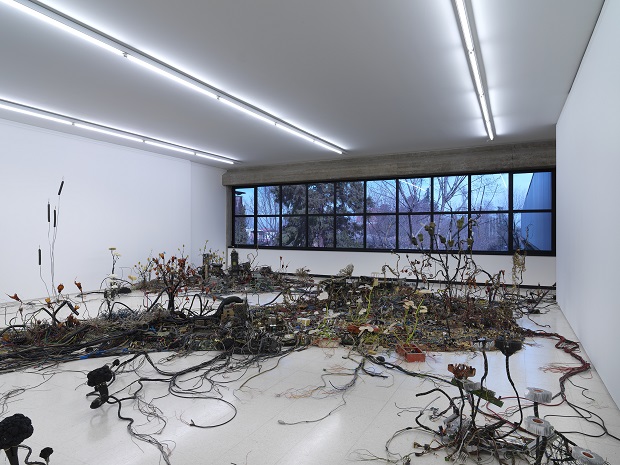
The gallery section presents more recent projects that now define acquisitions; a succession of focused series by leading contemporary artists. Their support from the Maramotti family is a continuation of the founder’s habit of forming personal relationships with artists.
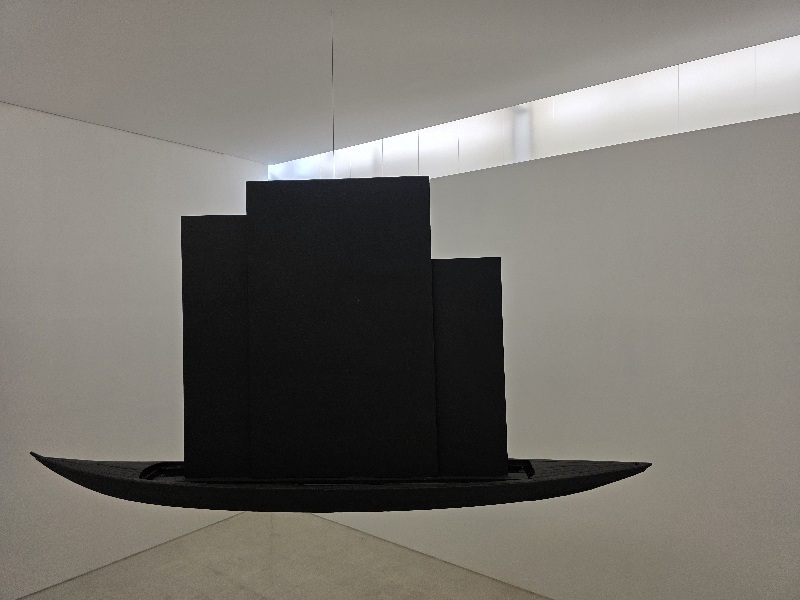
A notable one was with Claudio Parmiggiani, whose monumental sculpture Caspar David Friedrich (pictured below) fills a purpose-built atrium space, lit by both natural and artificial light and visible from two separate floors. Dedicated to religious sentiment, the boat-like structure represents the journey of life while the black hue hints at its mortal destination.
It was this personal vision, not swayed by the commercial market, that steered Maramotti’s extraordinary collection: rooted in Italian modernism yet setting its sights on a global view of not only contemporary art but a world shaped by human experience. Immersion in this art sanctuary reveals the philosophy of a family dedicated to creativity, artistic expression and imagination.
This is evident in the temporary exhibitions, which arise from a constant dialogue between the collection’s director, the family and artists. While these are predominantly solo shows, group exhibitions are nevertheless an opportunity to display works in storage – they number over 1,000 and continue to grow.
Max Mara Art Prize for Women
Nurturing emerging talent and honouring the often undervalued work of women are the guiding principles at the heart of the Max Mara Art Prize for Women, established in 2005. The biennial award has entered a new chapter after a 20-year collaboration with the Whitechapel Gallery in London: previously for women artists living and working in the UK, it is now open to international artists.

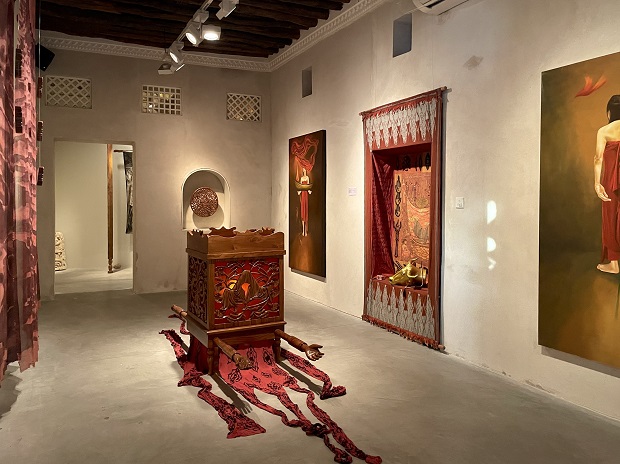
The first recipient is Indonesian Dian Suci (pictured above), who is on a six-month itinerant residency in Italy before presenting a solo show at the Museum MACAN in Jakarta and then the Collezione Maramotti in 2027.
Suci, born in 1985, is a multimedia artist from Yogyakarta who draws on her experience as a single mother in exploring the political domestication of women. For her residency, she is turning her attention to the handcrafting of religious artisan tradition, considering the fallout of their encounter with the capitalist system. With the aid of local experts she is undertaking a comparative study of Italy and Indonesia.
For Collezione Maramotti director Sara Piccinini, the award was pioneering when it was launched by Max Mara: “Many people were saying this was politically incorrect.”
But influenced by the matriarchs in the Maramotti family – Achille Maramotti’s mother Giulia ran a local tailoring and pattern-making school that encouraged financial independence among young women – it was a natural project for the company and was timed to mark the completion of the factory renovation.
“Female empowerment is one of the main values of the brand, which is also entirely intertwined with the family,” explains Piccinini, who says this singles it out compared to corporate art collections.
The broadening of the award to artists around the world adds piquancy. “It’s a much bigger deal for someone coming from outside Europe,” she notes. The small team running the collection have already developed a close relationship with Suci and are enthusiastic about this new turning point in the prize.
Reggio Emilia

Renowned as the home of the child-centred education philosophy that bears its name, the city of Reggio Emilia is less known, at least beyond its borders, for its deep-seated love of the arts. Cultural treasures abound in this leafy provincial capital, surrounded by the more frequented neighbouring cities of Parma, Modena and Bologna.
Reggio, as it is familiarly known, is an elegant small city that makes for comfortable exploring. Wander into the Renaissance Basilica della Ghiara in the heart of the city to admire the masterpiece artworks, religious frescoes and magnificent central dome.
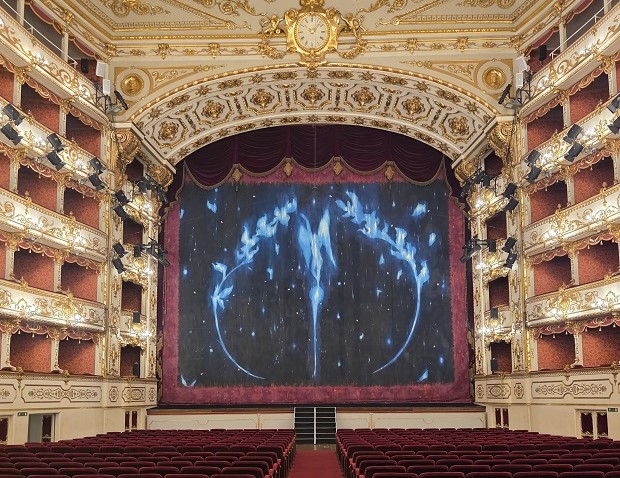
Another architectural gem is the Teatro Municipale, a neoclassic theatre and cultural hub that is the pride of the region. It boasts such a world-class programme of music, opera, ballet, contemporary dance and performance that the Collezione Maramotti has set up a collaboration to stage cutting-edge performances that connect dance and visual arts. It was inaugurated in 1857 and seats 1,150 – astounding for the city’s then population of some 25,000 – and its ornate and original furnishings remain resplendent today.
Meanwhile, the fascinating Musei Civici houses an extraordinary range of collections: from curiosity cabinets filled with gruesome zoological finds to Renaissance art, historical textiles and outfits and contemporary art exhibitions. It’s an unmissable institution.

Reggio is so committed to living and breathing culture, it commissioned a series of artworks by renowned contemporary artists in historic public spaces. Head to the municipal library, the Biblioteca Panizzi, and admire Sol LeWitt’s gloriously colourful ceiling fresco, Whirls and Twirls 1, amid the hushed surroundings of its 18th-century reading room.
On the culinary front, visitors are in for a treat with regional specialities such as prosciutto crudo, mortadella, balsamic vinegar and parmesan cheese. The atmospheric cavern-like eateries and wineries flanking the city’s arcaded squares are the place to sample them.
Otherwise, the province’s nature will appeal to hikers and history lovers can explore a multitude of medieval fortresses. Neighbouring Modena harbours the Maranello Ferrari Museum for fans of Italy’s rich automotive heritage.
Visiting the Collezione Maramotti
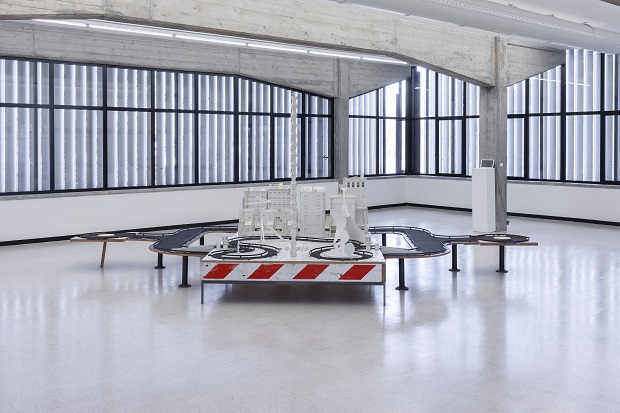
Admission to the Collezione Maramotti is free, by appointment and only with a guided tour. Visits are restricted to 25 people for a personalised experience and the tours are in Italian or English, depending on visitors’ preferences.
For the upcoming temporary show ABIAPUNTUA (8 November-14 February), Alain Urrutia, a Basque painter based in Berlin, presents an extensive project consisting of some 20 new paintings, accompanied by two videos. He chose the Basque language Euskara as its conceptual starting point (abiapuntua) for this intuitive body of work creating pictorial images from the memory of objects and subjects extracted from his personal archive.
Photos: (main image) ©Collezione Maramotti/Courtyard and project space Pattern Room by night, photo ©Bruno Cattani; Collezione Maramotti east entrance, photo ©Bruno Cattani; Collezione Maramotti exhibition view/artworks ©Jules De Balincourt, photo ©Dario Lasagni; Collezione Maramotti exhibition view/artwork ©Krištof Kintera, photo ©Dario Lasagni; Collezione Maramotti artwork ©Claudio Parmiggiani, photo ©The Bulletin; Portrait of Dian Suci ©Collezione Maramotti; Dian Suci, Larung May the Blooms Be Carried Safely through the Night 2024 © and photo Dian Suci; Photos Reggio Emilia ©The Bulletin; Collezione Maramotti exhibition view/artwork ©Tom Sachs, photo ©Bruno Cattani