
- Daily & Weekly newsletters
- Buy & download The Bulletin
- Comment on our articles
Related articles
Recent




Popular



Freemasonry’s lesser-known social side revealed in new exhibition at Château de Seneffe
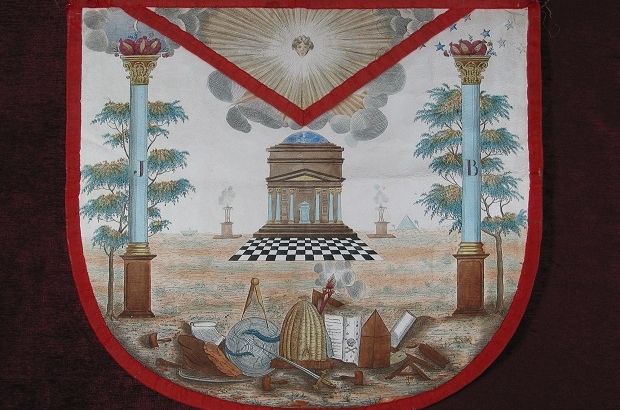
The world’s oldest and largest non-religious, secular fraternal organisation, Freemasonry, has been shrouded in secrecy and dogged by controversy since its founding in England in 1717.
But Château de Seneffe’s sumptuous new temporary show Freemasonry in the 18th Century: An opportunity for socialising highlights a different side of this institution, notably its propensity for having fun.
“Accessible to the curious and the knowledgeable, this exhibition invites visitors to discover Freemasonry during the Age of Enlightenment as a space for encounters, exchanges and unprecedented intellectual experimentation,” says curator Marjolaine Hanssens.
She emphasises that freemasons were very present in daily life, working in theatres, libraries and places of learning, throughout this period.

The exhibition, focusing on Belgium and France, also continues the ‘18th century’ theme of the stately home, which boasts period neoclassical rooms, beautiful parquet floors and elegant lighting.
For Hanssens, this was a time of evolving ideas, shared knowledge, networks and symbols, and therefore, “a natural breeding ground for freemasonry”.
The key message of the show is that there was more to freemasonry than immaculately dressed middle-aged men getting together to scheme, plan or discuss issues in their masonic lodges. Each room dedicated to themes including science, literature, music and nature underline freemasons’ desire to contribute to their society.
For example, they actively supported scientific experimentation and new inventions such as the telescope. There are displays of measurement instruments, maps and paintings showing how cartographers, astronomers and mathematicians, often themselves freemasons, aimed to understand the world to “construct” and “elevate” it. One outstanding exhibit is a charming ceramic plate featuring a hot-air balloon, a sport initiated by freemasons.
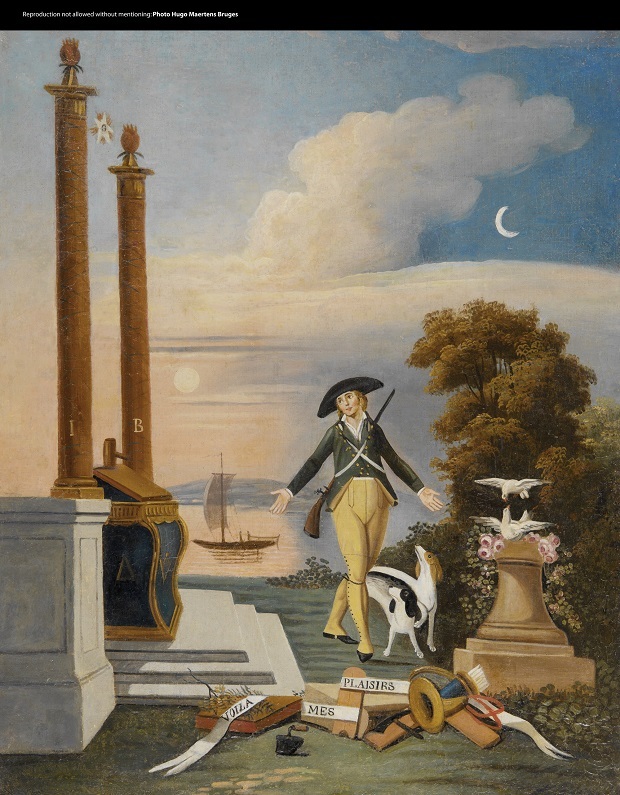
They also enjoyed attending cultural and sporting events in outdoor ‘Vaux Halls’, including the one in Brussels Park. They even contributed to the development of the game of golf. These men – and women – played an active part in community life by organising balls, concerts and various events open to a wider public. In short, by indulging in hunting parties, noble games and fencing before attending lavish banquets, freemasons clearly wanted to enjoy life as well as improve themselves.
The Seneffe show features nearly 300 exhibits from 43 institutions, collectors and masonic lodges. They demonstrate the common ground in all countries practicing freemasonry, notably its symbols such as compasses – the importance of moderation; rulers – time management; and the set square – righteousness. However, the institution in Belgium was less radical than its counterpart in the UK, according to the curator.

In addition, while much controversy over freemasonry relates to its rejection of female members, they were welcome, albeit in lesser numbers, to join lodges in Belgium. Actual censure, along with increased secrecy in all freemasonic ways, came much later – in the 19th century.
Finally, as Hanssens points out, the practice of freemasonry may have been shadowy, but it included many famous figures during this era, including Mozart, Haydn, Voltaire and Robert Burns.
Freemasonry in the 18th Century: An opportunity for socialising
Until 25 April 2027
Rue Lucien Plasman 7-9
Seneffe (Hainaut)
Photos: (main image) ©Tablier à décor maçonnique ©Musée de la franc-maçonnerie; ©Les jardins d’agréments du Vauxhall, Londres, XVIIIe, Domaine de Seneffe ASBL ©Domaine de Seneffe/photo Artamonow L; ©Trumeau « Voilà mes plaisirs » ©Musée belge de la franc-maçonnerie, Bruxelles, photo Hugo Maertens Bruges; ©Vaisselle à décor maçonnique, XVIIIe, Musée de la ville de Gand-STAM, Gand © TAM/photo, Burez M