
- Daily & Weekly newsletters
- Buy & download The Bulletin
- Comment on our articles
Related articles
Recent




Popular


The House of European History confronts colonialism past and present in new exhibition

Visitors to the House of European History in Brussels are invited to reflect on how the continent’s colonial past continues to shape the present in a new temporary show.
Postcolonial? explores the legacy of European colonialism through historical objects, contemporary art and personal stories.
It is part of the museum’s broader mission, established since its opening in 2017 by the European Parliament, to foster debate on shared European history from a transnational perspective.
Although addressing pan-European history, the topic is particularly pertinent for Belgium as the country continues to try and conciliate its own brutal colonial past in negotiations on decolonisation.
This pressing contemporary issue is centrestage in the exhibition’s question on how “the ideas, events, inequalities and injustices born of colonialism” continue to influence society today.
Following a largely chronological structure, it begins with the foundations of European colonial expansion almost a thousand years ago and moves through decolonisation in the 20th century to contemporary debates.

Divided into four sections, early exhibits highlight the scale of imperial power, using historical maps and visual material to show how European states projected influence across the globe.
This includes remarkable historical artifacts and pieces such as a 1860 Belgian claim for colonisation from King Leopold II, the British Slavery Abolition Act of 1833, which compensated slavers as well as pushed indentured servitude, and a magnificent painting of Haitian revolutionary leader Toussaint L’Ouverture.
A strong emphasis is placed on the environmental consequences of colonialism, linking historical exploitation of land and resources to today’s ecological crises. Contemporary artworks are shown alongside historical material to underline these connections.
A timeline of key moments in the history of decolonisation also feature. In a 50 year period from the end of the Second World War, more than 80 colonies declared independence. Among the documents on display are materials linked to the 1945 Pan African Congress in Manchester and the 1955 Bandung Conference in Indonesia, which helped shape the Non-Aligned Movement during the Cold War.
The exhibition also references the Atlantic Charter, signed by Winston Churchill and Franklin Roosevelt during the second world war, which included principles later invoked in independence movements.
While some countries achieved independence through negotiation, the exhibition does not shy away from the violence of anti-colonial struggles. It also highlights voices often sidelined in traditional narratives, including the role of women in liberation movements.
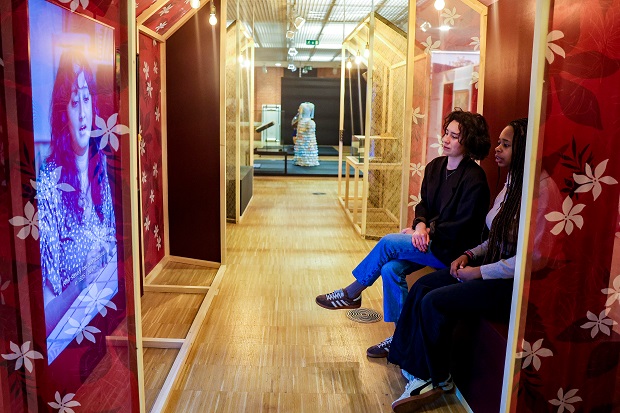
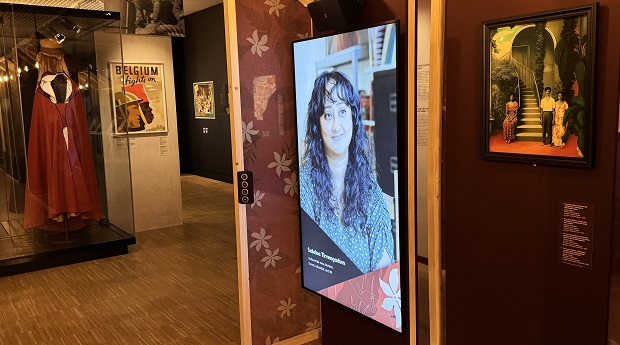
One of the central elements of Postcolonial? is a series of eight filmed personal stories. These testimonies explore how colonialism has affected individuals and families across generations, each paired with an object, photograph or artwork that deepens the narrative.
The exhibition also addresses the persistence of colonial structures after independence. It examines how economic control over raw materials and political influence continued in former colonies, often described as neocolonialism or extractivism. These themes are reflected in several contemporary artworks.
Visitors are encouraged to consider how people not directly involved in colonial systems still benefited from them. The exhibition also touches on migration histories, including the Windrush generation of Caribbean migrants in the UK, linking colonial ties to post-war population movements.

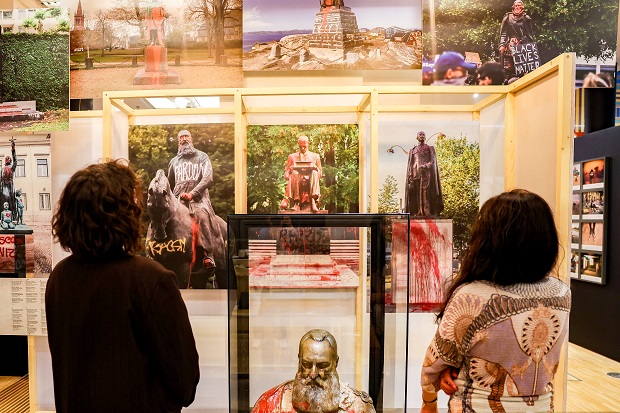
The final section focuses on the present-day legacy of colonialism. It looks at debates around racism, public memory and the role of museums. Displays include objects connected to recent protests, such as items linked to the removal of colonial statues in Europe, as well as the bust of Leopold II removed from Citadel Park in Ghent after it was vandalised.
Questions around restitution are also addressed, including references to the 1970 documentary You Hide Me, remastered in 2004, which examines the presence of looted artefacts in European museums, specifically the British Museum that owns a vast array of art from the colonial era.
In a note accompanying the exhibition, museum director Constanze Itzel said the institution aims to “raise awareness for the consequences of history for today” and contribute to a more inclusive understanding of Europe’s past.
The temporary show is presented as part of an ongoing process with curators describing it as a starting point for deeper reflection on how colonial histories are remembered, debated and reassessed in Europe today.
A complementary programme of activities is co-created with artists, academics, activists and cultural partners to amplify the exhibition’s decolonial vision.
Postcolonial?
Until 14 March 1927
Rue Belliard 135
Brussels
Photos: ©Be_Culture