
- Daily & Weekly newsletters
- Buy & download The Bulletin
- Comment on our articles
Related articles
Recent


Popular



Musée d’Ixelles to reopen in March 2027 with a festive weekend celebrating its ambitious relaunch

One year before Musée d’Ixelles reopens its doors after a protracted refurbishment project, the public art institution unveils its technical progress and ambitious plans for the future.
The museum will celebrate its new facilities with a festive weekend for the public from 19 to 21 March 2027, some nine years after its closure.
Although it was initially due to reopen in 2022, a series of unexpected issues including Covid and structural damage led to the opening being successively postponed.
For the museum, this was an unanticipated opportunity to reflect on the role and identity of the 135-year-old institution, which boasts a collection of 15,000 works primarily by Belgian artists.
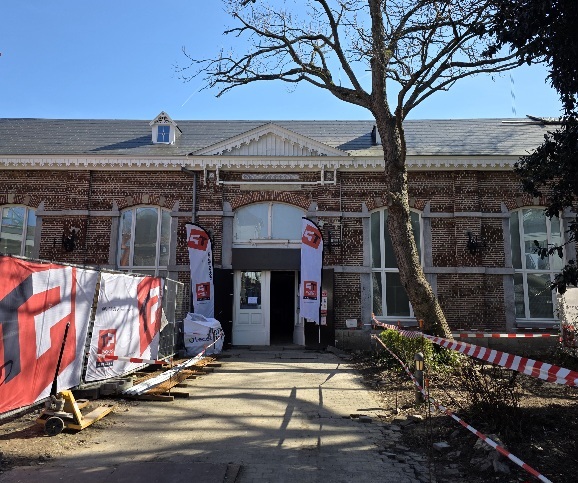
“From the beginning, the team treated this period of closure as a project in its own right,” says director Claire Leblanc, who adds that it was time for the museum to write a new chapter in its history.
The relaunch includes creating a space to serves as a dialogue between heritage and contemporary expression, while being attentive to societal issues.
Themed exhibitions and invitations to today’s artists all feature in future programming. Many of the extra mural activities developed during the museum’s closure will continue to reinforce its connection with the local community.
For Ixelles mayor Romain De Reusme, the museum is one of the municipality’s jewels. “The reopening planned for next year will be an opportunity to reconnect with the public and ensure maximum access to culture,” he says.
Two-stage renovation plan

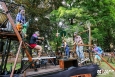
Since its inauguration in 1885, the Musée d’Ixelles in Rue Van Volsem has undergone numerous extensions, resulting in a hotch-potch of architectural styles and a confusing layout for visitors. It was originally the municipality’s slaughterhouse; one early addition was a grand ballroom (pictured above) while a 1970s wing was a later one.
The extensive refurbishment consists of two stages. The first has created a new reception area; a modern light space that features some of the original building’s red-brick walls and adjoins a new shop.

Suspended above the airy space is an installation by the Brussels-based contemporary Polish artist Tatiana Wolska that employs her signature technique of recycling waste material - on this occasion, plastic bottles.
By acquiring a neighbouring townhouse, the museum has added a conference space and rooms for educational workshops, as well as a terrace and a second garden that can be freely accessed by the public and local community. The outdoor area is designed as “a meeting place between nature and culture,” says the museum.

The second stage of the renovation involves more technical aspects and energy efficiency measures such as air conditioning, acoustics and humidity control, which are also necessary for preserving the artworks in optimal condition.
The €11.15 million improvement project is financed principally by the municipality of Ixelles to the tune of €5.12 million. This is supplemented by €4.5 million from the EU-funded Recovery and Resilience Plan (PRR), managed by the Wallonia-Brussels Federation, and two private donations.
Predominantly Belgian art
Initially founded with a donation to the municipality, 80% of the museum’s collection is Belgian art from the 19th century to the present day. A series of further bequests enriched its treasure trove of artworks that features Belgian greats such as Anna Boch, Paul Delvaux, Alechinsky, Permeke, René Magritte, Constantin Meunier and Rik Wouters. They were joined by European artists including Dürer, Heda, Picasso and Miró, as well as an impressive collection of posters by Toulouse Lautrec.
The museum’s illustrious history includes staging the first major monographic exhibition of René Magritte’s work in 1959 and numerous landmark shows in more recent decades. It has also lent works to major exhibitions in Belgium and beyond.

A tour of the museum’s newly renovated storage area below ground offers an insight into the extent of the collections. While sliding gridded racks (pictured above) are filled with paintings and drawings, sculpture and installations lie wrapped in the centre of the series of labyrinthine rooms.
Since the closure, the museum has continued its acquisition programme thanks to a €180,000 biennial budget. In a determined drive to address the gender imbalance in its collection, recent purchases include works by Lili Dujourie, Sophie Kuijken, Edith Dekyndt and Cindy Wright.
All of the collection is now digitally recorded, which helps the museum keep track of the works and facilitate loans.
Musée d’Ixelles: Re-opening weekend
19-21 March 2027
Rue Jean Van Volsem 71
Ixelles
Photos: (main image) Musée d'Ixelles ©Vincent Everarts; entrance ©Sarah Crew; Tatiana WOLSKA ©Vincent Everartss; Croquis aménagement extérieurs Trio architecture; storage ©Sarah Crew