
- Daily & Weekly newsletters
- Buy & download The Bulletin
- Comment on our articles
Related articles
Recent





Popular





Mental health in Belgium: The rising problem of truancy and school absenteeism
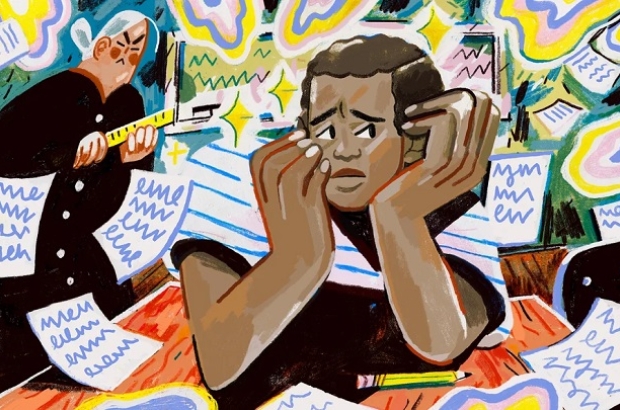
While a worrying number of students drop out of school early, there are specialised services in place to help them with their return to education. Julian Hale speaks to frontline professionals, including a clinic that treats underlying issues such as anxiety, while Emil Verhulst meets two students who struggled with their schooling.
Truancy in Belgium is a growing problem. In Brussels and Wallonia, the rate of absenteeism – when a pupil misses more than nine half days of school without justification – almost tripled between 2019-20 and 2023-24, from 32,000 to 93,000.
This official measurement of school disengagement, or décrochage scolaire, doesn’t take into account students who are becoming increasingly passive at school and failing to participate in activities or do homework.
If the issue isn’t tackled early, the impact can become extremely psychologically draining for both the student and their family. It can require considerable patience and time to repair the damage to their academic career while safeguarding their mental health. Other issues often accompany and exacerbate the problem, including underage drinking, addiction and, in some cases, self-harm.
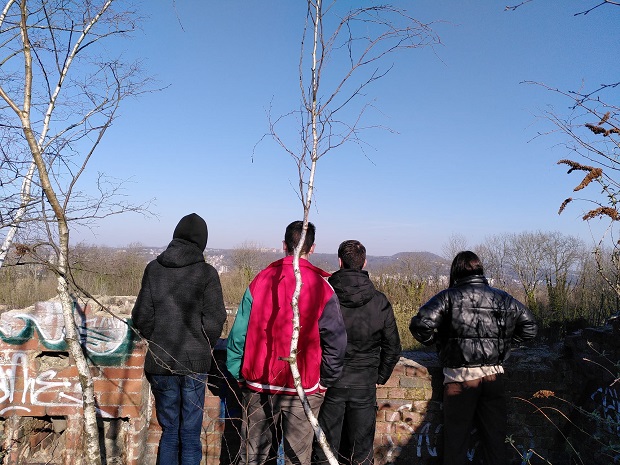
One frontline professional service in the Wallonia-Brussels Federation is Services d’Accrochage Scolaire (SAS), which offers social, educational and pedagogical support to children. There are 12 SAS outlets in the Belgian capital and Wallonia.
François Roderbourg, director of the Etterbeek service, Seuil, outlines some of the underlying factors behind the phenomenon: “Socio-economic and financial problems, problems with the law, bullying, family problems, serious depression, addiction – drugs and alcohol – and physical, sexual and moral violence are among the many reasons,” he says.
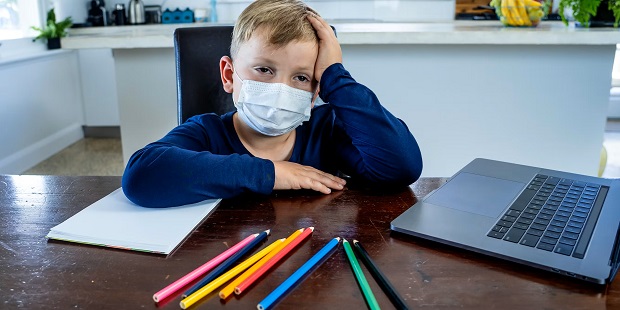
“Covid had a big impact on young people. In Brussels, people couldn’t go out. That hurt their mental health. The tripling in the number of young people in décrochage scolaire was because of what happened during Covid.”
Young people who are willing – a requisite for many mental health services – can attend this alternative educational facility after being referred by their GP, school psycho-medico-social (PMS) service or their school. Every student aged 12-18 has the right to 12 months in an SAS, in renewable stints of three months or longer.
The aim is to help the student get back into education or guide them towards a trade or professional occupation, by supporting them to regain their self-confidence and trust in educational institutions. They also have opportunities to participate in workshops, nature trips and excursions in Belgium or abroad.
“Many of the students suffer from high levels of anxiety. Social media addictions and screens are also major problems. And the geopolitical context is making things worse,” Roderbourg says.
His team of eight professionals is required to take on some 50 young people a year, which he describes as “demanding given the high level of individual attention needed”.
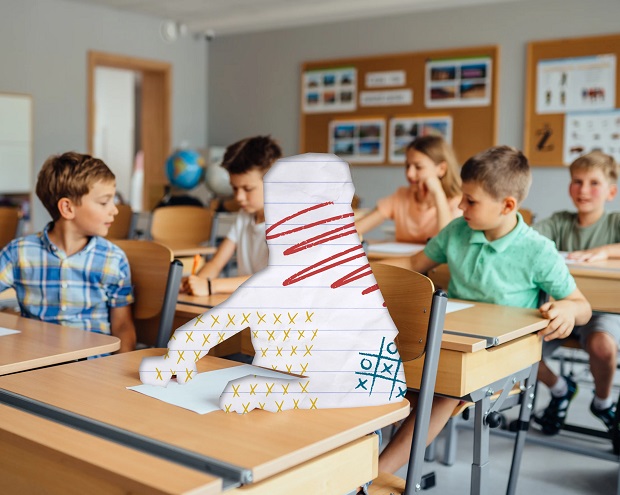
Hospital outpatient care
For students experiencing high levels of emotional distress, the SAS refers them to an institution with teams of specialists, such as the Centre Hospitalier Neurologique William Lennox, part of the Saint-Luc hospital group.
It encompasses specialist doctors, child psychologists and neurologists in the Accroch’ team, which was set up four years ago. It meets the child in their home and talks to their school and teachers. If necessary, it can propose hospitalisation to test for learning difficulties or school phobia. After ré-accrochage – getting the student back on track – they can monitor the child and their family for another six months.
Schools, PMS services, a child psychologist or a doctor can refer youngsters to places like the William Lennox Centre for treatment. GPs are likely to be aware of the problem if they have signed successive medical notes for justified absences and a medical note is needed before the centre accepts the child and their family.
“When the young person first arrives, they’re generally in a high state of emotional distress,” says Accroch’ team member Valérie Vaessen. “They feel unable to go to school, may have a phobia of school and may not be able to go out of the house or even get out of bed as they struggle with any kind of social interaction. They feel huge levels of stress and anguish.”
There may also be conflict in the family, for example between parents or between the parents and children. “It can also be very hard for siblings. A pre-existing complicated [family] environment can be exacerbated by the décrochage,” adds her colleague Chloé Lemaire.
The majority of the centre’s patients – they currently treat 80 – are suffering from anxiety, although a minority have fallen behind at school and have had to repeat at least one year. Around half have suffered from physical, verbal or psychological bullying, which often dates from primary school. The average age is 15.
The team works with the young people, who tend to be from traditional academic schools, and reorients them towards technical or professional education, apprenticeships, private schools or homeschooling via the Belgian Central Jury system. Children are usually with them for at least six months, although it can be up to a year.
For the team, the pandemic was not a major factor for many children dropping out of school. “If they had a fragility before Covid, then Covid enhanced that fragility,” says Vaessen.
Mobile teams
Schools are legally obliged to inform the Service du Droit à l’instruction (Service on the Right to Education) when students are absent for over nine half days without justification, says Benoît Lenoble from the federation’s Direction générale de l’Enseignement obligatoire (Compulsory Education Department).
Much of Lenoble’s role involves bringing together schools and teachers with the federation’s many youth support organisations. “Then, mobile teams can be sent to the child’s house to help the child and parent or parents find ways for the child to attend school regularly. The child can then be oriented to seek help from the SAS,” he explains.
“If multiple students are in a situation of décrochage scolaire in a school, the director can ask for a mobile team to be sent to see what can be improved at the school. And where there is a teacher-student or family-school dispute, a mediation process can be set up.”

There are myriad reasons why some children struggle at school. The Bulletin talks to two students who encountered difficulties as teenagers.
Carlota, 24, is in her first year of nursing school. She dropped out of secondary school in Brussels at the age of 17.
Initially, she skipped some classes, then failed to turn in homework and missed some exams. A sense of shame set in. “And then, little by little, I just stopped school,” she says. “I was smoking weed a lot for three years beforehand and then started smoking daily.”
Looking back, she thinks that “by smoking that much, I wasn’t caring at all about school and anything around it”. She also met someone in a similar situation who was older “and kind of followed what he was doing”.
Her family warned her that they would no longer financially support her if she stopped going to school. Having to work made her grow up quickly, though she found it hard to see everyone around her getting their diplomas. “It makes you a bit less confident,” she says. “But I think I still have a lot of good things about stopping school, too. So I don’t think it’s all bad, either.”
Carlota believes it was her own choices, rather than the school, that were behind her decision to drop out of school early. “I think sometimes Belgian schools can be really strict. And if you’re not going in that way, it’s not good. But I also think you have a lot of possibilities.”
She outlines options such as switching to less academic schools and combining work with studies. In her case, she returned to studying five years after dropping out.
Although Gauthier, 21, is now at university, his academic career at schools in Ghent and Flemish Brabant was not plain sailing. Like many pupils in the Belgian system, he was told he needed to repeat his second year of secondary school.
“I didn’t want to sit in class with kids who were a year younger than me,” he says. Fearing he would be picked on for being older and for failing, he decided to catch up on the school year from home. “I basically needed to do every class on my own and teach it to myself.”
He believes his previous difficulty with keeping up with classwork was due to violence at home. “I couldn’t really focus on school,” he says. “When I came home, I just wanted to block out the noise and play some video games for me to not think about the situation I’m in.”
Gauthier recognises that his school picked up on his difficulties quite quickly and tried to help him. A counsellor offered to explain his home situation to teachers. “But I didn’t want that because I just want to be a normal guy and not the guy with the problems. I didn’t want the pity of the teachers. I didn’t want them to look at me and be like, that’s the kid who got beat up by his stepfather.”
For the year he was out of school, he continued playing football but otherwise had little social contact. He did later see a psychologist “because it took a toll on me”, while his home situation improved when his mother left his stepfather. “There is no more violence in my house. Moving was the main factor to gain some mental clarity. My girlfriend helped me a lot also because she studies psychology.”
Although he missed going to school and joking with friends, learning to be self-reliant at a young age has been a life lesson, says Gauthier. “I just got used to being on my own. I don’t need constant stimulation from someone else.” He also credits the experience with making him more focused in his studies.
Brussels and Wallonia
Services d’Accrochage Scolaire Short-term social, educational and pedagogical support for children and teenagers (Fr)
AMO (Action en Milieu Ouvert) Centre providing information, support and orientation for young people (Fr)
MADO (MAison de l’aDOlescence) Support and information for 11 to 22-year-olds and their families in Brussels: North and South (Fr & NL)
Centre Hospitalier Neurologique William Lennox: Service Accroch’ - Multidisciplinary team supporting children and teenagers located in Ottigines (Fr)
Community Help Service (CHS) Mental health centre for adults, children, adolescents and families with a multidisciplinary and multilingual team (Eng)
Flanders
Konekt Training, courses and inclusive activities for young people and adults needing cognitive or social support (NL)
NAFT Support pathways helping young people at risk of dropping out reconnect with education and society (NL)
CLB Student guidance centres offering educational, psychological and social support to pupils and families (NL)
VDAB Public employment service providing job search support, training and career guidance (NL)
Teleblok Online and telephone support service for students dealing with stress, study pressure or personal problems (NL)
For more information on addiction treatment and mental health services in Belgium: Mental health care in Belgium: National survey plus where to get help and support | The Bulletin
Photos: (main image) ©Kelsey Wroten for NPR; ©Services d’Accrochage Scolaire; ©IBX insights; ©Sam Wordley/Shutterstock; ©video.game-addiction.org
The production of this feature was supported by a grant from the Local Innovative Media In Europe Network (LIMENet), co-funded by the European Union.