
- Daily & Weekly newsletters
- Buy & download The Bulletin
- Comment on our articles
Related articles
Recent




Popular



What’s new in Mons and Hainaut province?

If you are in search of an under-the-radar tourist destination, look no further than the province of Hainaut, which harbours a fascinating mix of hidden gems. In addition to 19 Unesco sites, historic towns, cities, castles and abundant nature, its quirky folklore traditions and gritty industrial heritage offer an authentic travel experience.
Mons
Hainaut’s capital is notable as a former medieval and military bastion, but the once coalmining hub has undergone large-scale urban regeneration. It was given a new lease of life in 2015 as a European Capital of Culture when numerous heritage buildings were transformed into new museums. It may have been delayed by 10 years, but the city’s sci-fi style Santiago Calatrava train station finally opened in 2025.
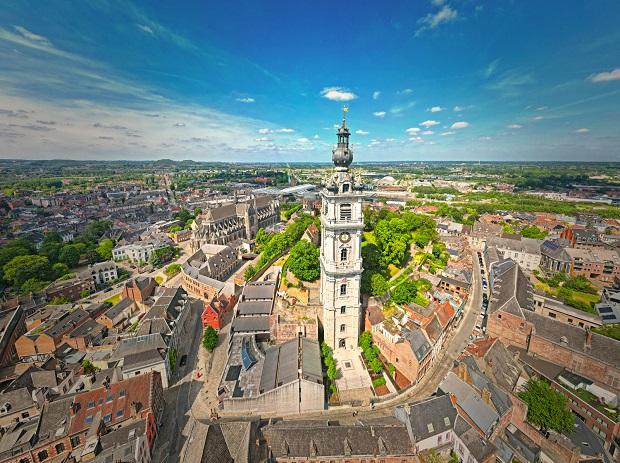
Cobblestoned streets lead to the medieval Grand-Place and gothic city hall , home to the tourist office and inner courtyard garden, Jardin du Mayeur. From here, charming alleys wind up to the city’s focal point, the Unesco-recognised belfry. It affords a bird’s-eye view of the city, the gothic collegiate church of Sainte-Waudru and surrounding countryside.
If you’re looking for a spot of culture, museums are dotted all over the once fortified hilltop city. A good starting point is the museum complex CAP (Culture, Art and Patrimoine) in Rue Neuve. The modern fine arts museum hosts temporary exhibitions, including shows dedicated to major international artists. It currently turns the spotlight on Belgian communism in the 20th century in Regards Pluriels: L’art belge et l’utopie communiste au XXème siècle. Revealing the social awareness of these artists, from Magritte and Bury to Vanriet and Graverol, the show runs until 16 August.
A walled and terraced garden serves as the main gateway to the arts complex. Visitors can stroll around a botanical and historical garden showcasing local sculpture and plant species, a collaborative permaculture garden and visit La Guinguette, an attractive outdoor space for coffee and drinks.
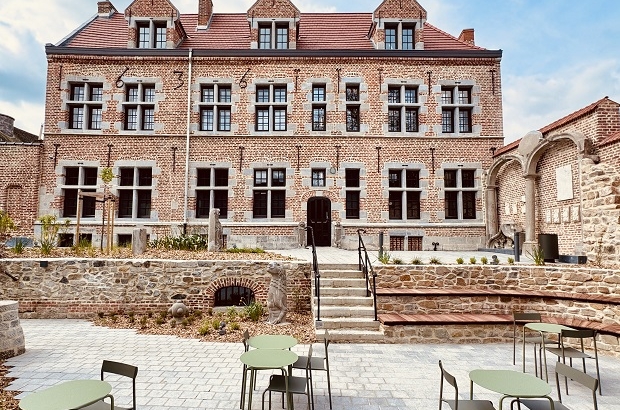
Overlooking the cloistered garden is the Collections House (pictured above), which explores the colourful history of Mons through the city’s extensive collections. It is accessed from the arts museum via an ancient underground tunnel (pictured above) that once served as a thoroughfare for this former convent gatehouse. Rooftop Summer Mons is an annual happening on the roof of the city’s fine arts museum. DJs, deckchairs and delicious cocktails plus a food corner cost €4 for the whole season, which also provides access to exhibitions (until 26 August).
Mons’ Artothèque displays the fully restored 16th-century painting, the Crucifixion, as part of the exhibition Fragile(s): Stories of Restored Heritage (until 18 October). The artwork boasts a fascinating history. Stolen in 1980, it was returned to the nearby Collegiate Church of Saint Waudru and entrusted to the art library for a complete restoration.
This summer, the historic heart of the city is filled with a parade of elephants. The VisitMons site details the seasonal street art project L’art habite la Ville, which also supports the conservation of Asian elephants.
Memorial tourism

The area around Mons played a significant role in numerous conflicts due to its strategic location close to the French border. The Mons Memorial Museum (pictured above) is dedicated to World War One and remembrance; inviting visitors to reflect on the wider phenomenon of war. Exhibits focus on the relationship between civilians and the military. Its current show, Political Poster. 50 Years of Triennials, showcases the committed artists from around the world who have participated in the competition (until 2 May 2027).
Outside the city, the village of Saint-Symphorien (pictured) is a small woodland military cemetery laid out on an old mine which mixes German and British graves, including those of the first and last Commonwealth soldiers killed in WWI.
Nearby attractions

The Unesco-recognised Neolithic flint mines of Spiennes come complete with a visitor centre, while slightly further south lies the Chant d’Eole domain that produces quality sparkling wines according to the Champagne method and runs group tours and tastings. Another successful local winegrower is Domaine des Agaises, better known under the name Ruffus.

Wallonia’s biggest tourist attraction is the Pairi Daiza animal park and resort set in the former Cambron Abbey in the village of Brugelette. With more than 7,000 species, it takes visitors on a global journey around eight themed worlds. Families will also appreciate SPARKOH! (pictured above) in Frameries, an interactive science centre with indoor and outdoor activities, while DOCK79 is another multi-activity leisure park.
Heading south, is the rural area familiarly known as the boot of Hainaut. It’s home to the gastronomic delights of Chimay Abbey and Biercée distillery, as well as the extensive Lacs de l’Eau d’Heure (pictured, above). The top tourist destination in Wallonia and largest man-made water resort in Belgium boasts a holiday village and nautical, nature and adventure activities. Two water ski lifts plus a restaurant/terrace with wood burner and onsite eco-friendly accommodation, make up the lakes’ Spin Cablepark.
Cultural highlights
Rudyard Kipling classic Le Livre de la Jungle is this year’s annual sound and light show at the château of Beloeil, staged by world-renowned theatre director Luc Petit. Performed by some 100 artists — actors, acrobats, dancers and fire jugglers — the domain known as the Versailles of Belgium is transformed into an immersive wild jungle (until 16 August).
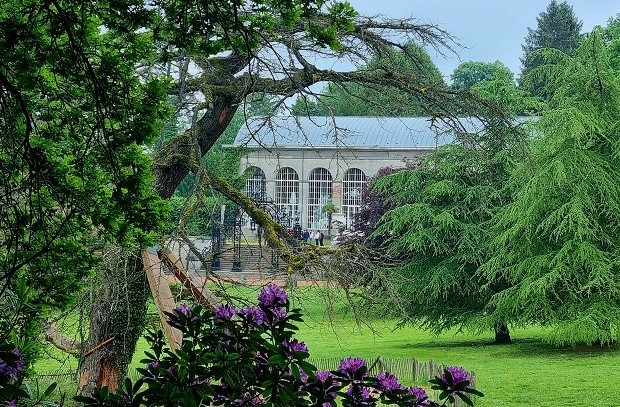
Mariemont Museum near La Louvière is filled with worldclass treasures and set in beautiful rolling parkland and woods. The grounds are dotted with the former chateau’s relics as well as artworks. Entrance is free, except for temporary exhibitions.
Binche is famed for its folklore festivities. The town that dates from medieval times plays host to the Gilles during carnival celebrations, and is also worth visiting for the 2km walk around its ancient ramparts, an impressive mask museum and lively Grand Place.
The 6th edition of the contemporary art trail Biennale d’Enghien runs from 5 to 20 September. Entitled Miroirs 6 / Tenir debout, it invites art and heritage lovers to reflect on the beauty of the world around them via the prism of the enchanting setting. Within this open-to the-public domain, 12 Belgian and international contemporary artists have created inspired by the surrounding nature and architecture of the 182-hectare park.
Industrial heritage
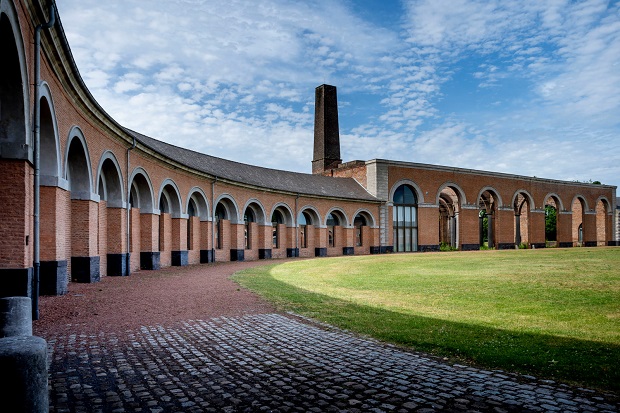
Former colliery Grand-Hornu, west of Mons, was once one of the finest 19th-century miners’ villages. Now the Unesco site with its neoclassic architecture, harbours two renowned contemporary art and design museums, MACS and CID, and also runs summer activities.
Nearby sites illustrating ‘black country’ industrial history include the Bois du Cazier, commemorating the 1956 Marcinelles mining tragedy, that also features industrial and glass museums, as well as the Bois-du-Luc mining museum.
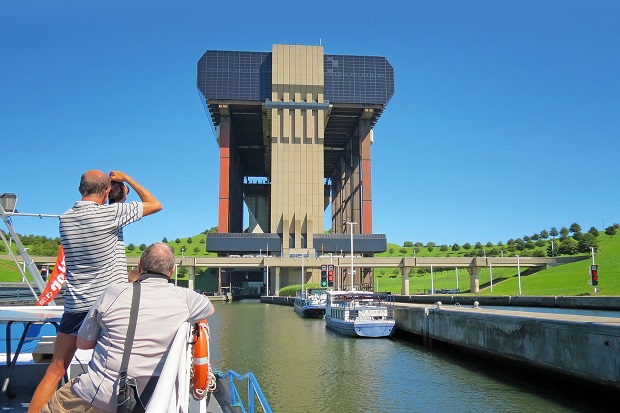
Close to La Louvière and conveniently adjacent to the E42 motorway, the world famous Strépy-Thieu boat lift and museum is sited along a scenic canal. Visitors come to admire the surrealistic spectacle of barges and other watercraft being raised or lowered by the famous lifts. The visitor centre explores the history of the site and the importance of the canals for the region’s industry, and offers panoramic views of the site.
For travel information about Tournai, read this feature from our archives about the historic Hainaut city.
Discover dazzling Art Deco and modernist glassware by Belgian crystal factory Val Saint Lambert at this exhibition in Charleroi celebrating the Liège company’s bicentenary.
Photos: (main image) Grand-Place de Mons ©WBT-David Augusto Rocaberti Salamanca; Mons - Beffroi and city centre ©Chris Chevalier; Collections House ©Be Culture; Mons Memorial Musuem ©Mara De Sario; Spiennes ©WBT/JP Remy; Royal Domain of Mariemont ©The Bulletin; Grand-Hornu ©WBT/ Henning Angerer; Strepy rivertours
Explore Belgium: Hainaut is ideal for culture, nature, heritage and folklore | The Bulletin