
- Daily & Weekly newsletters
- Buy & download The Bulletin
- Comment on our articles
Related articles
Recent


Popular



Planning permission granted for Cinquantenaire renovation
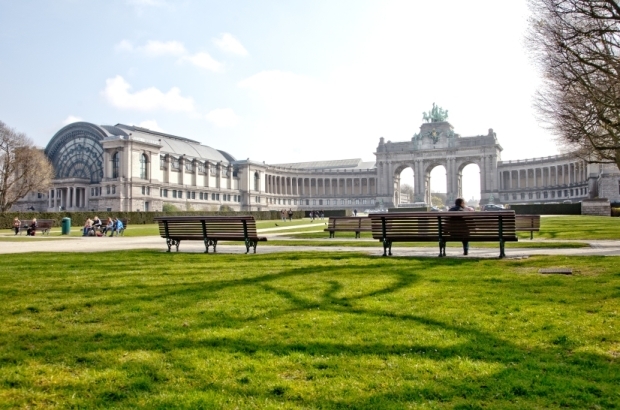
The federal Brussels fund Beliris has secured planning permission for the renovation of Cinquantenaire park, with an aim to complete the refurbishment in time for Belgium’s 200th anniversary in 2030.
“Cinquantenaire park isn’t just any place on the map of Brussels. It’s a landmark, a symbol, a meeting place that every Brussels resident has etched into their memory in one way or another,” said Audrey Henry (MR), state secretary for urban development.
“Whole generations have walked, partied, run, dreamt and met one another here. As Belgium’s bicentenary approaches, this park must be preserved and restored so that new generations, in turn, can write their own stories here.”
The Beliris works are intended to enhance the green character of the park and restore its tree heritage, while new planting schemes promote greater biodiversity.
Footpaths will be re-laid and tarmac areas in the park will be replaced with natural stone. Greater attention will be paid to soil permeability.
Rainwater from the roofs of the museums in the park will be collected in reservoirs and used to water plants during periods of drought. Beliris also intends to create several rain gardens.
Recreational and sports areas will be redesigned to better meet users’ expectations, while blending into the park’s layout.
The plans were slightly amended at the start of the year. The athletics track will not be extended, but will instead be shortened and narrowed. Two multi-sports pitches with artificial turf will be built on the central section of the athletics track, providing space for activities such as yoga and slacklining.
Another change to the plans concerns the lighting, which will be modernised throughout the park but will only remain on all night along the central avenues. On the other paths, the lighting will switch off after midnight.
“This protects the peace and quiet of the wildlife, combats light pollution and saves a great deal of energy,” the plans explain.
Beliris has a budget of €20 million to carry out the works.
“More than ever, Cinquantenaire park will be the green heart of the capital - an attractive space for living and socialising, for both residents and the many tourists who visit,” said interior minister Bernard Quintin (MR), who is responsible for Beliris.
“In a city facing climate challenges, developing this green lung is a direct investment in the quality of life of the people of Brussels,” said Ans Persoons (Vooruit), Brussels state secretary for the environment, climate and heritage.
“Our ambition is clear: to preserve and enhance nature whilst ensuring diverse and safe use for the people of Brussels.”
The upgrades rooted in environmental concerns come at a time when residents are especially worried about the balance between the park’s use and its ecosystem.
Several committees and associations representing residents living near the park have created a joint platform to call for stricter regulations on events organised in Cinquantenaire and on its esplanade.
The new body brings together the Groupement des Associations du Quartier européen (GAQ), the Association du Quartier Léopold (AQL), the Tervueren-Montgomery Committee, the Saint-Michel Committee and the Tervueren/Tongres/Braffort/Ménapiens Committee.
Local residents are criticising the increasing number of events which they consider to be noisy, waste-generating and attracting large crowds.
In their view, these activities are contributing to the deterioration of the Cinquantenaire park, a listed site which Brussels Environment classifies as a “quiet area open to the public”.
The platform is calling for a ban on privately organised commercial events such as the Hangar concerts or the Fiesta Latina, which is due to move from Bois de la Cambre this year to Cinquantenaire at the end of August, and last for three days.
The organisations also wish to ensure that no decision regarding the use of the park or its esplanade is taken without prior consultation with the cultural institutions on the site and local residents. They believe such consultation is essential to preserve "community harmony" in the densely populated neighbourhood.
The signatories wish for the activities organised to be compatible with the missions of the cultural institutions based on the site, such as the Army Museum, Autoworld, the Royal Museums of Art and History and the Royal Institute for Cultural Heritage.