
- Daily & Weekly newsletters
- Buy & download The Bulletin
- Comment on our articles
Related articles
Recent


Popular




Brussels terror attacks: Molenbeek, 10 years on
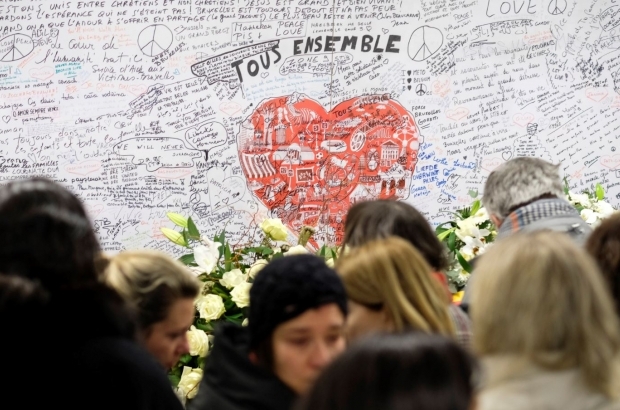
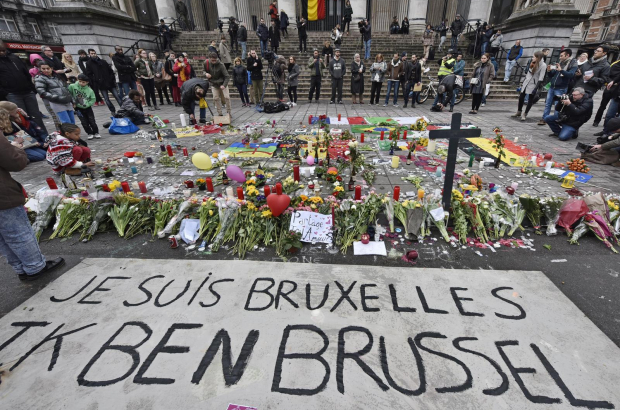
On the morning of 22 March 2016, commuters filled the departure hall at Brussels Airport while rush-hour crowds packed the platforms of Maelbeek metro station. It was an ordinary weekday morning in Brussels. Within minutes, it would become one of the darkest days in the country’s history.
Two explosions ripped through the airport shortly before 8.00. An hour later, another bomb detonated inside the metro system in the heart of the European quarter. Some 32 people were killed and hundreds were injured, many of them critically. The attacks were later claimed by an Islamic State group based in Belgium and carried out by members of a network that had already been involved in the November 2015 Paris attacks only months earlier.
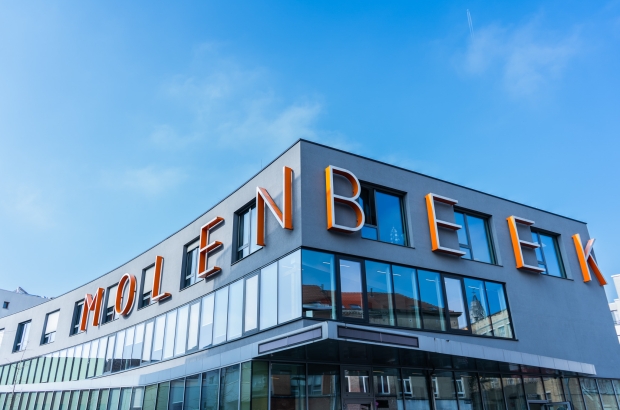
Almost immediately, attention turned to one particular municipality that was synonymous with poverty: Molenbeek. Home to about 100,000 residents with a large population of Moroccan descent, it has an estimated 80% of inhabitants identifying as Muslim. Within days, the neighbourhood’s name had become shorthand in international media for extremism, radicalisation and Islamic terrorism.
But 10 years later, people who studied the attacks, governed the municipality and worked directly with its residents say the reality was far more complex.

Exposing a network far larger than Molenbeek
As investigators began tracing the attackers’ movements, it quickly became clear that the terrorist cell was not confined to a single municipality and was spread all over the city.
“Not all of the attackers came from Molenbeek,” explains counter-terrorism specialist and an expert witness at the attacks’ trial, Mohamed Fahmi. “We had two or three gangs inside this terrorist network. Some of them were living in Anderlecht, some in Schaerbeek and some in Molenbeek.”
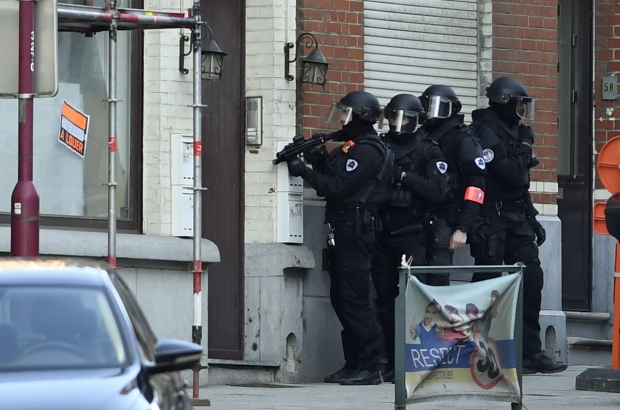
For Fahmi, the international focus on one municipality obscured the structure of the network itself and made it a municipal issue rather than a city-wide one.
“When we talk about radicalism or terrorism, we observe the same trends in different parts of Brussels,” he says. “Molenbeek is not unique in that regard. It was simply one part of a much larger network operating across several municipalities.”
The attacks themselves were part of a longer chain of events. Just months earlier, in November 2015, coordinated terrorist attacks had struck Paris, killing 130 people. Several suspects in those attacks also had ties to Molenbeek, turning the neighbourhood into a focal point for investigators and backlash, especially from French media.
“After the Paris attacks we strengthened cooperation with the federal police and the intelligence services,” says Françoise Schepmans, the liberal mayor of Molenbeek during the crisis. “We increased controls and tried to monitor what was happening more closely in the municipality.”
Part of the difficulty, Fahmi explains, was structural, and based on policy between countries and different security groups.
“The main problem at that time was the exchange of information policy,” he says. “Today the information is better exchanged and we have a more precise image of what is happening on the field.”
At the same time, local authorities were beginning to confront another reality: radicalisation had emerged years before the attacks.

Olivier Vanderhaeghen, now director of social affairs at the CPAS social welfare centre of Molenbeek, previously headed the municipality’s crime prevention and anti-radicalisation service.
“Around 2014 the issue of radicalisation started appearing more clearly, especially when people from Belgium and Molenbeek began leaving for Syria,” he says.
According to The European Institute for Peace, 47 Molenbeek residents had left Belgium for Syria between 2011 and 2016, about one tenth of all Belgian fighters in Syria.
For Vanderhaeghen as well as local officials, this marked the beginning of a new challenge in a neighbourhood that was separate from the rest of the city, in terms of community and structure.
“We tried to develop prevention programmes against violent extremism,” he says. “The work focused on three areas, supporting families of people involved in radicalisation, training professionals, and raising awareness among young people.”
How Molenbeek became a symbol of jihadism
While investigators slowly pieced together the structure of the terrorist network, the global media had already found its damning narrative.

Television crews from across Europe and the US descended on Molenbeek. Satellite vans filled the narrow streets. Newspapers labelled the area “Europe’s jihadist capital”.
For residents and local officials, the sudden spotlight felt overwhelming and unjustified.
“In the beginning it was a catastrophe because all the international media were in Molenbeek,” Vanderhaeghen recalls. “They stigmatised the municipality and mixed together the Muslim population and the terrorist attacks.”
Calling it a staging ground for terrorism was also incorrect, as according to Fahmi and countless other sources, most of the attackers were former criminals and were radicalised in prison rather than on the streets.

Although most of the media’s points were unjustified and incorrect, once the narrative took hold, it proved difficult to challenge.
“For me it was deeply unfair because an entire community was reduced to a caricature,” Schepmans says. “That image did not reflect the reality of the people who live here.”
Ten years on, the stigma continues to shape the municipality’s reputation negatively.
“Even today, Molenbeek still carries what happened in 2015 and 2016,” Schepmans says. “For the image of the municipality it is very damaging.”
For social workers trying to address radicalisation, the stigma created another obstacle, even more difficult than before.
“When we try to speak about radicalisation, we can’t speak objectively about the facts any more,” Vanderhaeghen explains. “People immediately say it’s stigmatisation, Islamophobia or racism.”
That tension made prevention work far more complicated and closed off the already very disconnected community even more from the rest of the country and city.
“You speak about prevention of radicalisation,” he says, “but residents hear it as an accusation against the community.”
Preventing the next crisis
A decade later, the nature of radicalisation has evolved, becoming increasingly digitalised and targeting people younger in age.
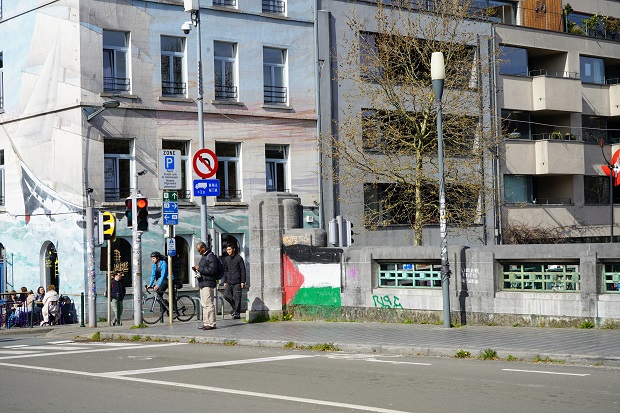
“Regarding the terrorist threat in Belgium since 2016, it has changed greatly,” Fahmi says. “Today it’s more an online thing.”
But while the methods have changed, many of the social challenges remain. Prevention programmes now focus heavily on education and youth engagement.
“We try to focus our efforts on young people between 12 and 25 years old,” Vanderhaeghen explains. “Not only about terrorism, but about issues like conspiracy theories, polarisation and freedom of speech.”
According to him, the early signs of radicalisation are rarely ideological and are much more social-based.
“You have to forget the visible signs of radicalisation,” he says. “The real signal is a change in behaviour, leaving school, leaving friends, breaking with family and social networks.”
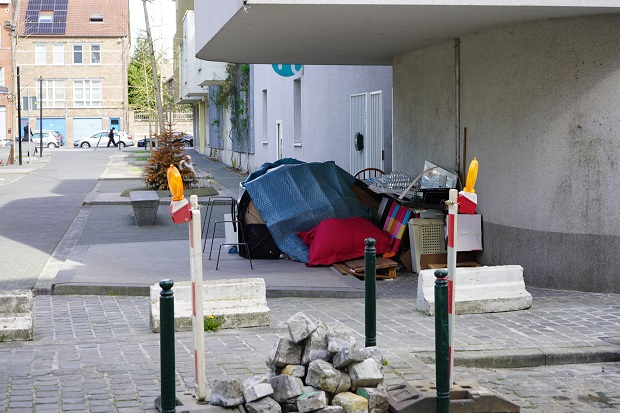
For Schepmans, long-term solutions lie beyond security measures alone and lie more with trust and community.
“When I was mayor, my priority was to invest in culture and social cohesion,” she says. “Security is important, but it does not solve everything for the future.”
Programmes that Schepmans pushed for such as CAPREV (Centre for Assistance and Support for People Directly Affected by Radicalism and Violent Extremism) employ trained teachers, social workers and community leaders to recognise and respond to early signs of radicalisation. But much deeper structural issues remain.
According to Statbel, Molenbeek has the second lowest median income of any Belgian municipality at €21,200, only behind Saint-Josse Ten-Noode. Molenbeek also has a 31% risk of poverty, which is almost double the national figure of 16%.
“Poverty is part of the problem,” Vanderhaeghen says. “But the bigger issue is the lack of diversification in the population. Many people stay inside their own community and rarely leave the municipality.”
Without a real connection to the rest of the city, Molenbeek will remain somewhat of a city within a city. Much of this is related to the stigmatisation and blame put on the municipality in the past 10 years, pushing some residents to isolate even more.

Searching for a new narrative
Ten years after the attacks, Molenbeek is still negotiating its place in the public imagination. The municipality has undergone urban redevelopment and undertaken cultural initiatives aimed at reshaping its image. A new generation has grown up since the attacks, one that remembers the events only indirectly, for better or for worse. Yet the narrative surrounding Molenbeek remains powerful.
“Even today we still see that Molenbeek carries this reputation,” Fahmi says. “Recent attacks in Brussels were linked to other neighbourhoods, but no one described those places as the ‘heart of terrorism’ in Belgium.”
For those who live and work in the municipality, changing that narrative will take considerable time. Yet some hope that Molenbeek's thriving culture can play a role in rewriting the story.
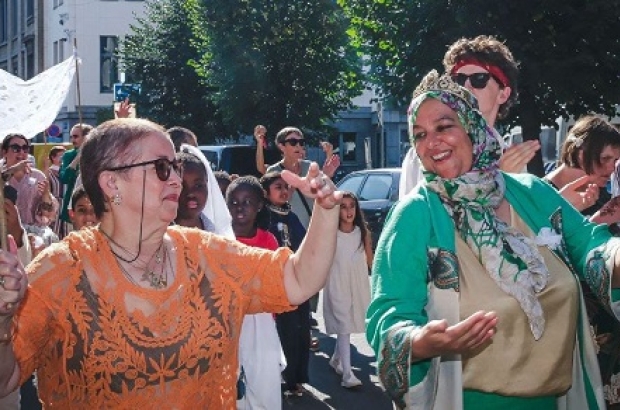
Although it was not selected, Molenbeek was Brussels’ bid to become European Capital of Culture in 2030. It was an initiative designed to highlight the neighbourhood’s artistic energy and sense of community rather than its association with terrorism.
“My dream is that Molenbeek will one day be recognised as a place of culture, creativity and diversity,” Schepmans says, “where people live together side by side.”
The challenge now is ensuring that, in the years to come, Molenbeek is remembered not for the violence linked to it, but for the community that continues to rebuild beyond it.
Photos: (main image) Maelbeek metro station 2015; Memorial to the victims in EU quarter; police raids ©Belga; Ikbenbrusseljesuisbruxelles Facebook page; Molenbeek town hall ©Emil Verhulst; Maelbeek metro station ©Belga; Canal district of Molenbeek ©Emil Verhulst; I like Molenbeek Facebook page; Molenbeek ©Emil Verhulst; Molenbeek ©Emil Verhulst; Market at Molenbeek ©Emil Verhulst; ©Molenbeek for Brussels 2030