
- Daily & Weekly newsletters
- Buy & download The Bulletin
- Comment on our articles
Related articles
Recent


Popular


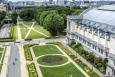


Wing of Cinquantenaire museum to remain closed for months due to stability issues
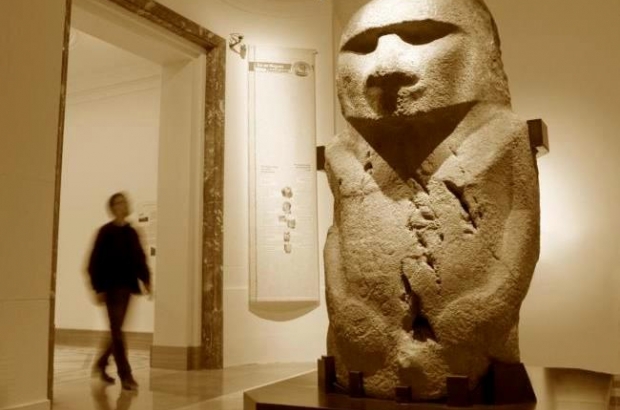
The entire antiquities wing of the Museum of Art and History at Cinquantenaire Park in Brussels has been closed for two months and will remain closed for at least several more months due to safety issues related to the ceilings.
The antiquities wing includes the Rome, Greece and Egypt galleries, as well as the Near East and Islamic art galleries, but these have been closed since February due to safety and the renovation works, Bruzz reports.
The ceiling of the Petra Room, a small meeting room on the ground floor of the wing, suddenly collapsed last summer. No one was present at the time.
The museum called in the Buildings Agency, which decided to carry out an inspection and sent in a specialist firm to investigate the stability of the false ceilings.
Concerns then arose regarding the possible presence of asbestos fibres in the insulating glass wool of the ceilings, so the firm also carried out an investigation into this.
Museum staff were given a workspace elsewhere in the building, and anyone who still needed to be in the wing wore a face mask.
The museum then decided to close the entire wing to visitors indefinitely so that they would not be exposed to any fibres. It has since emerged that no asbestos was found.
“An FFP2 face mask is therefore no longer required for anyone entering the building, but a hard hat is still necessary,” said museum spokesperson Bart Suys.
The investigation revealed that several false ceilings were unstable. Management therefore intends to remove them throughout the building.
The process of appointing a contractor is currently under way and the aim is for work to start this month.
According to Suys, the work will be carried out in three phases, working from the bottom up: first the Near East and the area around the Apamea mosaic on the ground floor and first floor, then the Greece, Rome and Egypt galleries on the upper floors, and finally the Egypt storage area on the fifth floor.
All the offices will also be tackled. Each time, the galleries will have to be cleared.
“It’s a massive undertaking,” said Suys.
Suys cannot say how long the wing will remain closed. The museum website states "at least until the end of June", but a school that saw its planned visit to the museum cancelled was told it could take up to a year.
“Work on the first phase is due to start this month. In the meantime, we have already begun moving the exhibited works downstairs,” Suys said.
“The timing of the next two phases and that of the work on the offices still needs to be discussed with the contractor who will be appointed. There are still many uncertainties and questions.”
The Buildings Agency is also currently unable to provide a completion date, but said that its “aim is to carry out the works as quickly as possible”.
While the antiquities section remains inaccessible, visitors can still visit the museum’s other departments, such as the prehistory, Art Nouveau and Art Deco, America and Asia galleries.
The museum’s three libraries, on the other hand, are also closed indefinitely, according to the website.
The antiquities library and the volunteer-run China library are located in the closed antiquities wing. The central library, elsewhere in the building, is reportedly closed due to staff shortages.
The antiquities wing is often referred to by the museum as the "new" wing. The original antiquities pavilion dates from the late 19th century but was completely destroyed by fire in 1946.