
- Daily & Weekly newsletters
- Buy & download The Bulletin
- Comment on our articles
Related articles
Recent




Popular




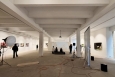
The Bridge Theatre in Brussels: Autumn production of Michael Frayn’s ‘Copenhagen’ is more than a play about nuclear physics

We are living through a remarkable period of human history. Technologies that seemed like science fiction a generation ago are now part of everyday life: artificial intelligence writes and creates, autonomous systems reshape warfare, biotechnology opens possibilities once unimaginable. But just because something is technologically possible does not mean that it should be done.
This dilemma is at the heart of Michael Frayn’s extraordinary play Copenhagen that The Bridge Theatre is staging in Brussels from 15 October to 6 November.
Written in 1998, the drama returns to one of the most consequential moments in the history of science. In 1941, Werner Heisenberg travelled to Nazi-occupied Copenhagen to meet his former mentor, the physicist Niels Bohr. The two had once been close collaborators in nuclear physics. Now Europe was at war, and the discovery of nuclear fission had opened up the possibility of a weapon capable of unprecedented destruction.
Exactly what happened during Heisenberg’s visit remains a mystery. He may have been seeking Bohr’s help, or even trying to steer Nazi Germany away from making any breakthroughs. History has no clear answer.
Frayn takes this historical uncertainty and turns it into something extraordinary. Copenhagen is part detective story, part philosophical debate and part emotional reckoning. As the characters revisit that fateful evening, the story keeps shifting beneath them. Certainties dissolve, motives blur, and memory itself becomes unreliable. Rather than telling us who was right or wrong, the play asks us to sit with the uncomfortable possibility that even the people making history may not fully understand what they are doing.
How scientific discoveries raise hard questions
Human ingenuity has repeatedly given us new possibilities before we have had the chance to understand their consequences, especially when the excitement of discovery becomes a race to be first. Somewhere between “Can we?” and “Should we?” lies a harder set of questions: Why are we doing this? Who will benefit? Who might be harmed? Who is responsible for what happens next? These were exactly the questions that Niels Bohr and Werner Heisenberg were grappling with on that chilly night in 1941.
We are, of course, confronting very different technologies today. Yet the underlying human dilemma is remarkably familiar: our capacity to create keeps outpacing our capacity to understand what we have created. The questions reach far beyond science. It concerns governments, businesses, researchers and all of us as citizens.
The role of theatre in examining complex questions

Theatre has a surprisingly important role to play in that conversation. A good play does not tell us what to think, rather it gives us a space in which to think. For two hours, an audience can inhabit uncertainty, see an argument from several sides, and empathise with people whose choices we might otherwise condemn. In a world increasingly divided into instant opinions and opposing camps, there is something valuable about being asked to embrace complexity.
I became particularly aware of the power of context during our production of George Brant’s Grounded (pictured above), a 2013 play about the psychological toll of drone warfare. When we staged it in Brussels a decade later, audiences were watching in the shadow of the wars in Ukraine and Gaza. The play had not changed. The world around it had, and consequently the experience of watching it changed too.
The words of a play remain on the page, but audiences do not. We arrive in the auditorium carrying the current events, anxieties and hopes of our own time, and an old story can suddenly feel as though it was written for us.
Perhaps that is why Copenhagen still resonates nearly three decades after it was first written. It is not ultimately a play about nuclear physics. It is about human beings trying to make responsible choices in a world transformed by their own discoveries.
And perhaps, when technological change feels faster than our ability to think it through, a place to pause, question and listen to another perspective is exactly what we need.
Copenhagen by Michael Frayn
15 October to 6 November
La Maison Qui Chante
Ixelles