- Daily & Weekly newsletters
- Buy & download The Bulletin
- Comment on our articles
Related articles
Recent



Popular



European culture capital candidate Molenbeek 2030 to be wound up
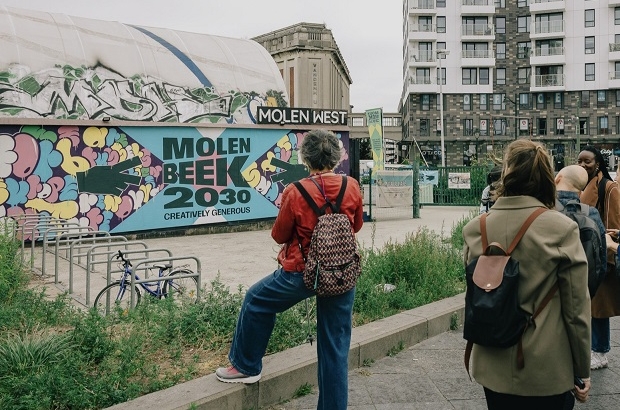
A year after Brussels missed out on the title of European Capital of Culture, the non-profit organisation Molenbeek 2030 will cease to exist.
Hopes to keep alive a slimmed-down version of the project have finally been dashed. “There is a lack of political will,” admitted former commissioners Fatima Zibouh and Jan Goossens, reports Bruzz.
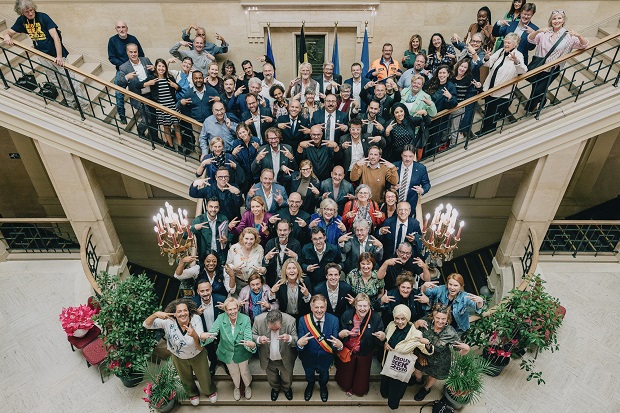
It was in September 2025 that the Brussels candidate failed in its bid to become Capital of Culture in 2030, losing out in the final to Flemish city Leuven.
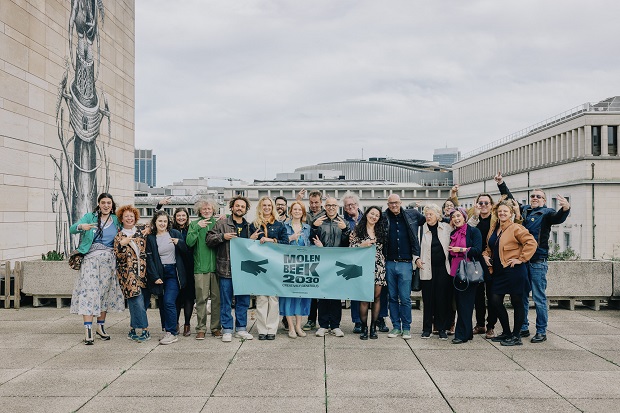
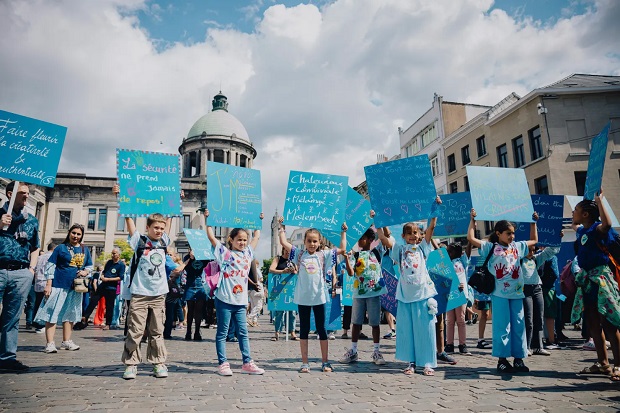
The municipality of Molenbeek, supported by the city and region of Brussels, proposed a mission in which culture served as a driver of social, urban and cultural transformation. It was built around the concept of ‘Sadaka’, which means generosity and voluntary giving in languages such as Hebrew, Arabic, Swahili and Urdu.
The candidacy aimed to showcase its rich diversity with 140 nationalities living together in the canal side district north of the capital.
Now Molenbeek 2030 is being would down, despite attempts by its commissioners to breathe new life into the project.
“It is a great pity that it is ending,” said Goossens. “The people of Brussels need a culturally strong Brussels that transcends language borders and brings people together. If there is no political will, it is not possible to realise such ambitious projects,” he commented.
Zibouh and Goossens resigned at the end of June ahead of the non-profit being shut down by 30 November. Goossens is still managing director and will remain in place, together with two part-time employees, for the dissolution of the organisation. “After the jury's decision, we had to sack part of the team. A second part left at the end of June,” Zibouh explained.
Documentary film in pipeline
In 2026, Boris Dilliès’ Brussels government allocated another €600,000 for the non-profit, after receiving €1.8 million in 2025.
“As a final assignment, the non-profit organisation has been working in recent months on making a documentary that portrays the entire process of the candidacy,” Christophe Degreef, spokesman for minister-president Dilliès (MR) said in a written response to Bruzz. “A website has also been designed in which the complete archive of the candidacy should be made available,” he explained.
It appears that the final subsidy was mainly intended to legally terminate employment contracts. “We don't expect anything else from the non-profit organisation,” added Degreef.
For Goossens, “We are now focusing on the support networks that can ensure the urban and cultural mobilisation that Molenbeek 2030 has brought about is not lost."
The one-hour documentary tracing the entire journey of Molenbeek 2030 is close to completion. “The ambition is to show the documentary publicly,” said Zibouh. It has yet to be determined how and when it will be screened.
Work is also ongoing on a written report in which the organisation wants to gather together all the lessons from the culture capital bid process. “It is important to recount what we have learned for the city from this process.”
Back-up plan
After missing out on the European title, Molenbeek 2030 explored other avenues to continue at least the preliminary part of the project.
“There are examples of cities that were not selected as European Capital of Culture, but then went ahead with their project. Sometimes even with a stronger result because they are no longer tied to the strict conditions of the European competition, such as in Dublin or Sankt Pölten in 2024,” explained Goossens.
In order to launch 'plan B' by 2030, Molenbeek 2030 asked the Brussels government at the end of 2025 for four to five million in subsidies per year, spread over the next three years. But the Dilliès government turned this down, citing budgetary reasons.
While recognising the region’s financial constraints, Goossens reflected on the importance of culture in the city: “Since Brussels was Capital of Culture in 2000, the cultural world has played such an important role in bringing the city together, building bridges. So what will be the glue for the future of Brussels?”
Photos: ©Bryan Nicola Maxwell, Molenbeek for Brussels 2030; MB2030 Décision Jury ©Bryan Nicola Maxwell; Parade bidbook ©MB2030; Molenbeek 2030 Jury ©Bryan Nicola Maxwell