
- Daily & Weekly newsletters
- Buy & download The Bulletin
- Comment on our articles
Related articles
Recent



Popular



Brussels government reaches budget agreement
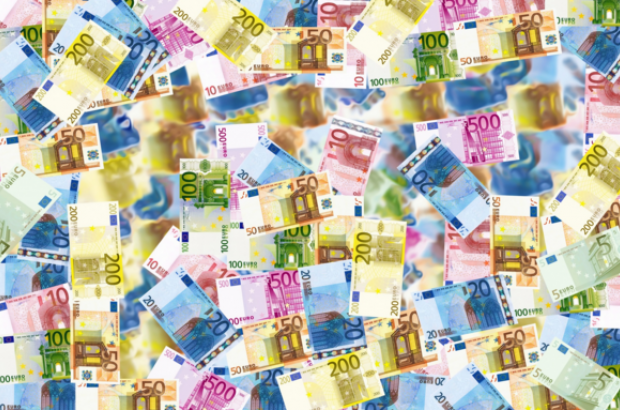
The Brussels government has reached an agreement on next year’s budget and revised its budget for 2026.
The aim of talks that took place over the weekend was to reduce the deficit by the end of next year to €719 million and thus remain on track for a balanced budget in 2029.
“This government keeps its word,” Brussels finance minister Dirk De Smedt (Anders) announced after discussions concluded.
“We said we would reduce the deficit, that we would look at the public sector itself first, and that we would create scope for economic growth. That is exactly what this budget does.”
During the government negotiations in February, the majority coalition partners (MR, PS, Les Engagés, Groen, Anders, Vooruit and CD&V) reached an agreement on a multi-year plan.
Those agreements served as a guide this weekend, but the figures still had to be significantly revised due to lower-than-expected revenue, additional demands, new policies and European funds that had been booked as revenue while not all the necessary expenditure appropriations had been provided for the corresponding projects.
Two days of negotiations followed a familiar pattern, Bruzz reports. After initial optimism, tensions rose steadily. On both Saturday and Sunday evenings, the plenary discussions were suspended for several hours.
Brussels minister-president Boris Dilliès (MR) said he was ultimately satisfied with the final budget.
“A quarter of the targets we set for this legislative term have already been achieved,” Dilliès said.
“The budget remains on track and we are sticking to our objective: a balanced budget by the end of the legislative term.
"These budgetary efforts are freeing up resources to improve the quality of life for the people of Brussels and to enhance the appeal of our capital."
With this budget agreement, the government aims to achieve a deficit of €719 million by the end of next year. In 2025, the deficit was €1.6 billion.
The reduction of the deficit comes at the cost of steep cuts to public spending, including public transport.
Because more than a quarter of the regional budget goes towards transport, the coalition partners agreed back in February that public transport operator Stib needed to raise more revenue.
While the discounted season tickets for young people and senior citizens remain in place at the request of the PS party, the standard ticket price will be indexed. From February next year, a single journey will cost €2.50 instead of €2.40.
There will also be cuts to the agency’s investment budget, though where and by how much remains unclear. There will be no changes to public transport services, and the major order for electric buses remains on schedule.
Additional funding will be allocated to road safety and budgets will remain earmarked for major redevelopment projects such as Place Général Meiser, Chaussée de Ninove and tram line 15. The second car-free Sunday has also been confirmed.
A road tax vignette will be introduced in agreement with the other regions that is expected to generate €30 million. In return, road tax will be reformed.
The vignette will depend more on the type of car. Small city cars and zero-emission vehicles will be exempt from annual road tax from the second half of 2027. The purchase of large and heavy vehicles will be subject to higher taxes.
An ongoing hiring freeze for civil servants is expected to yield up to €70 million in savings.
“Vacancies will no longer be filled automatically, and through internal mobility, staff will be deployed more specifically where the needs are greatest,” De Smedt said.
The number of subsidised contract staff will remain unchanged. Brussels has about 5,000 such employees working for local authorities and non-profit organisations, which the PS party said “supported a great many local services in the voluntary sector and in the social, educational and cultural sectors”.
The mergers of the Brussels administrations are continuing. The pay scales for civil servants will remain unaffected. The government also plans to sell the minister-president’s official residence.
“This represents a streamlining of the state, both in budgetary and symbolic terms,” said a spokesperson for Dilliès.
The sale of the classical-style mansion next to Brussels Park will not take place until the next legislative term and is expected to raise between €10 and €20 million. The government building on Rue de la Régence is also included in the package. Reportedly, there are already interested parties.
Child benefit and service vouchers will remain unaffected, unlike in Flanders, but an increase in their cost was already implemented last year and the tax deduction was abolished.
While cuts were plentiful, some programmes remained untouched or even received an increase in funding.
The government scrapped the Renolution energy grants, but promised a new system involving zero-interest renovation loans due to come into effect in the spring of 2027. A budget of €66 million euros has been allocated for this.
Brussels state secretary Karine Lalieux (PS) confirmed that the €131 million allocation for the BGHM (Brussels Regional Housing Company) will be paid out before the end of this year, though there is still some uncertainty regarding the BGHM’s budget for 2027.
Lalieux also emphasised that support for the most vulnerable tenants will be maintained, with funding for rent subsidies confirmed. Additionally, €104 million has been earmarked for the construction of more than 1,000 homes to be sold at moderate prices via Citydev.brussels.
Another €1.8 million is being channelled to Samusocial, providing 140 shelter places for homeless families.
Ahmed Laaouej (PS) highlighted the introduction of a growth target that will make €5 million available for new initiatives in the areas of welfare and health.
Health prevention will also receive more than €1 million extra, including funding for improved cancer screening and the preparation of an adaptation plan for periods of extreme heat.
The fight against school dropout will receive an extra €5 million, including funding for initiatives by the 19 municipalities and community organisations.